Advanced Aquarist
"Snakelocks anemone" bred for first time in captivity
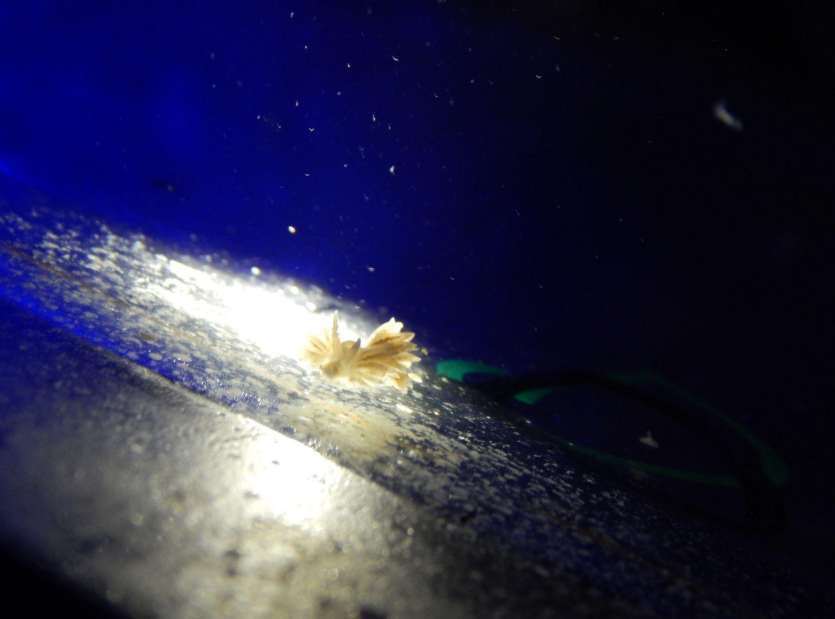
Prized as delicious food (?!), snakelock's anemone was recently successfully captive bred by the University of Granada spin-off, iMare Natural S.L. in Spain.
New York Aquarium scheduled to partially reopen on May 25
The New York Aquarium at Coney Island was devastated by Hurricane Sandy to the tune of approximately $65 million in damages. It's been closed ever since the storm made landfall, but the Wildlife Conservation Society says they plan to partially reopen the aquarium in a little over a month.
Air pollution stunts coral growth
A new study has found that pollution from fine particles in the air – mainly the result of burning coal or volcanic eruptions – can shade corals from sunlight and cool the surrounding water resulting in reduced growth rates.
Castaway: Reef Fish Edition
Marine debris from the March 2011 Japanese tsunami is still washing up on distant shores. Last month (two years and ten days after the tsunami), a Japanese fishing skiff finally came ashore 5,000 miles away on a Washingon State beach. To scientists' surprise, a single reef fish survived the two year boat-ride!
Remote reefs can be tougher than they look
Isolated coral reefs can recover from catastrophic damage as effectively as those with nearby undisturbed neighbours, a long-term study by marine biologists from the Australian Institute of Marine Science (AIMS) and the ARC Centre of Excellence for Coral Reef Studies (CoECRS) has shown.
Tiny grazers play key role in marine ecosystem health
Tiny sea creatures no bigger than a thumbtack are being credited for playing a key role in helping provide healthy habitats for many kinds of seafood, according to a new study by the Virginia Institute of Marine Science and U.S. Geological Survey.
Pacific Sun's new Pandora Hyperion S LED + T5 fixture
Pacific Sun has announced their latest model of the Pandora Hyperion LED lamp: the Hyperion S, described by Pacific Sun as their "shallow water" version. The eight channel multi-colored 200 watt LED+T5 hybrid fixture is wirelessly controlled via bluetooth. The Hyperion S is due out on April 20, 2013 with a retail price of $899 USD ($699 Euro)
Aquarium Fish: An Overview of Stingrays of the genus Potamotrygon, Part Two
Stingrays of the genus Potamotrygon can be stunning aquarium animals. While they have a much better record of captive survivability than other batoids, their husbandry is hardly undemanding or uncomplicated. In actual fact, properly caring for these unusual creatures requires a considerable amount of preparation and resources.
Building a sexier betta tank: The LumaTank
Robert Young and Denny Curtis have a vision to build a better betta tank, and they need your support. The LumaTank is a 6 inch acrylic cube tank, but it's unlike any other tank you've seen. The tank's walls are laser cut and engraved cast acrylic and illuminated by edge-lit LEDs to create an eye-catching conversation piece.
Download your free copy of Redfish Issue #19
Redfish Issue 19 is marine-centered, with articles about Acropora, Orange-lined triggerfish, what NOT to keep in your reef tank, as well as articles about neotropical cichlids and breeding Redigobious naus.
Indonesian reef invaded by coral-killing sponge
The coral-killing sponge, Terpios hoshinota, was recently found on a Java reef and smothers all coral that it comes into contact with as it grows.
Wisconsin man dives in his own 20,000 gallon living room reef tank
CNN reports that Bill Wann owns the largest privately owned reef aquarium in North America (a 24 feet x 10 feet x 10 feet main tank totaling over 20,000 gallons including two sumps). His aquarium is so large that Wann regularly scuba dives in it. We share CNN's video report.
First psychedelic drug isolated from a marine organism?
Experimenting on himself, "Dr. Osculus" may be the first person to use a psychedelic drug synthesized by a simple marine sponge found in the Caribbean.
Scaring fish straight!
The 35,000 sardines in the Kuroshio Current Exhibit at Nagoyako Aquarium (Japan) were once well behaved. They grouped themselves in a coordinated school, creating a "pilchard tornado" - a massive whirling ball of fish that delighted aquarium-goers. But as time went on, the sardines began to break formation. Aquarium officials had to do something to get their fish back in line.
TONMOCON V announced with tentative schedule
This one's for all of you cephalopod lovers! Do you want to meet up with others that share your passion? If so, register for TONMOCON V, which will be held at the California Academy of Sciences October 18-20, 2013.