Heliofungia:
Husbandry considerations and taxonomical relationships
The
free-living stony coral Heliofungia
actiniformis is one of the largest solitary polyp corals, and
it has been popular with reef keeping aquarists since the early
days of the reef aquarium hobby. The appearance of the living
animal is very deceptive to the first time observer. Most who see
it at first think it is a sea anemone, and this is the reason for
its specific name. The polyp of Heliofungia
has the ability to swell dramatically with water, a feature that
enables it literally to walk across the substrate, or turn itself
back over if it is overturned. This feature also enables the coral
to escape from being buried by sediment that may settle on it
during stormy weather conditions, and it allows the coral to live
and remain on top of soft bottom habitats where other corals would
simply sink into the mud and suffocate (Hoeksema,1988).
Based
on the form of the skeleton, Heliofungia
has always been considered to be related to other fungiid corals,
such as Fungia, Ctenactis and Herpolitha.
In fact it was originally described as Fungia
actiniformis. The new genus was created on the basis of the
very different polyp form, compared to other fungiids. Heliofungia
actiniformis is the only species in its genus, though regional
variations have been described.
Proud sponsor of this column
Note some exsert septa on the
skeleton of this Euphyllia
glabrescens. It is not difficult to imagine the
evolution of free-living polyps that look like fungiids.
The typical appearance of Euphyllia glabrescens.
The
typical appearance of Fungia danai.
Compare the appearance of the
polyps of Euphyllia glabrescens to Galaxea
fascicularis.
Heliofungia
is common in the Indo-Pacific region, occurring on reef slopes and
especially in lagoon reef habitats, in shallow and in deep water.
There are regional differences in the diameter of the tentacles,
and some specimens develop bifurcated tentacle tips. Abe (1940)
discusses growth variation and environmental conditions that may
affect the form of this coral. Several color forms exist, but no
one has correlated habitat with color form. It is most likely that
there is no such connection and the color forms are merely an
expression of genetic variation, such as hair color or eye color
in humans. The most common color form is brownish gray with pale
stripes on the oral surface and white tips on the tentacles.
Another common form is fluorescent green with a striped oral
surface and white tentacle tips. The most spectacular forms have
bright pink tentacle tips. These may have a brown, gray or
fluorescent green background as well. The green and pink
combination is quite similar to the popular coral Catalaphyllia
jardinei. The brown with white tipped tentacles and green with
white tipped tentacles are easily confused with the coral Euphyllia
glabrescens. It is my opinion that this similarity is not
merely a matter of convergence. The similarity to Euphyllia
glabrescens goes beyond mere coloration, but I will elaborate
on that in a moment. There does seem to be at least one case of
convergence or mimicry involved in the form and color of Heliofungia
polyps. The brown form with white tipped tentacles strongly
resembles a color form of the sea anemone Heteractismagnifica. If this
resemblance is a form of mimicry, the explanation for it is not
entirely clear. While the anemone Heteractis
magnifica has a potent sting that makes fish avoid it,
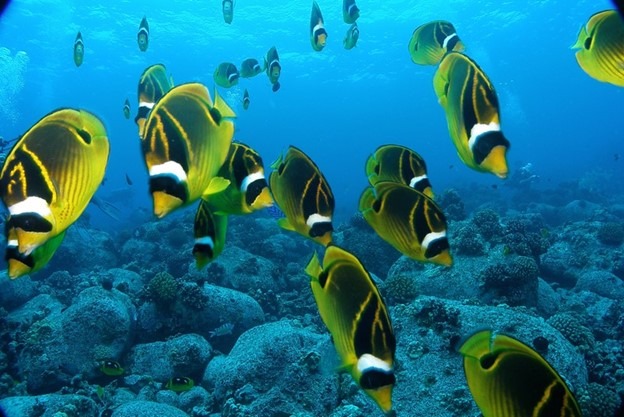
butterflyfishes may attack and eat an anemone if it is not guarded
by a pair of clownfish that aggressively defend their host. Since Heliofungia
does not harbor clownfishes, the coloration might seem like an
invitation to be attacked by butterflyfishes. This does not seem
to be a problem for the coral in its natural habitat, so it is
likely that the corals own sting is effective at discouraging
predators. In aquariums, however, butterflyfishes will eat Heliofungia,
possibly an artifact of reduction in stinging by the coral when it
is not in perfect condition.
Regarding
the similarity between Heliofungia
actiniformis and Euphyllia
glabrescens, I have discussed my opinions previously (Sprung,
1999a and b). I originally came to believe that Heliofungia
was more closely related to Euphyllia
spp. than Fungia spp. on
the basis of the manner in which it often dies and its asexual
means of reproduction (Sprung, 1999b). Heliofungia
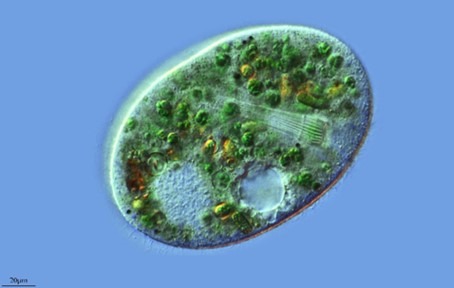
often succumbs to protozoan infections (Helicostoma
nonatum) that produce “brown jelly” with necrotic tissue,
exactly the kind of infections that affect Euphyllia
spp. In Euphyllia these
infections can be stopped with a simple freshwater bath followed
by careful siphoning off of the necrotic tissue. Euphyllia
colonies are composed of series of polyps or separate polyps in
phacelloid colonies. If they get an infection it is possible to
sever the affected area and save the colony. The result is the
loss of one or more polyps (or regions with an oral center) in a
colony, but the rest of the colony can be saved. In Heliofungia
the “colony” cannot be saved because it is a single polyp.
Infections in Heliofungia
are almost always fatal. Herein lies a difference with Fungia
spp. Fungia spp. are
also single polyps, but they can survive loss of some or even most
of their tissue mass. In such situations Fungiid corals commonly
develop polyp buds called anthocauli on their oral surface, and
these buds develop into new fungiid corals that grow and detach
from the original “mother” polyp’s skeleton. This mode of
reproduction may be possible for Heliofungia
under the right conditions, as it is known for many genera of
corals, but I have not personally seen it in Heliofungia
in an aquarium or in the natural habitat. By contrast, the
formation of anthocauli in Fungia
spp. is ubiquitous in the wild and in aquaria. Heliofungia
actiniformis does form polyp buds, but these are located on
the underside of the skeleton, not on the oral surface. This is
analogous to the formation of daughter colony buds beneath the
polyps in Euphyllia spp.
The
assertion that Heliofungia
is closely related to Euphyllia
is supported further if one looks at the appearance of newly
settled polyps of Heliofungia
compared to newly settled polyps of Euphyllia
glabrescens. They are practically indistinguishable. Both are
attached to the substrate. In Heliofungia
the polyps break from their attachment point when they reach a
certain size, which is the same mode of development that fungiid
corals have. It is my opinion that Heliofungia
has adapted this mode and the free-living lifestyle to take
advantage of habitats where a sessile coral would likely be
buried. The physical requirements of such a lifestyle promote
development of its shape. Thus I am suggesting that the similarity
between the shape of the skeleton of Fungia
and Heliofungia is a
more a matter of convergence than close relationship. If one
compares the density of the skeleton in Heliofungia
to fungiids and Euphyllia
spp., one finds that the density of the Heliofungia
skeleton is more like Euphyllia.
The shape of septal and costal teeth on Heliofungia
is more like Fungiids, but this might be explained by the physical
requirements of a free-living coral of this shape; see for example
Hoeksema, (1993). The aforementioned trait of developing
bifurcated tentacle tips seems to be another connection to Euphyllia.
Note the photographed specimen, which looks like Euphyllia
divisa.
Given
the choice of revising its taxonomy, one could place Heliofungia
in the same genus as Euphyllia.
Alternatively it could retain its name and be moved to the family
that contains Euphyllia, the recently created family Euphyllidae (Veron, 2001).
The latter option seems appropriate to me, if my hypothesis is
correct.
As a
side note, while I'm discussing taxonomical revisions in the
family Euphyllidae, there is another popular reef aquarium coral
that I believe is related to Heliofungia
and Euphyllia, though
its present taxonomy suggests otherwise to the extreme. The coral Galaxea is presently classified with Oculina in the family Oculinidae. Galaxea has absolutely nothing in
common with Oculina, a
coral that has a dense skeleton and polyp structure clearly like Solenastrea, Astrangia,
and the fossil coral Septastrea.
The coral Physogyra,
which belongs to the Euphyllidae, has a similar skeletal structure
to Galaxea, though the polyps in Physogyra
are meandroid. The calyces of Physogyra
lichtensteini are embedded in a very porous skeletal matrix
called coenosteum, as are the calyces in most Galaxea,
except for G. (=Acrhelia) horrescens, The
living polyps of Galaxea
bear no resemblance to those of Oculina,
but are very much like tiny Euphyllia
glabrescens. See the photo of them side by side for
comparison. Looks can be deceiving, so this similarity does not
necessarily mean they are closely related as I am suggesting. I
hope to have the opportunity to test this hypothesis some day. The
similarity goes beyond looks. Anyone who has kept Galaxea is familiar with its stinging abilities and the formation of
very long sweeper tentacles. These traits are found in Euphyllia spp., but not in Oculina.
Husbandry
requirements for Heliofungia
Keeping
Heliofungia in a reef
aquarium is not difficult. One should of course avoid fishes that
may pester or feed on the coral. Various angelfish and
butterflyfishes fall in this category. The aquarium should have a
sufficiently large flat horizontal area on the bottom where the
coral can be placed, on gravel, sand, or rock. The coral thus will
be correctly oriented with respect to the light, and will have
sufficient room to move around. There should be no other corals,
soft or hard, that the Heliofungia
might contact as it moves around on the bottom. An exception is
that there can be other Heliofungia.
Heliofungia normally grows and thrives in captivity, but as I
previously described, it is prone to infections. If the coral
develops a brown jelly infection it is important to remove it from
the aquarium. The fouling tissue from a dying Heliofungia
may spread the infection to other corals, killing them in an
effect like falling dominoes (Delbeek and Sprung, 1994).
Lighting
Heliofungia
is not very demanding with regard to illumination. It can be kept
under standard output fluorescent lights as easily as under high
output tubes or metal halide lamps. If it has room to move around,
it will choose a location where the lighting is best.
Water
motion
Heliofungia
does not like very strong water currents. Under strong flow it
will not expand fully. It will expand beautifully under slight to
moderate water flow that gently moves the tentacles. This movement
promotes gas exchange and assures uniform illumination of the
whole polyp.
Temperature
While
Heliofungia tolerates
fairly hot water conditions in the natural environment (to at
least 87 degrees Fahrenheit), I recommend maintaining it at much
cooler temperatures in the aquarium. This is mainly because
infections are less common at cooler temperatures, in my
experience. An ideal temperature is about 75 degrees Fahrenheit.
This Heliofungia
actiniformis has bifurcated tentacle tips that make it
strongly resemble Euphyllia
divisa.
The
most common color form of Heliofungia.
Three young Heliofungia
polyps here attached to a shipwreck. Compare their
appearance to Euphyllia
glabrescens.
Periclimenes
spp. shrimps often live in association with Heliofungia.
This relationship can be maintained in an aquarium.
This Heliofungia
actiniformis has coloration like Catalaphylliajardinei.
Proud sponsor of this column
Feeding
It
is not necessary to feed Heliofungia directly in a well-illuminated aquarium that has a
typical fish population. The fish food and feces as well as
dissolved nitrogenous waste supply enough nutrition for the coral
to thrive, apart from the nutrition Heliofungia
obtains from its symbiotic zooxanthellae. Heliofungia
does eat solid food, and the occasional small piece of chopped
fish, shrimp, crab, or clam meat will be eagerly consumed.
Calcium
and Alkalinity
As
with all stony corals, the growth of the calcareous skeleton
requires the maintenance of calcium and alkalinity levels in the
water. The calcium level should be between 350 and 500 ppm and the
alkalinity between 2.5 and 4-meq/l.
Trace
Elements
Supplementation
with iron and manganese may be needed to promote the health of the
zooxanthellae in closed system aquariums and to prevent bleaching
responses in brightly illuminated corals (Sprung, 2002). The addition of
strontium may be beneficial for the skeletal growth of Heliofungia,
but that has not been tested.
Reproduction
While other
fungiid corals readily fragment to effect asexual reproduction,
fragmentation in Heliofungia
is a rare occurrence in nature, and is not employed significantly as a
means of asexual reproduction. It is possible to sever a polyp
successfully to produce clones, but the survival of the severed pieces
is low compared to other fungiids. As mentioned previously, Heliofungia
forms polyp buds on the underside of the disc, and these can be severed
to produce asexual offspring.
Sexual
reproduction in Heliofungia
may involve different modes depending on the population. Some
populations appear to be hermaphroditic brooders, while others have
distinct sexes that spawn at the time of mass coral spawns (Delbeek and
Sprung, 1994).
Commensals
Heliofungia
commonly harbors commensal organisms, and these relationships, while not
essential to the coral, offer unique opportunities for a display
aquarium. Various shrimps of the genus Periclimenes
associate with this coral, and a very special tiny white pipefish, Siokunichthys
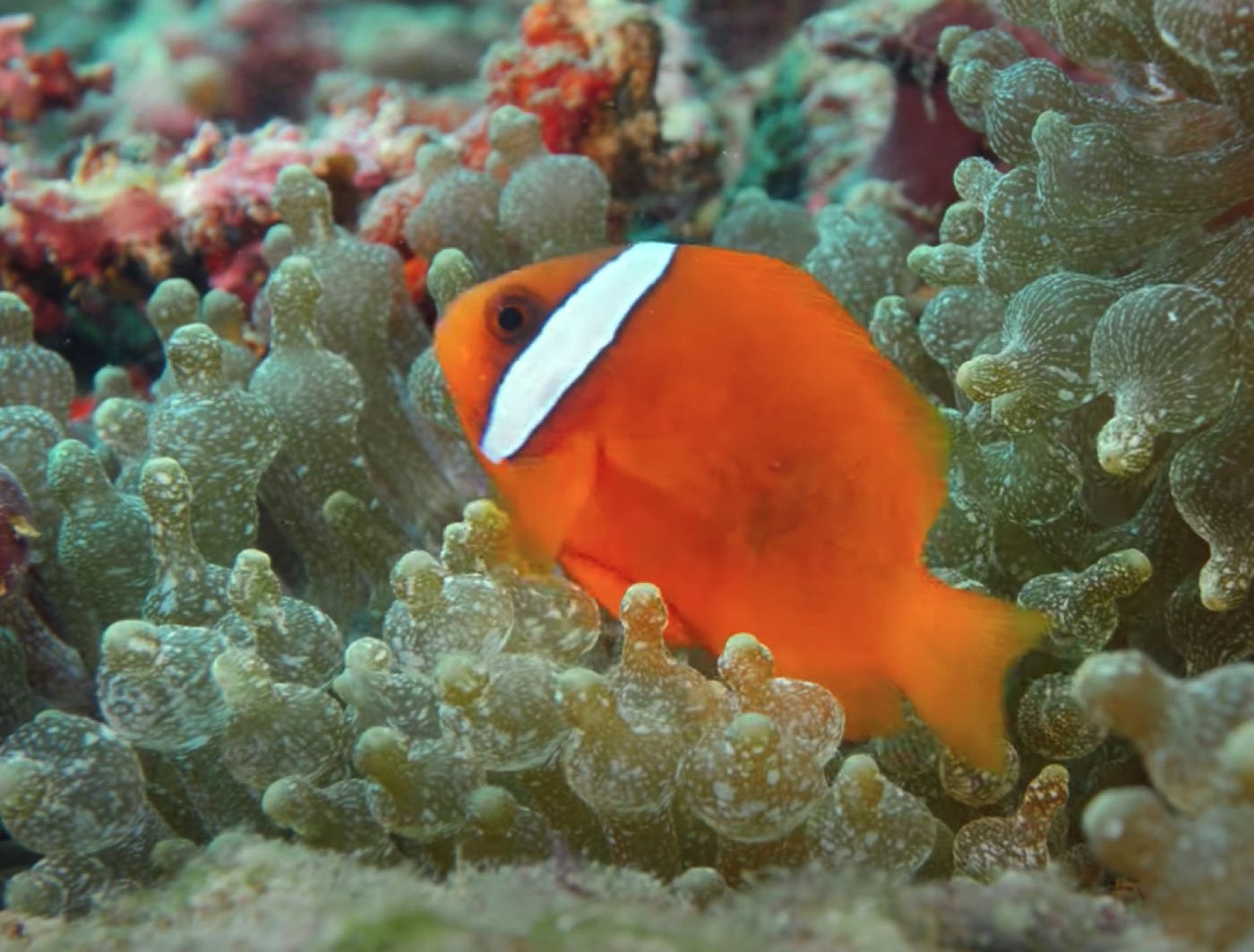
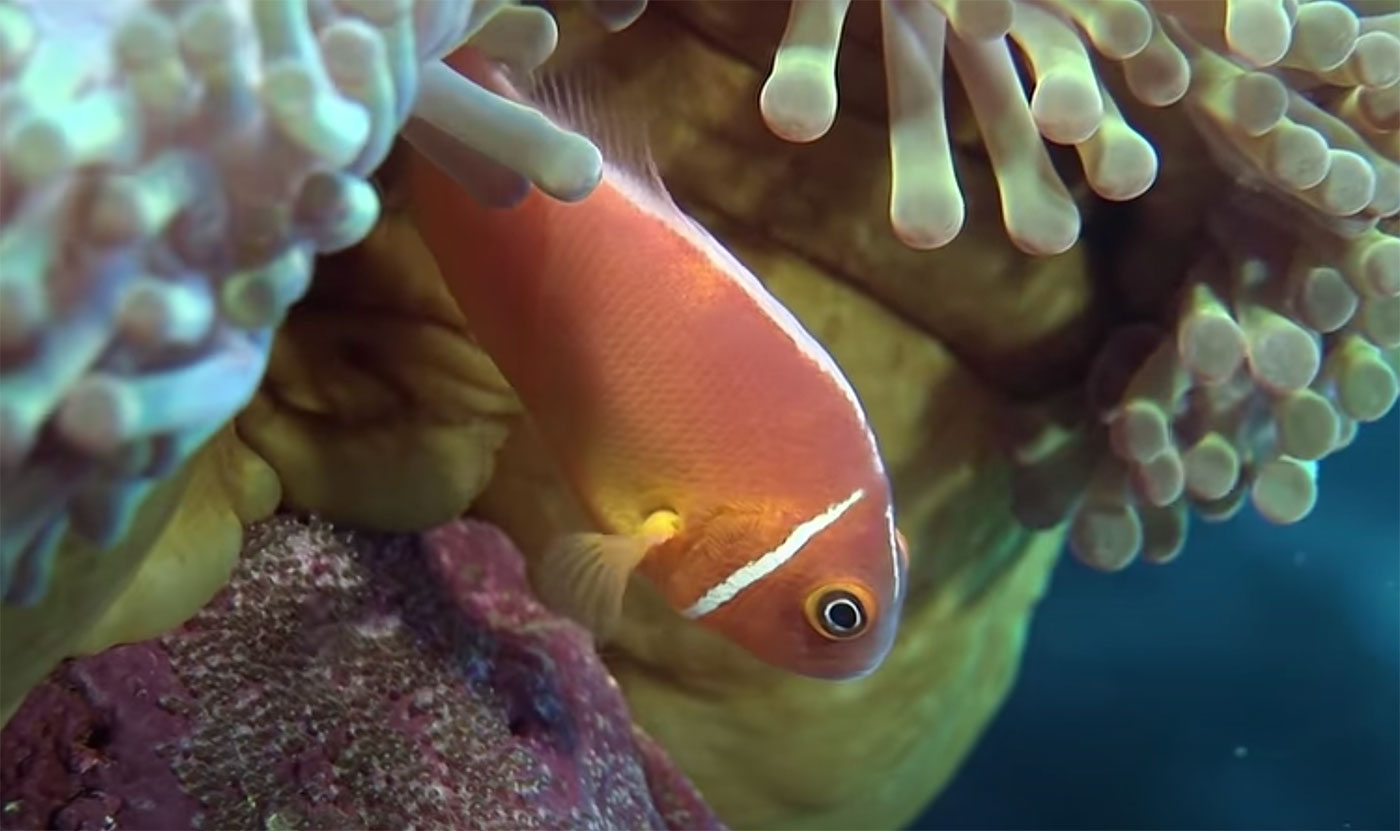
nigrolineatus is associated with it in some regions. Although
clownfishes do not associate with Heliofungia
in the wild, in aquariums they may do so. If the clownfish are large and
very active, they may disturb or injure the Heliofungia.
Proud sponsor of this column
References
and suggested reading
Abe, N. 1940. Growth of Fungia
actiniformis var. palawensis DÖDERLEIN and its environmental
conditions. Palao Trop. Biol.
Sta. Stud., 5: 105-145, 11 figs., 16 tabls.; Tokyo.
Delbeek and Sprung, 1994. The Reef Aquarium Volume One. Ricordea Publishing, Coconut Grove,
FL.
Hoeksema, B.W. 1993.
Phenotypic corallum variability in Recent mobile reef corals. Cour.
Forsch.-Inst. Senckenberg, 164: 263-272, 4 figs., 3 tabls.;
Frankfurt am Main.
Hoeksema, B.W. 1991.
Evolution of body size in mushroom corals (Scleractinia: Fungiidae)
and its ecomorphological consequences. Netherlands
Journal of Zoology 41 (2-3):112-129
Hoeksema, B.W. 1989.
Taxonomy, phylogeny, and biogeography of mushroom corals (Scleractinia:
Fungiidae). Zool. Verh. Leiden 254: 1-295.
Hoeksema, B.W. 1988. Mobility
of free-living Fungiid corals (scleractinia), a dispersion mechanism
and survival strategy in dynamic reef habitats. in: Proceedings
of the 6th International Coral Reef Symposium,
Australia, 1988, Vol 2
Sprung, J. 2002. Captive
husbandry of Goniopora, spp. with remarks about the similar genus Alveopora.
Advanced Aquarist Online.
Sprung, J. 1999. Corals:
A Quick Reference Guide. Ricordea Publishing. Coconut Grove
Florida.
Sprung,
J. 1999b Is there really something special about Goniopora,
Alveopora and Heliofungia?"
Marine Fish and Reef USA .
Veron, JEN. 2001. Corals
of the world. AIMS. Townsville, Australia.
Wells, J. W. 1966.
Evolutionary development in the scleractinian family Fungiidae. Pp.
223-246 in Rees, W.J. (ed.), The Cnidaria and their evolution.
Symposia of the Zoological Society of London, No. 16, 449pp.
Academic Press, London, New York.