Wade Lehmann's
150 gallon display system
Editors Note: Click on any image to bring up a photo gallery
of all the pictures used in this article.
My reef tank has
had a rather cataclysmic evolution. As with many folks in the
hobby, my tank started small, 20 gallons actually, and then
began to grow. In a couple of short years I went from a 20 gallon,
to 55, to 125, and finally to the current 150 gallon tank (which
will be upgraded to a 210 gallon in the near future). The tank
has been operating in its current iteration since early spring
of 2001.
The tank is an old
custom built glass tank, with ¾" glass. No braces permit
me to use two sets of lights instead of three without casting
shadows. The tank is dominated by sps corals with a couple of
lps and soft corals tossed into the mix. Not a single wild colony
was purchased or placed into this tank. It is derived entirely
from coral frags, generated from friends, purchased, or from
trades with the NC Coral Frag Trade Group (www.coralfrag.org).
The tank is lighted
with four 400W metal halides, containing two Iwasaki 6500K and
two XM 20kK bulbs in tandem. I custom built two pendants that
place the bulbs side by side in a PFO reflector and balances
out the coloration of each nicely. The pendants have ¾"
spacing between the reflector and wooden box and are vented
in the rear in order to prevent heat damage or risk of fire.
An 8" desktop fan blows air across the open topped canopy and
pushes evaporation up to around 5 gallons per day.
 |
 |
|
Circulation in the
tank is provided by 3 recirculating loops (Quiet 1 and 2 Iwaki
20 pumps) and the main return (Ampmaster 2700). The loops are
drilled through the bottom of the tank on both the inlet and
outlet side. The sump is located half a floor below (split-level
house) and behind the main tank, so that all of the noisy tank
components are located in another room. This makes the tank
amazingly quiet during operation. Two of the loops are static
and one is brought over the back of the tank and into a Seaswirl
for more dynamic water movement.
| |
|
|
|
|
| Proud
sponsor of this column |
|
| |
|
I use a Reefscience
(Fergy) calcium reactor loaded with ARM to maintain calcium
and alkalinity levels. I use a Dwyer flow meter to monitor CO2
input (~20cc/min). I also have a Reefscience beckett driven
skimmer that operates on an Iwaki 40 pump. The skimmer is a
monster, at almost 5' tall! I drain the waste from the skimmer
into a 4 gallon pail for easy removal. I use activated carbon
continuously, changing it every 3-6 weeks for additional filtration
and removal of organic debris.
Topoff is handled
automatically with a Spectrapure RO/DI unit connected to a Spectrapure
liquid level controller. The controller maintains approximately
15 gallons of water in a large pail near the sump. Sump water
level is controlled by a DIY redundant level controller system
connected to a Mag 7 pump. Water levels generally stay within
¼" inch of optimal height in the tank at all times. The
additional step guarantees that no more than the 15 gallons
of water will make it into the tank if the system fails, which
will not be detrimental to my critters.
The sump is a 65g
second tank, lit with a 175W 10kK MH. There is a 3-4" sandbed,
some random rock, and a few soft corals residing there.
Current occupants:
Inverts:
- E. quadricolor
- green, rose, whitish
- Acropora
- approximately 30 different species
- Stylophora
- Pavona
- Seriatopora
- Pocollipora
- Zooanthids
- 4 species/color morphs
- Polythoa
- 2 species/color morphs
- Sinularia
- 2 species
- Corallimorphs
- 2 frilly species, blue and green
Inverts, Mobile:
- Cleaner shrimp
2
- Few random hermit
crabs - red and blue legs
- 3 Mexican turbo
snails (over 3 years old and huge!)
- 10 Astrea snails
- 3 black brittle
stars
Fish:
- Pair A.
percula percula clowns
- Pair A.
perideraion pink skunk clowns
- Pair A.
melanopus (in sump) cinnamon clowns
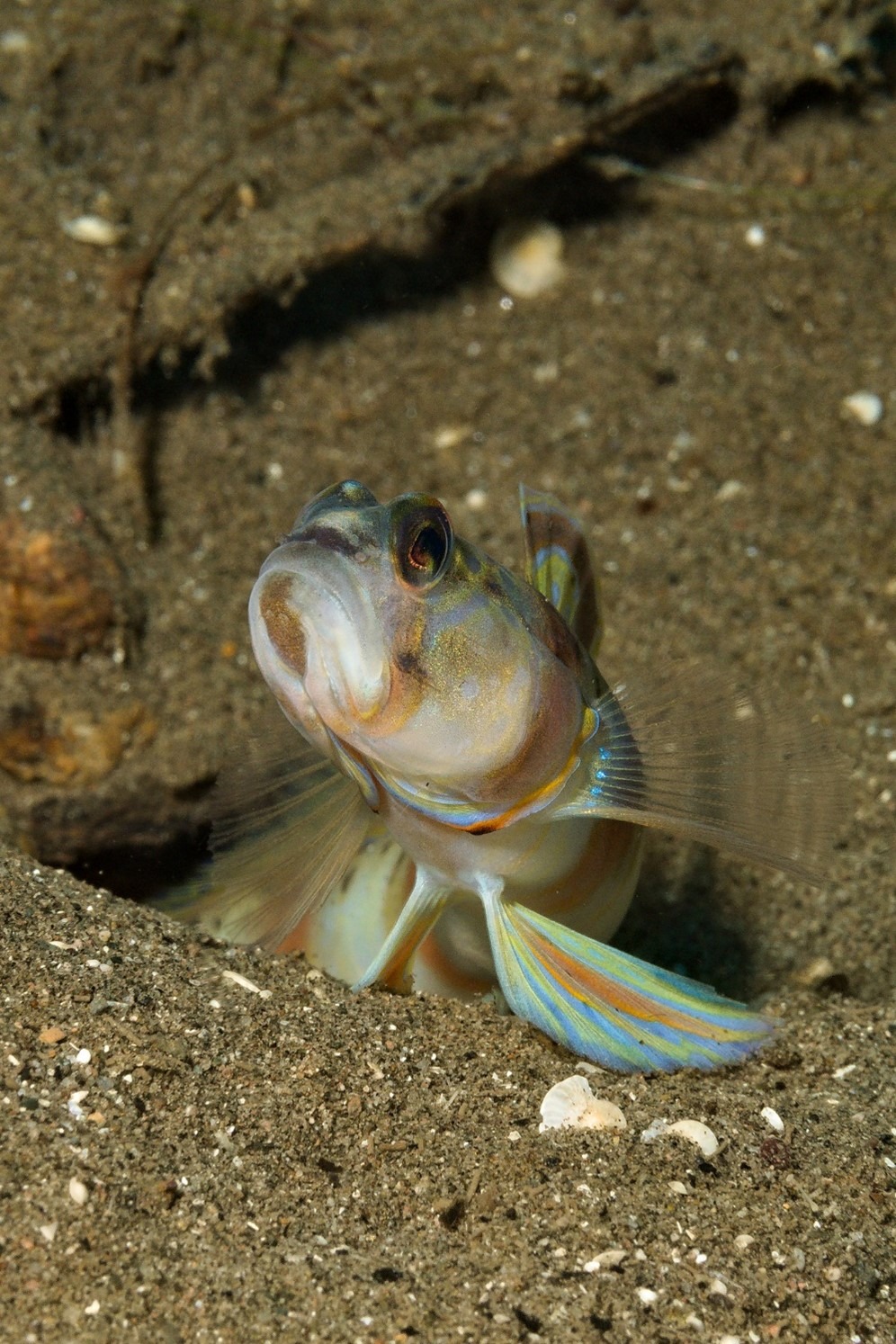
- Pair Gobiadon
okinawae yellow clown gobies
- Centropyge
loriculus flame angel
- Zebrasoma
flavescens yellow tang
- Siganus
punctatus bluespot rabbitfish
- 5 Chromis
viridis green chromis
- Pair Nemateleotris
magnifica firefish
- Pair Synchiropus
splendidus mandarin gobies/dragonets
- Cirrhilabrus
rubripinnis red finned fairy wrasse
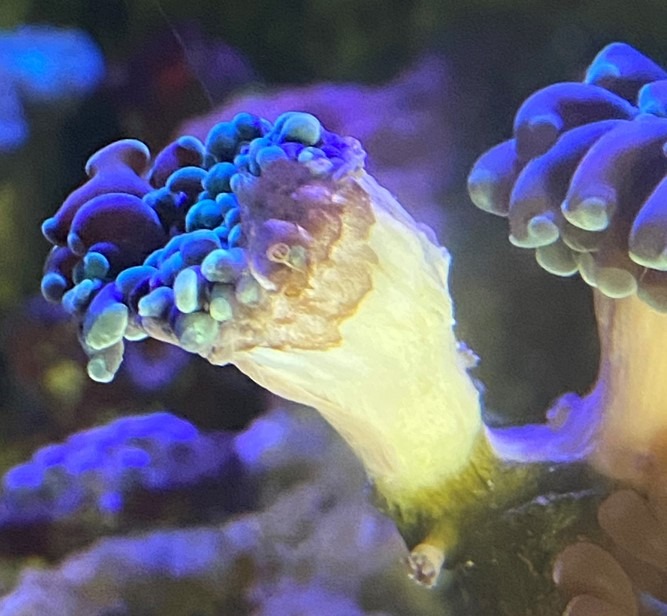
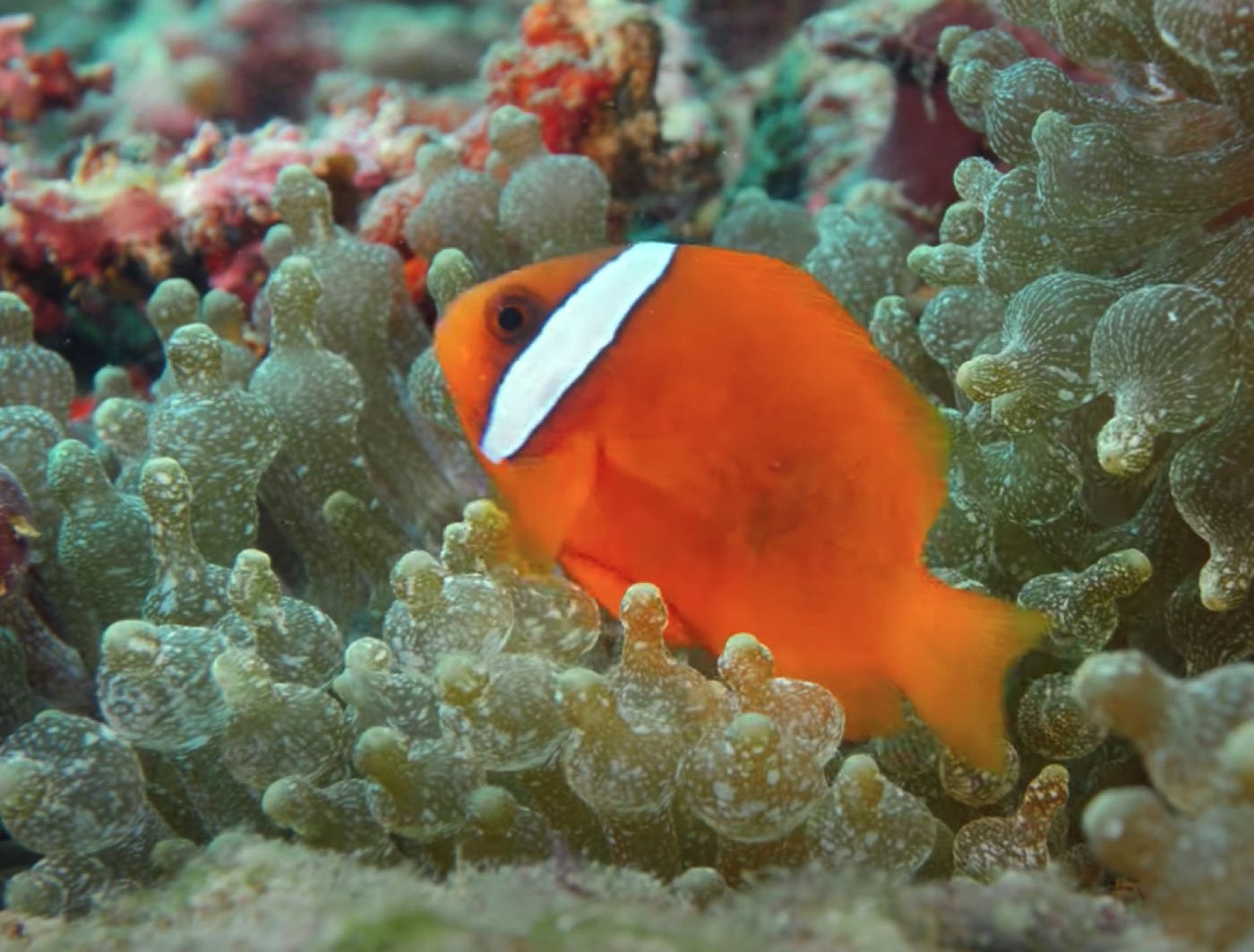
My bubbletip anemones
(E. quadricolors) have split numerous times each (the
rose is relatively new and has not yet split). I have even forced
splits when they grow too large and begin to sting nearby corals.
I currently have 6 anemones split between the display and a
35 hex anemone tank. The pink skunks host in the green BTA and
the percula pair host in the white. They do not intermix nor
bother each other from about 2 feet apart.
My maintenance is
usually a glass scraping with a heavy duty magnet every few
days and a complete razor blade scraping once every two weeks.
I also perform thirty gallon water changes every 2-3 weeks on
the system. As mentioned earlier, I also change out approximately
a quart of activated carbon on a 3-6 week rotation. Recently,
I have also had to do some fairly heavy fragging to keep the
corals in-line and competition down as they are beginning to
overgrow one another.
| |
|
|
|
Proud
sponsor of this column |
Proud
sponsor of this column |
| |
|