|

EDITORIAL
by TERRY SIEGEL
One of the most asked
questions centers around the best temperature range to keep a reef tank at.
Beginning with a series of articles and statements by Ron Shimek, Ph.D.
advocating relatively high temperatures for reef tank maintenance this
question has provoked considerable debate. Based essentially on anecdotal
experience many experienced reef keepers like me and Greg Schiemer argue
that optimum temperatures in the wild do not translate into optimum closed
system reef tank temperatures. Both Greg and I have observed that
temperatures above 82-degrees F too often are associated with outbreaks of
what we call RTN (rapid tissue necrosis). I prefer to keep my reef tank
temperature in the mid to high seventies despite the fact that Ron Shimek
has suggested that reef building corals become dormant at these “low”
temperatures. Keeping our corals at these “low” temperatures neither
Greg nor I have had any kind problem with growth; in fact, both of us have
to frequently chop out hunks of living corals to keep them from turning our
reef tanks into an impenetrable mass of aragonite.
|

|
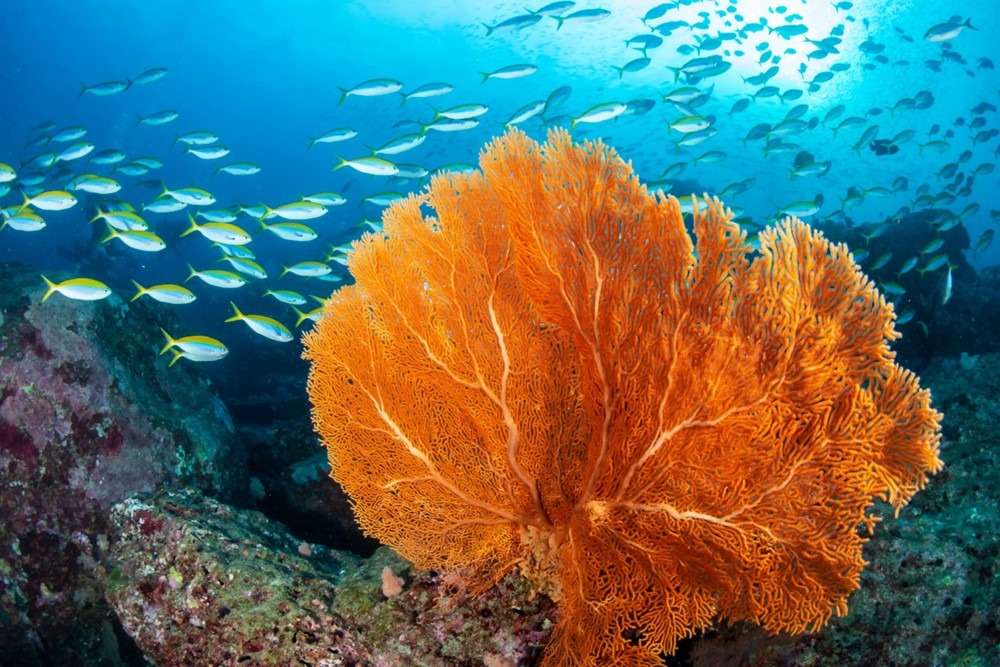
| This
orange Montipora
sp. grew to this size in the author’s reef tank in a few
months. It was given to the author by Greg Schiemer as a
one inch fragment. |
|
In this connection it is
important to read this month’s Media column by J. Charles
Delbeek. Just to give you a little taste of what you will find in
greater detail in Delbeek’s column check out the following,
In
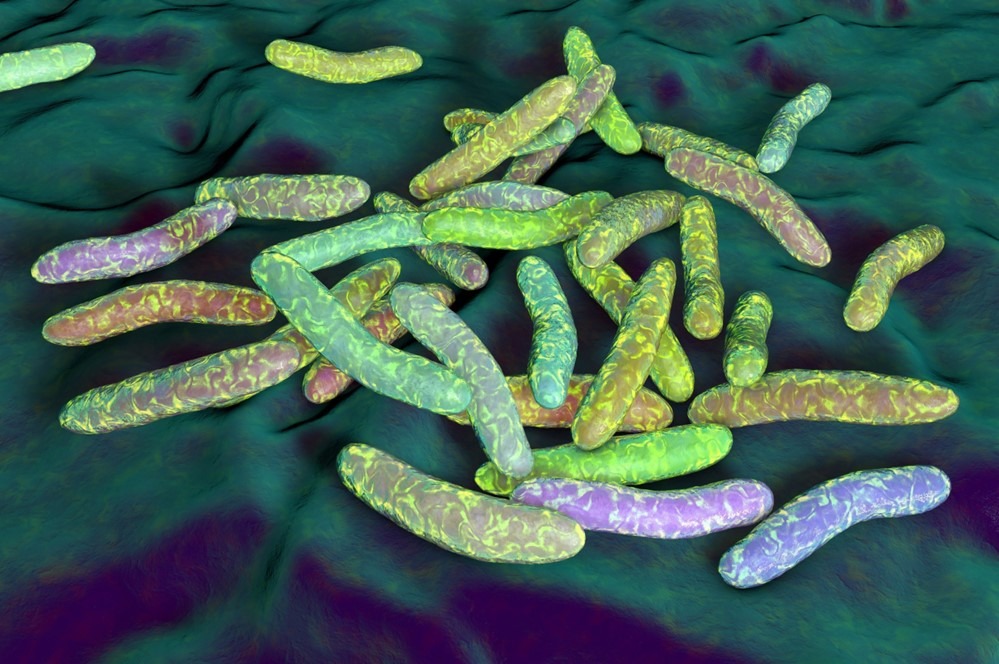
experiments of disease transmission at differing temperatures it
was found that no symptoms appeared after inoculation [P.
damicornis] at 20 and 25°C
after 20 days (68-77°F), but that 100% of the tested fragments
showed disease and died at 27 and 29°C (80.6-84.2°F) after just
16 days (the rate was slightly faster at 29°C than 27°C). It is
interesting to compare the photos shown in Fig. 3a-d in this paper
and those published in The
Reef Aquarium volume two
pages 444-445 (Sprung and Delbeek, 1997).
It
is gratifying to find, as marine biologists study the diseases of
corals, that what reef keepers have observed regarding the
relationship of high temperature to RTN in reef tanks may be
grounded in experimental fact, both in tanks and in the wild. |
|
As an aside, I’d like to
suggest that the concentration of PO4 (orthophosphate) in
our reef tanks has a lot more to do with coral growth than does
temperature. Calcification seems to almost stop when concentrations of
PO4 approach 1-mg/L, and reach growth rates comparable to
coral growth on wild reefs when the tank’s PO4
concentration drops below 0.1-mg/L. I have also found that PO4
levels can be dropped quite low by harvesting macro-algae on a regular
basis from a refugium. Though the early advocates of the Berlin system
often ridiculed the algae scrubber system developed by Walter Adey,
many now recognize that the most successful reef systems employ the
best techniques from many sources – modern reef keeping techniques
utilize the best of Wilkens, Jaubert, and Adey.
With
this issue, we are very pleased to publish the first of a series of
columns by Julian Sprung. Through his books, columns, and lectures
Julian has certainly become a star in our hobby, but for me it’s
Julian’s love of sea creatures, his years of close observation of
their habits, and his comprehensive husbandry skills that matter most.
If you want to know what it is and how to keep it alive there is no
one better to turn to than Julian Sprung. |

|
To access our Editorial forum, click here
Copyright 2002 Advanced Aquarist's Online
Magazine |
|