In
the last few months a couple of articles/letters appeared both online (http://reefkeeping.com/issues/2002-05/eb/feature/index.htm)
and in the printed media (FAMA, August 2002) where the author was
questioning the claim that bacterial disease(s) were to blame for the
problem with poor survival of imported Catalaphyllia (Elegans
coral) colonies in the last year or so. This author brought into
question the probability that bacteria could be held accountable for any
coral or invertebrate disease, pointing out the lack of published work
in this area.
This
month I would like to bring to your attention a recent article that
appeared in the journal Marine Biology. The
abstract of the article can be viewed online here,
so I will not go into great detail on the entire text of the article but
I would like to bring to your attention the following key points.
Ben-Haim,
Y. and E. Rosenberg. 2002A
novel Vibrio sp. pathogen of the coral Pocilloporadamicornis.
Marine Biology 141: 47-55.
In
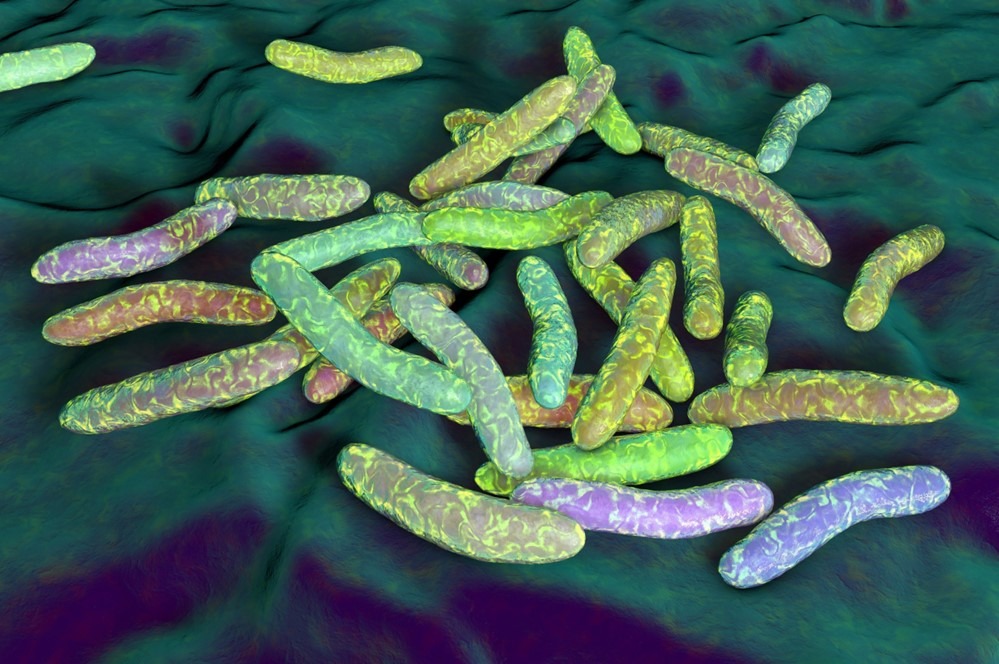
this paper Ben-Haim and Rosenberg describe how they were able to
isolate a previously unknown pathogenic bacterium Vibriocoralyticus
YB from colonies of Pocillopora damicornis collected from
the coast of Zanzibar (in fact they found 15 strains of
Vibrionaceae that were dominant in diseased colonies but not
healthy ones, but V. coralyticus YB was the most virulent).
They were able to inoculate healthy colonies with this bacterium
(by adding it to the water and by putting an affected coral into
direct contact with a healthy piece) and produce the same symptoms
of rapid tissue loss resulting in death within a few weeks. They
were also able to infect other colonies of P. damicornis
collected from the Red Sea (ambient water temperature of
collection area was 22-26°C) with the same bacterium.
Proud sponsor of this column
In
experiments of disease transmission at differing temperatures it was
found that no symptoms appeared after inoculation at 20 and 25°C after
20 days (68-77°F), but that 100% of the tested fragments showed disease
and died at 27 and 29°C (80.6-84.2°F) after just 16 days (the rate was
slightly faster at 29°C than 27°C). It is interesting to compare the
photos shown in Fig. 3a-d in this paper and those published in The
Reef Aquarium volume two pages 444-445 (Sprung and Delbeek, 1997).
Although
no studies have been conducted on the mechanism by which this bacterium
results in tissue loss, it is felt that a mechanism similar to that
found with the well-studied Vibrioshiloi/Oculina patagonica
bleaching disease in the Mediterranean (see references in the above
article) may be at work where virulent genes only become expressed with
increases in temperature. For example, the V. shiloi
adhesion, which is required for binding the bacterium to a ß-galactose-containing
receptor on the coral surface, is only produced at higher temperatures.
The mechanisms by which V. coralyticus YB causes tissue
damage to P. damicornis are, at present, unknown.
Preliminary data indicate that the bacterium adheres to the coral
surface and then penetrates into the tissue. Ben-Haim and Rosenberg are
currently examining the specificity of this adhesion and the effect of
temperature on the process. In addition, they are studying the host
specificity of the infection and the production of potential V. coralyticus
YB virulence factors, such as extracellular proteinase and toxins
similar to those produced by V. shiloi. They have also recently
isolated a strain of Vibrio that is very similar to V. coralyticus
YB, from diseased Red Sea P. damicornis.
So
what does this mean for aquarists? Well, it brings home again the point
that running aquaria with corals close to their thermal maxima can be a
risky business. A mere 2°C (3.6°F) increase in temperature was enough
to cause complete mortality in the P. damicornis used in this
study. There is of course a great deal of variability between corals and
their thermal tolerances, but without the data on where the corals were
collected, what the prevalent water temperatures were and/or what
particular clade of zooxanthellae a coral is carrying, why take the
risk?
Some
V. coralyticus YB facts:
Growth
Rate
(doubling
time in MBT media)
20°C
- 140 min
25°C
- 36 min
30°C
- 25 min
Antibiotic
sensitivity
Sensitive
to: erythromycin, tetracycline, chloramphenicol, gentamycin
Resistant
to: kanamycin, ampicillin, penicillin
It’s
informative to see that V. coralyticus is sensitive to
chloramphenicol, an antibiotic first suggested by Craig Bingman as a
treatment for RTN in aquaria. Unfortunately, chloramphenicol is not a
very pleasant drug to deal with and is difficult to get, as you need a
prescription from a veterinarian. Doxycycline is more readily available
and has also been shown to also be effective in treating RTN.
For
further information on coral diseases found in the wild take a look at:
1.
Drs. McCarty and Peters’ website detailing what is known about coral
diseases from the Caribbean, a very useful and informative site:
2.
Fitt, W.K., Brown, B.E.,
Warner, M. E. and R. P. Dunne. 2001. Coral bleaching:
interpretation of thermal tolerance limits and thermal thresholds in
tropical corals.
A
useful and informative review on what is known about coral bleaching,
includes definitions and an extensive reference list.
Kuffner,
I.B. 2002. Effects of ultraviolet radiation and water motion on
the reef coral, Porites compressa Dana: a transplantation
experiment. Journal of Experimental Marine Biology and Ecology
270:147-169.
As
many hobbyists know, most corals, marine invertebrates and algae
are exposed to significant amounts of biologically effective
ultraviolet radiation (UVR, 280-400 nm) in nature. To help them
cope with this they manufacture chemicals that act like a natural
sunscreen. This class of chemicals known as mycosporine-like amino
acids (MAAs) are contained in the corals’ tissues where they
absorbed UVR energy and release it as heat. What many hobbyists
don’t know is that these compounds are colorless and can only be
measured by chemical extraction and liquid chromatography
techniques. In other words, a coral’s color and any changes
therein, have nothing to do the presence or absence of MAAs. When
looking at factors that control MAA production the most obvious
one is the presence of UVR. Numerous studies in a wide range of
marine organisms have shown that MAA concentrations are strongly
correlated with UVR. However, few studies have looked at other
factors that may act in conjunction with UVR such as water motion
and overall light levels. It is well known that water motion plays
a major role in zooxanthellae rates of photosynthesis,
calcification rates and nutrient uptake, with these factors
increasing with increasing water motion, presumably due to the
reduction in the thickness of the boundary layer surrounding coral
tissue, resulting in greater diffusion rates of nutrients and
wastes into and out of the coral. Kuffner’s study was conducted
to determine if water motion would also have an effect on MAA
production.
Proud sponsor of this column
Kuffner
used Porites compressa nubbins collected 14 nubbins from each of
9 colonies on the windward side of Coconut Island in Kaneohe Bay, Oahu,
Hawaii. She transplanted half of these nubbins to the opposite (leeward)
side of the island and placed some under UV blocking acrylic and some
under UV transmitting acrylic. The rest were left on the windward side
and some were placed under UV blocking acrylic and some under UV
transmitting acrylic. Water flow on the windward side averaged 5 cm/s
and on the leeward side less than 2 cm/s. She then measured MAA
concentrations, calcification rates (by weighing the nubbins) and
photosynthetic pigment concentrations initially and then at three week
and six week intervals for a total of six weeks.
MAA
concentration was found to behave much as expected; when UVR was present
in the control site (windward) MAA levels remained about the same, but
those under UVR blocking acrylic dropped by 29%. However, those nubbins
on the leeward side dropped 20% with UVR present and 36% when UVR was
blocked! Coral nubbins on the windward side showed no decrease in
photosynthetic pigment concentration or calcification rate with or
without UVR (this indicates that MAA production does not exact a
metabolic cost on this coral as far as growth and photosynthetic pigment
production are concerned), but those on the leeward side (lower water
motion) showed declines of 22% and 11.6 % respectively, irrespective of
UVR presence.
The
reasons for these declines are not fully understood but it may be that
the thicker boundary layer that results when water motion decreases,
slows the uptake of the necessary chemical precursors for MAA production
by the zooxanthellae.
Interestingly,
differences were found in MAA concentration patterns between the various
colonies. Some colonies had higher levels or different combinations of
MAAs. This indicates that there is a genetic component to MAA production
and may explain why some colonies exhibited bleaching in the summer of
1996 when water temperatures were elevated and doldrums caused unusually
calm waters for several weeks in Kaneohe Bay. Since MAAs are produced by
zooxanthellae, it may be that different strains/clades of zooxanthellae
also produce different amounts and combinations of MAAs.
The
implications of this study for aquarium culture of corals are
interesting. The significant differences in MAA concentrations,
calcification rates and photosynthetic pigment concentrations between
high and low water motion sites suggest that corals may have specific
flow requirements and could suffer stress (short term?) when moved or
when water motion parameters are changed. What is not shown by this
study is whether or not corals can eventually adapt to new water flow
regimes either by altering their growth form and hence the diffusion
boundary layer, or by altering their zooxanthellae make-up. When
introducing newly collected or imported corals it would be useful to
know how long those corals have been in transit or holding before
arriving in systems with ideal conditions of water motion and lighting.
Given that many of the newer and/or popular lamps on the market also
give out measurable UVR and most hobbyists implement the ill-advised
practice of not using shielding under their lights fixtures, chances are
good that UVR shock would be a likely result.
Interesting
Citations from the Periodical Literature
The
following are citations for some of the articles that might also be of
interest to aquarists, which were published in the spring and summer of
2002.
Coral
Biology
Barneah,
O., Malik, Z. and Y. Benayahu. 2002. Attachment to the substrate by soft
coral fragments: desmocyte development, structure and functions. Invertebrate
Biology 121(2):81-90.
Battaglene,
S.C., Seymour, J.E., Ramofafia, C. and I. Lane. 2002. Spawning induction
of three tropical sea cucumbers, Holothuria scabra, H.
fuscogilva and Actinopyga mauritana. Aquaculture
207(1-2):29-48.
Buck,
B.H. Rosenthal, H. and U. Saint-Paul. 2002. Effect of increased
irradiance and thermal stress on the symbiosis of Symbiodinum
microadriaticum and Tridacna gigas. Aquatic Living
Resources 15(2):107-118.
Grover,
R., Maguer, J.F., Reynard-Vaganay, S. and C. Ferrier-Pages. 2002. Uptake
of ammonium by the scleractinian coral Stylophora pistillata:
effect of feeding, light and ammonium concentrations. Limnology and
Oceanography 47(3):782-790.
Jompa,
J. and L.J. Mcook. 2002. Effects of competition and herbivory on
interactions between hard corals and a brown alga. Journal of
Experimental Marine Biology and Ecology 271:25-39.
Smith,
L.D., Rees, M. and S.N. Field. 2002. Enhancement of coral recruitment by
in situ mass culture of coral larvae. Marine Ecology Progressive
Series 230:113-118.
Coral
Diseases
Bythell,
J.C., Barer, M.E., Cooney, R.P., Guest, J.R., O’Donnell, A.G., Pantis,
O. and M.D.A. LeTissier. 2002. Histopathological methods for the
investigation of microbial communities associated with diseases lesions
in reef corals. Letters in Applied Microbiology 34(5):359-364.
Diaz-Pulido,
G and L.J. McCook. 2002. The fate of bleached corals: patterns and
dynamics of algal recruitment. Marine Ecology Progressive Series
232:115-128.
Dube,
D., Kim, K., Alker, A.P. and C.D. Harvell. 2002. Size structure and
geographic variation in chemical resistance of sea fan corals Gorgina
ventalina to fungal infection. Marine Ecology Progressive Series
231:139-150.
Fishes
Perante,
N.C., Pajaro, M.G., Meeuwig, J.J. and A.C.J. Vincent. 2002. Biology of a
seahorse species, Hippocampus comes in the central Philippines. Journal
of Fish Biology 60(4): 821-837.