Is
it Really in the Water? A Critical Reexamination of Toxic Metals
in Reef Tanks
Proud
sponsor of this column
During
my recent talk at the International Marine Aquarium Conference,
I outlined the evolution of modern reef keeping explaining that
the hobby had evolved through a series of stages to reach it’s
current status. I suggested that the haphazard trial and error
that had helped the hobby reach it’s current level of
understanding would carry us no further. To continue to evolve
and grow, the hobby had to enter a new phase where scientific
methods replaced the “voodooism” that has characterized
too much of what had guided the hobby to this point.
A recent
series of articles on metals in artificial seawater and reef
tanks would seem to be an example of what I was advocating.
(Shimek 2002a 200b) Although that is true to some degree, the
series also illustrates the potential pitfalls and dangers that
we face as we enter this new phase of reef keeping. The response
to the articles also demonstrates that many reef hobbyists are
naive regarding scientific methods and are ill prepared to interpret
the validity and usefulness of seemingly significant research.
If the hobby is to benefit from scientific methods, hobbyists
need to develop a greater understanding of the principles and
methods of science as well as an ability to distinguish between
good and bad science, The goal of this and subsequent articles
examining the reef tank metals articles is to help develop a
sufficient understanding within reef keeping that hobbyists
can critically judge articles that appear in hobbyist literature,
What
is science?
All
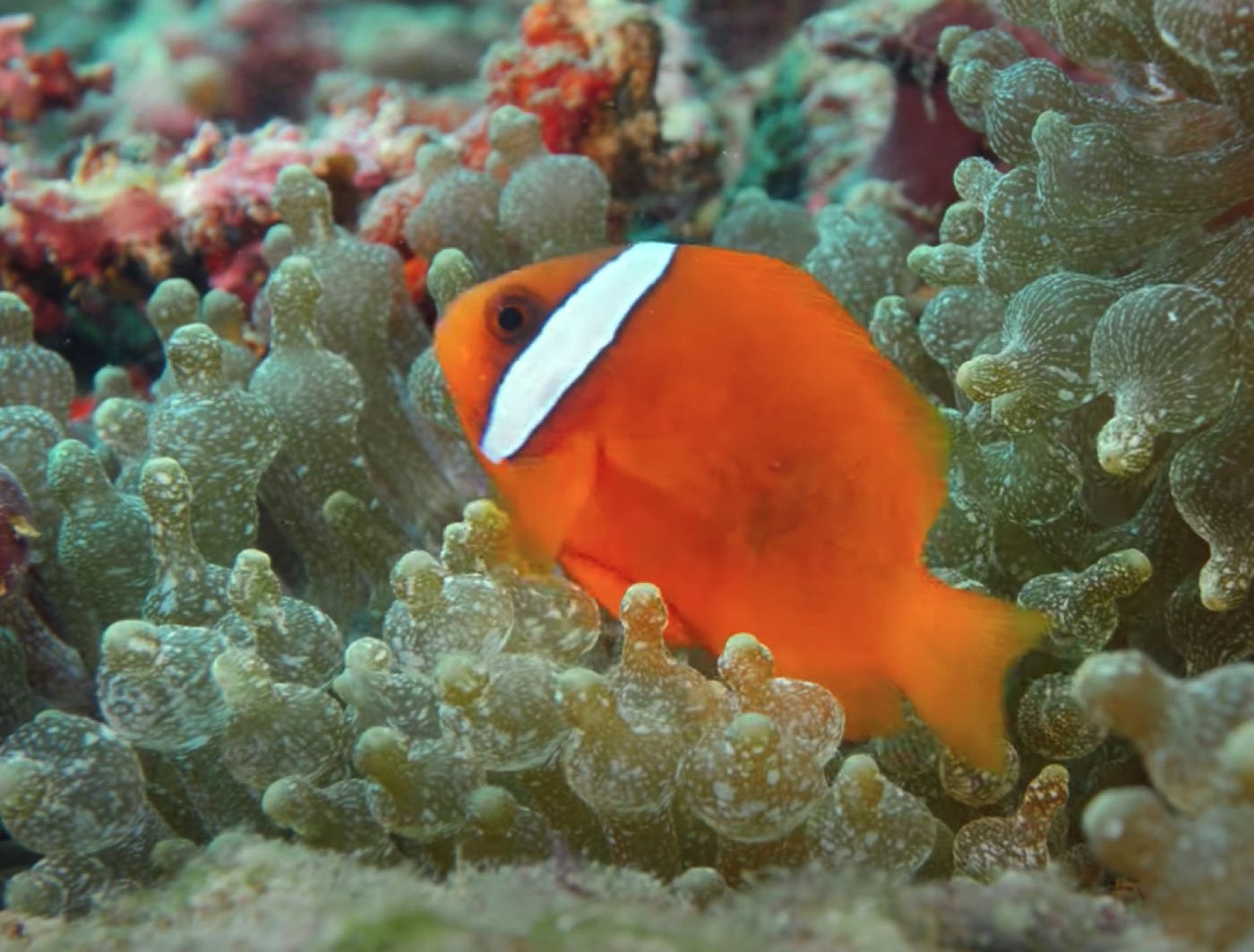
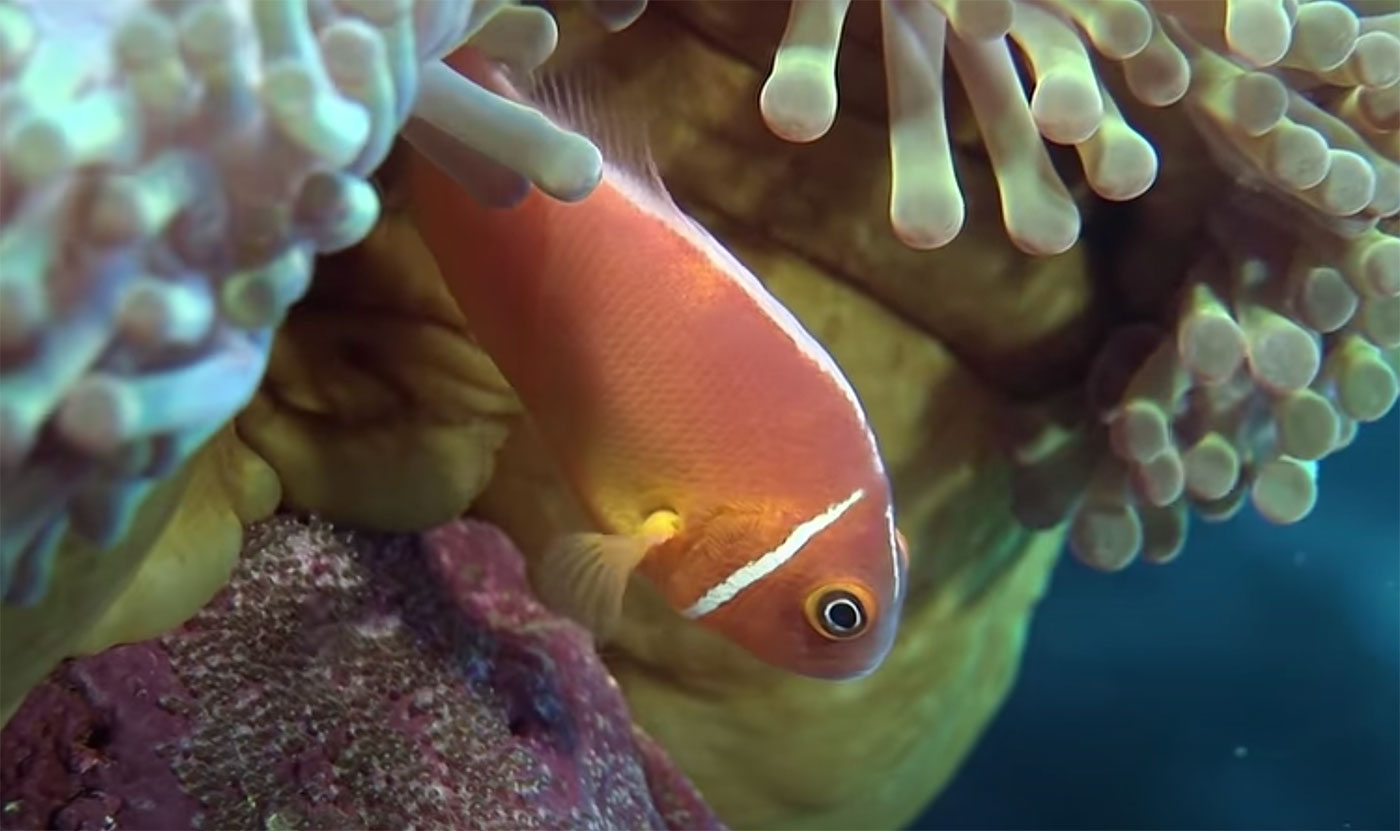
photos are by the author from recent dive trips.
In
it’s most basic form, science is simply systematic study
of phenomena. The Oxford Dictionary defines science a little
more elaborately as, “a connected body of demonstrated
truths or with observed facts systematically classified and
more or less comprehended by general laws, and which includes
reliable methods for the discovery of new truths.” There
are many moving parts to the definition and each matters in
deciding whether something is science. It has also been said
that the history of science consists of a series of conjectures
and refutations. That’s because in science, most conjectures
are wrong and few are right. In other words, scientists are
wrong more often than they are right. So one might more accurately
describe scientists as seekers of falsehoods. (This is one key
difference between the psyche of the scientist and that of the
reef keeper. Scientists accept error as inevitable and the uncovering
of errors of others as essential elements of scientific progress.
Many reef keepers seem uncomfortable with this notion.)
Scientific
knowledge has grown through the centuries as scientists have
built on the discoveries (and errors) of previous work. Observations
led to hypotheses, that in turn led to tests and experiments.
Some experiments supported hypotheses while others disproved
them, but each step of the way scientists learned a little more
about our world. Scientific methods refer to the use of tested
and accepted methods to study phenomena. The use of accepted
scientific methods lends credence to one’s findings and
help other scientists understand the results. It also helps
others replicate the studies to confirm their findings.
The
metals studies are useful in illustrating both the use and abuse
of scientific methods. In the following sections, I’ll
examine each stage of the studies and explain what is right
and wrong about the author’s methods and conclusions.
Scientific
work involves a series of steps, all of which determine the
accuracy and usefulness of the work. A misstep at any point
in the process can undermine the entire process, so each step
must be closely examined. Scientific papers generally begin
with an introductory section explaining the central question
under study. This section will generally review previous studies
and relevant literature. It will explain why the study is important,
and outline the hypotheses to be tested. In the metals articles
the author asserted that metal concentrations in the average
reef tank were significantly higher than on natural reefs and
that scientific studies had conclusively demonstrated that at
the levels found in reef tanks metals were toxic to marine organisms,
He proposed that metal accumulation in reef tanks might explain
why some tanks deteriorate over time (old tank syndrome).
When
critically examining research, one should first question the
premises of the author. Are the arguments of the author logical?
Given what we know, are his assertions reasonable? If they are,
will the approach he proposes address the issues he raises?
Methods-and why you can’t always
trust the government
Scientific
papers always have a methods section devoted to outlining the
methods used in the study. One way to judge a study is to examine
the methods used and see if the methods are a reasonable means
to test the author’s hypotheses. To prove that the average
reef tank has high levels of metals, one has to measure metal
levels in a reasonable number of tanks representing a cross
section of hobbyists. Ideally, a sample of participants would
be drawn reflecting all the possible variables that might affect
metal levels. The age of each system, the experience of each
reef keeper, the different sources of make-up water, and so
on should be considered in designing a sample. In the case of
this study, the author solicited the help of hobbyists who would
be willing to submit tank water for evaluation and pay for the
analysis. Ultimately, only 23 hobbyists submitted samples. In
statistical terms, this is a self-selected sample. Rather than
sample a cross section of tanks, the author simply accepted
whoever had the money and inclination to participant. As a rule,
self-selected samples tend to be unrepresentative of large populations.
With only 23 self-selected participants, one should be quite
cautious about assuming that any analyses of these tanks can
be extrapolated to the hobby as a whole.
The
methods section should also outline how the levels of metals
will be determined. In the metals articles, the author listed
the method as, “Inductively Coupled Plasma Emission Spectrometry
or ICP Scan, EPA method 200.7.” A long impressive name
like this lends an air of authenticity to the work. Most hobbyists
have probably never heard of the technique and are in no position
to judge the appropriateness of the method. In a scientific
paper, the methods section will often present an explanation
of why a certain technique was chosen. It will also explain
any limitations in the method. The series author, unfortunately,
did not address limitations in the method chosen. A review of
the scientific literature on the subject of measuring metals
in seawater finds significant problems with the ICP method.
(Crompton 1989) Saltwater is a complex soup of chemicals in
widely varying concentrations. For technical reasons addressed
in a recent column by Randy Holmes-Farley, an ICP scan has great
difficulty differentiating metals, particularly toxic metals.
(Holmes-Farley 2003) Scientists do use ICP scans to study seawater,
but the metals are first concentrated using resins or other
methods.
So
why has the EPA approved the use of ICP scans? Because they
are fast and inexpensive. The Federal government’s interest
is in finding a method that can provide cost effective data
for monitoring sites and enforcement of environmental laws.
Other methods are more sensitive, but more time consuming and
costly. Consequently, an EPA endorsement of any methodology
is not evidence that it is the most accurate or useful for scientific
studies.
Every
experiment and study has multiple potential errors, and it is
important to consider how the author deals with potential error.
The samples were collected by individual hobbyists and then
shipped to the author who in turn shipped the samples to the
lab. This means that 23 different people collected the 23 samples.
No attempt was made to filter particulates out of the tested
water, and it isn’t clear how careful the 23 hobbyists
were in collecting their samples. Under these circumstances,
the risk for contamination is great. The metals of interest
are in extremely small concentrations, and it would be easy
for a hobbyist to inadvertently introduce foreign substances
into his sample. For example, even if rinsed repeatedly, using
the same cup one uses to add supplements or feed the tank would
inevitably contaminate the sample water. In a study of professional
marine scientists, it was found that even professionals produced
wildly varying results when analyzing metals in seawater, probably
because of contamination. Because contamination is so easy when
testing for metals, very elaborate procedures have been developed
to make sure that contamination is minimized at each stage of
analysis. The author makes no mention of handling techniques,
so it is unlikely that the hobbyists involved used accepted
procedures for handling the water.
The
hobby tends to confuse accuracy and precision. A measurement
might be carried out to three decimal places and still be inaccurate,
whereas a measurement carried out to a single decimal point
may be much more accurate. ICP scans carry out most metal levels
to two decimal places, but does that mean the measurements are
accurate to that level? Not necessarily. Computer programs analyze
the results of an ICP scan, and then make their best estimate
of the levels detected. The stated detection level is the level
at which a single element can be detected. However, it does
not tell us how well the ICP machine can differentiate multiple
metals simultaneously, and that is what a scan does. Consequently,
the practical limits of detection are much less precise than
the theoretical limits of the technology. Because seawater contains
high levels of some metals like sodium and magnesium, ICP operators
make sequential dilutions of the samples to determine the concentrations
of some of the metals. Each dilution introduces another potential
for contamination and error. While professional labs do their
best to avoid such problems, detecting metals in seawater tests
the limits of even the most conscientious lab technician.
So
without going much further than the methods portion of the study,
one finds serious methodological flaws that raise questions
regarding the likelihood that valid data will come out of the
study. The small sample of reef tanks may not be representative
of most reef tanks. The method used to determine metal concentrations,
the ICP scan, has serious flaws as used here, and the handling
of the samples may have introduced contaminations.
Proud sponsor
of this column
Lies,
damn lies, and statistics
Mark
Twain once wrote that there were three kinds of lies: lies,
damn lies, and statistics. This brings us to the analysis portion
of the articles. Once one has collected the data, the next step
is to aggregate it into some sort of useful summary. Since the
goal of the study was to determine metal concentrations in reef
tanks, a logical first step would be to average the results
from all 23 tanks to determine what an “average”
tank looks like. On the face of it, this seems simple and obvious,
but as it turns out, one of the most serious methodological
mistakes in these articles occurred at this point.
An
average or mean is calculated by summing all the values and
dividing by the number of values. Consider five tanks that measure
as follows:
0.02
0.01
0.02
0.03
0.02
The
mean for the five tanks is 0.02, which seems like a reasonable
average value. We can also calculate something called the standard
deviation, which tells us how much the values vary from the
mean. In this case, the standard deviation is 0.01 which means
that two-thirds of all values are within 0.01 of the mean and
that 95% of all values are within 0.02, or two standard deviations
from the mean. What happens if one tank is very different from
the others? Let’s say that five different tanks measure
as follows:
0.02
0.01
0.02
1.00
0.02
In
this case, the mean is 0.21, ten times the mean of the first
example. While mathematically correct, a hobbyist should be
wary of assuming that for this sample of tanks, the mean is
synonymous with average. Four of the tanks were within .01,
so it seems like the “average” tank should be closer
to .02 but the one high value distorts the results. This points
out the most serious problem in using a mean to characterize
data. Means are sensitive to extreme values. In statistical
terms, the 1.0 value is called an outlier. It is a data point
so removed from the rest of the data that it is reasonable to
suspect that it is an error or aberration.
A statistician
will look at data and first determine whether the values are
reasonable. If outliers exist, he may exclude them, suggest
that the tests be repeated, or qualify the results by noting
the outliers. Another option is to use the median of the data
rather than the mean. This is particularly useful if one has
a limited data set and does not want to exclude any of the data.
The median is the mid-point in a distribution. It is half way
from the highest and lowest values. The median for both examples
is .02, which is probably closer to the average tank than the
mean value.
One
can calculate the median only if we have access to the original
data, and the author has refused to publish the data of individual
tanks. Consequently, we have no way to calculate the median
metal levels. The author did, however, provide standard deviations
for each of the examined metals, so we can make some inferences
about the range of values. High standard deviations indicate
widely varying values. For example, in the study cobalt had
an average value of .037 mg/l with a standard deviation of .031.
These numbers suggest that two-thirds of all tanks have cobalt
levels between .006 and .068, a ten fold difference. Furthermore,
it also tells us that 95% of reef tanks have cobalt levels between
-.025 (let’s call that zero) and nearly 0.1 mg/l. Such
a wide range of possibilities raises the question of whether
we can draw any conclusions about the level of cobalt in an
average reef tank based on these data.
Large
standard deviations should be a red flag for anyone reviewing
the results of a study. In this case it means that for some
metals, the concentration levels varied widely among the 23
tanks. It also means that we should be very cautious about assuming
that the mean values in the articles really represent the average
reef tank. This by itself is a serious problem for the study,
but an even more egregious statistical error was committed in
analyzing the results. Some of the tanks had metal levels below
the detectable limits of the ICP scan. For example, if the level
of antimony detected was less than .01 mg/l, the print-out read
<.01. In other words, the machine was saying that we know
the level is no higher than .0099 mg/l, but there is no way
of knowing how much lower it might be.
The
author chose to ignore any undetectable levels when calculating
mean values. For example, the detectable limit for arsenic is
.01 mg/l. One tank had a level of .02 mg/l and none of the other
tanks had detectable levels. The author then claimed that the
mean for arsenic was .02 mg/l. Is this reasonable? Excluding
22 of 23 tanks because the ICP scan detected no arsenic potentially
creates the false impression that high levels are present in
the average tank. A more reasonable method to treat undetectable
levels is to use the detection level to calculate a mean. Using
the detection level for the other 22 tanks, mean arsenic becomes
.01, half what the author claims. And at .01 mg/l, the mean
probably over estimates the level of arsenic in the average
reef tank.
Proud
sponsor of this column
Once
the author had calculated means for all of the metals, he then
proceeded to show elevated metals by comparing the tank test
results with published metal levels of natural seawater. The
tank concentrations were much higher than the published NSW
concentrations. Is this conclusive proof? Not necessarily. The
published concentrations of metals in natural seawater is the
result of elaborate studies using sophisticated equipment and
procedures. None of the published studies used ICP scans to
determine metal levels.
One
might take the position that if levels found in reef tanks exceeds
the detection limits of ICP, the method of testing is irrelevant;
Levels still exceed NSW. The reality is somewhat more complex.
As I pointed out earlier, the practical detection limits of
ICP when testing seawater are considerably higher than the theoretical
limits. Because of this, pristine natural seawater might test
higher in metals using ICP scan than using the methods of published
studies. Because of this possibility, the author should have
tested natural seawater along with reef tank water to see if
higher reef tank metal concentrations were an artifact of the
chosen methodology.
In
part two, we’ll look at metals in natural seawater using
the ICP scan, We’ll also take a look at metal concentrations
in several reef tanks not included in the original study to
see if reef tanks are really the toxic waste dumps that the
author believes they are.
References
Crompton,
T.R. 1989. Analysis of Seawater. Butterworths &
Company, London