Nutritional
Value of Live Foods for
the Coral Reef Aquarium, Part 1
Proud
sponsor of this column
I am often asked
questions about fish nutrition and live foods for the reef
aquarium, so I wanted to try to write a general overview
article on the subject. Therefore, instead of giving you
a list of recommended foods to feed your fish, I have decided
to take a more general approach and talk about all the different
options for feeding a living miniature reef aquarium. The
main reason for me doing this is that although fish are
certainly an interesting an integral part of many reef tanks,
there are a whole suite of other animals that require food
as well. Many of the foods that are most important to a
reef aquarium are rarely discussed, and are quite often
inappropriate or impractical for a fish-only tank. That
is not to say that if you have a fish-only tank that you
should stop reading this article. Quite to the contrary,
I hope that this article will provide some important information
to everyone who owns a marine tank, regardless of what you
chose to keep in it: fishes, corals, or other invertebrates.
However, as I wrote this article, I quickly discovered that
to do any justice to the subject was well beyond the scope
of a single article, so I will try to cover the subject
very briefly in a two part series. Just so that you know
what to expect, my next installment of this column will
be the conclusion of the article.
So why am I
taking the time at the beginning of this article to point
out that feeding is not just about fish? Well, because there
are entire groups of coral reef invertebrates that feed
on things too small for a fish to even see, let alone capture
and eat. Those animals are typically called "filter-feeders"
and most feed on tiny plants and animals (called plankton)
that spend their entire lives floating freely in the water
column. If there are enough of these tiny plankton in the
water, our aquarium water becomes "cloudy" and we usually
do something to remove those particles and make the water
clear and "clean" once again. It is, of course, important
to maintain very high water quality for our animals, especially
in a reef aquarium, but there are entire groups of coral
reef animals (such as feather-duster worms, mussels, clams,
tunicates, barnacles, etc.) that thrive on those same particles
that we work so hard to filter out. Obviously, if we would
like to keep any of those animals in our aquaria, we need
to provide them with some food, or like a starving fish,
they will not survive for long in the aquarium.
With that in
mind, I wanted to take the time in this article to discuss
the full range of foods required to keep a thriving coral
reef alive in nature, and discuss the options for providing
some of those same foods to your aquarium at home. I want
to emphasize right up front that not all tanks will benefit
from all the food types that I will discuss in this article.
Obviously, if you're keeping a tank filled with only large
predatory fishes (such as grouper, lion fishes, eels, or
snapper, etc.), adding plankton that are too small for your
fish to even see will likely hurt more than it will help
conditions in your tank. Conversely, if you're keeping a
miniature reef aquarium without any large fish in it, dropping
large chunks of meaty food in your tank will almost certainly
be a bad idea! You have to use a little common-sense here,
and I leave it to you to take this information and determine
what changes, if any, you should make to the way in which
you are currently feeding your aquarium.
OK, now that
we've gotten that out of the way, let's start to talk about
food. There are two main issues when it comes to feeding
any animal: 1) are the particles of the right size and taste
that they will be eaten, and 2) is the food providing the
proper nutritional value to keep your animal healthy? Obviously,
if the food is too big or too small for your animal to eat,
the actual nutritional value is not particularly important,
because none of it can actually be eaten. On the other hand,
even if it is eaten, and does not provide adequate nutrition,
then your animals will not thrive either. So we have to
address both considerations when it comes to feeding.
You may be asking
yourself, "How can food be too big? Fish can simply bite
out chunks of the appropriate size to swallow, right?" While
that is true of fish with powerful jaws, it is not true
for feather-duster worms or clams that don't have any jaws
to bite into their food. For these types of animals, and
in fact virtually all filter-feeders, if the food particles
don't come in the correct size to start with, they may as
well be a piece of sand, because they cannot be eaten even
if they have the perfect nutritional profile, and these
animals will starve to death regardless of the amount of
this kind of food. If on the other hand, we try to feed
nothing but newly-hatched baby brine shrimp to an adult
panther grouper, it will also be unable to feed properly,
and will likely starve. Although we rarely think of size
being a concern for proper feeding, it is critically important
to most marine animals.
I plan to go
through a list of most of the easiest and/or most nutritious
potential live foods available on the market right now in
this article, but the order may seem a little random to
you. Although I jump back and forth between very different
types of foods at the beginning of the article, there is
a reason for the order in which I have chosen to discuss
each food type. The main reason is that each of the long
sections that follow are probably the best example (food
type) by which to introduce some important issues to you,
before ending the article with a more traditional list of
the pros and cons of each food. In any case, I will discuss
the size and nutritional value of each food type in more
detail below.
1) Phytoplankton
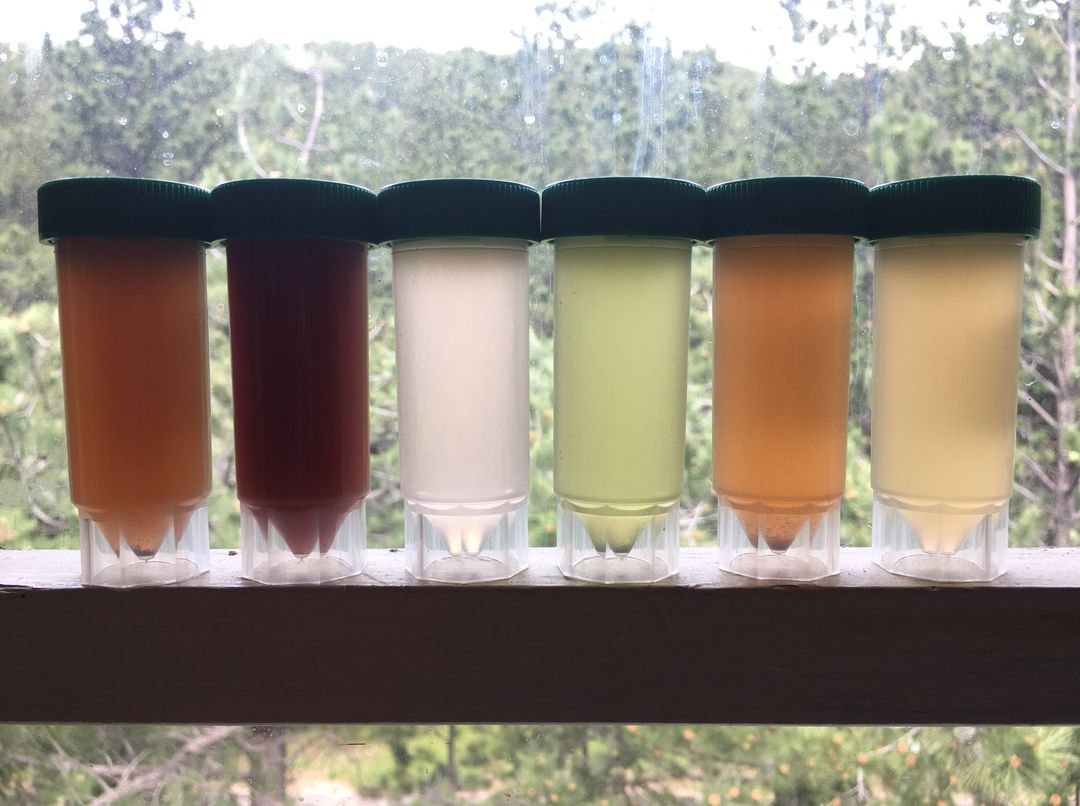
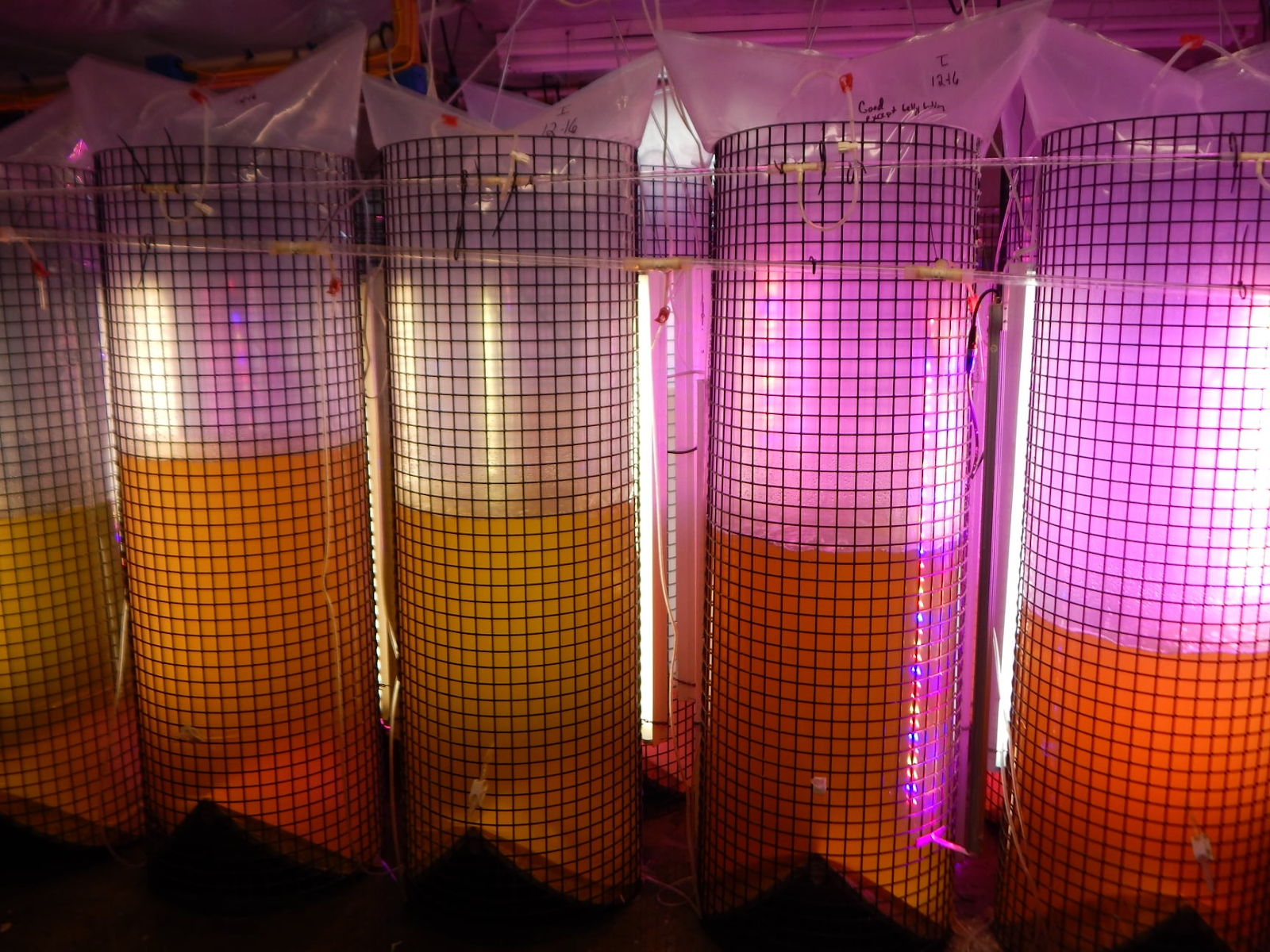
Phytoplankton
is a word made up of two basic roots "phyto" - pertaining
to plants, and "plankton" - meaning basically "floaties
in the ocean." So, phytoplankton is just a technical word
for tiny floating plants (such as diatoms and dinoflagellates)
which serve the same role in the food chains of the oceans
as grass and shrubs serve on land; namely small things eat
them, which are in turn eaten by bigger things and so on
down the line. Many coral reef animals feed directly on
phytoplankton. In fact, even those animals that do feed
directly on phytoplankton still rely on the nutrition gained
from these tiny plants: even the largest predators are,
at some level, eating something that feeds on something
else that feeds on phytoplankton or some other marine algae.
These tiny floating
plants (on the order of 2-20 micrometers, or roughly 8/1,000
- 8/10,000 of an inch) are the primary food for a variety
of coral reef invertebrates (such as feather-duster worms,
sea apples, mussels, and flame scallops to name a few).
Despite the fact that there are many animals sold in most
petshops that rely exclusively on phytoplankton to survive,
these food items are probably the least common element included
in feeding an aquarium. If you hope to keep any of these
animals in your aquarium, you obviously need to provide
them with food, and they simply cannot get by with left-overs
from your fish, or traditional "invertebrate foods" based
on pea-flour and yeast sold in most petshops. Like any other
pet, feather-dusters, flame scallops or whatever need to
be fed on the appropriate type of food to survive, and for
these animals, the only appropriate type of food currently
available is phytoplankton.
In addition
to being the primary food for many filter-feeders, phytoplankton
also play an important role in the nutrition of many larger
animals such as shrimps and fishes. However, these foods
are far too small for shrimps or fishes to eat, so why are
they so important? Well, a number of essential nutrients
provided by marine algae in general, and phytoplankton in
particular, cannot be synthesized by animals, and are therefore
extremely important components of a healthy diet.
All animals
require some amount of certain polyunsaturated fatty acids
in their diet, but in clinical trials two specific types
of fatty acids are repeatedly indicated as being essential
to animal health. These two general classes of essential
fatty acids are Omega-3 and Omega-6 fatty acids, which are
an essential component of cell membranes, and particularly
important in the normal development of eye, nerve and heart
tissue (I'll come back to this in more detail below). The
difference between these two classes is unimportant (the
name denotes their chemical structure), but the fact that
they are required for normal growth and development, as
well as immune function, is an important thing to know (both
for yourself and for your pets). Omega-6 fatty acids are
primarily derived from animal sources, while Omega-3 fatty
acids derive primarily from plants. Omega-6 fatty acids
are generally fed far in excess of their need, because animal
fats are commonly included in any commercially available
food added to our tanks. Omega-3 fatty acids, on the other
hand, are frequently lacking in the diets of both humans
and our pets, and the ratio of the more abundant Omega-6
to Omega-3 fatty acids is typically 4 or 5 (and sometimes
as high as 25) times what it would be in nature. Because
fatty acids cannot be converted from one basic structure
to the other, a proper balance of both classes of fatty
acids is important to the health and proper development
of all animals, although the exact nutritional requirements
vary by species (and most are not known exactly for aquarium
species).
You may have
heard about the long chain Omega-3 fatty acids in the news
with regards to human and/or pet nutrition, but they play
an equally important role in the nutrition of your fishes
and coral reef invertebrates as they do for your dog, or
for you. The two Omega-3 fatty acids of primary interest
to fish breeders for the past 20 years have been the highly
unsaturated fatty acids (HUFA for short) DHA (docosahaxaenoic
acid: 22:6 n-3) & EPA (eicosapentaenoic acid: 20:5 n-3)
which are synthesized almost exclusively by marine algae.
In fact, one of the major breakthroughs in the aquaculture
of marine animals was the discovery that certain highly
unsaturated fatty acids were an essential part of the diet,
and without them, nutritional deficiencies or arrested development
are common problems (reviewed by Watanabe et al. 1983).
For example,
newly hatched brine shrimp (Artemia) are a simple
and easily cultured food for the larvae (juveniles) of many
marine organisms, but because these shrimp typically lack
sufficient quantities of EPA & DHA, most marine fish
fed exclusively on baby brine begin to die off within a
week or so after hatching (reviewed by Holt 2003). The widespread
success of culturing and breeding many marine animals has
come only since the discovery of the importance of including
these essential fatty acids in the diet. DHA has been shown
to be important in the normal growth and development of
the central nervous system, and in particular the brain,
eyes and reproductive organs, while EPA is important to
cardiovascular health and plays an essential role in certain
immune responses. Among the common symptoms of EPA/DHA deficiency
in marine animals are1) Sudden fright syndrome - shock,
convulsion or even death when the animals are frightened;
2) poor vision, and reduced ability to locate prey; 3) worn
or mysteriously eroding fins; 4) poor growth rates or sudden
massive die offs during early development; 5) low egg viability
or infertility; 6) high mortality and disease rates, particularly
when under stress (e.g., shipping or acclimation), and 7)
inability to properly heal after being wounded (reviewed
by Rainuzzo et al. 1997; Masuda et al. 1998; Fredalina et
al. 1999; Furuita et al. 1999; Sargent et al. 1999; Ishizaki
et al. 2001; Holt 2003). By "enriching" food items such
as Artemia with phytoplankton prior to feeding them
to the marine animals being raised, the amount of EPA &
DHA is often increased to the point that die-offs and developmental
problems previously encountered are completely avoided (reviewed
by Rainuzzo et al. 1997; Sargent et al. 1999; Holt 2003).
However, additional
research has shown that it is not sufficient to simply add
a lot of EPA & DHA to the diet of marine fish. Our understanding
of the role of these essential fatty acids in the diet of
marine fishes has evolved from trying to determine the optimal
levels of EPA & DHA in the diet to consideration of
the relative ratio of EPA & DHA as well as AA (arachidonic
acid: 20:4 n-6) in the diet of marine animals (Sargent et
al. 1999). Simply adding these fatty acids without consideration
of the ratios provided in the diet of captive marine species
may ultimately be more harmful than helpful. In a recent
review by Sargent and colleagues (1999), they conclude that
a mixed diet is required for the healthy maintenance of
marine fish species. They concluded that the best diet for
larval marine fish is one that contains roughly 10% of the
dry weight as Omega-3 highly unsaturated fatty acids with
less than 5% triacylglycerols. Any other mixture resulted
in a nutritional imbalance that can, in some cases, be as
serious as the absence of these essential fatty acids from
the diet in the first place (reviewed by Rainuzzo et al.
1997; Kobayashi et al. 2000).
So, even though
your fish can't possibly eat phytoplankton, hopefully I
have managed to convince you that the nutrition provided
by these tiny plants is ultimately important to the health
of your fish as well as your filter-feeding invertebrates.
Having said that, there are several ways in which to get
the nutritional benefit of phytoplankton to your fishes.
As I just mentioned, you could enrich live foods to some
degree by feeding them on phytoplankton for a few hours
before feeding them to your fish (e.g., McEvoy et al. 1998;
Olsen et al. 2000; Sorgeloos et al. 2001). However, that
is not nearly as simple with dead or frozen foods, and so
the other option is to use a liquid HUFA supplement for
adding to your food. There are several such products on
the market (e.g., Selcon, Zoecon, etc.), and you should
be able to locate a number of these by flipping through
the pages of any hobbyist magazine. Enrichment has been
so successful that every commercial aquaculture outfit of
which I am aware uses either phytoplankton or a liquid HUFA
supplement as part of their regular feeding routine (reviewed
by Rainuzzo et al. 1997; Sargent et al. 1999; Sorgeloos
et al. 2001).
Proud
sponsor of this column
2) Feeder
fish (guppies and goldfish)
It is much more
intuitive to realize that nutritional value is a major concern
for feeding our animals. One of the most common mistakes
that people make with feeding large predatory fishes (such
as groupers, snappers or lion fishes), is to give them feeder
goldfish. There are many reasons that people usually give
feeders to their marine fishes. First, virtually all of
these predatory fishes are still wild-caught, and when first
brought into captivity, they do not receive the proper cue
to initiate feeding from flake or frozen foods, and the
addition of a struggling live fish (such as a freshwater
goldfish tossed into a marine tank) is a powerful feeding
cue to get these fish to immediately attack the prey. That
means that the owner doesn't have to invest any time in
training the lionfish to accept other foods. Second, because
goldfish are so slow relative to most marine fishes, it
is easy for the lionfish to catch. Third, the use of goldfish
is a simpler and more cost effective way to feed these guys
than to use a marine "feeder" fish. I think that all of
these factors come into play with the decision of most pet
shops to feed goldfish to their lionfish. Because a good
feeding response is one of the criteria that most of us
use to decide whether or not a fish is healthy and worthy
of purchase, this is an important thing for any pet shop
to be able to demonstrate to us as potential buyers. So,
adding a feeder goldfish to a tank of lionfish is one of
the best sales techniques available to a retailer. You have
to admit, there are few feeding responses among marine aquarium
fishes quite so dramatic as watching a lionfish hunt and
then engulf a goldfish whole! Whether we are willing to
admit it or not, deep down, most people get a thrill from
watching a predator hunt down and devour live prey. In fact,
I suspect that is a large part of the reason that many people
decide to purchase a lionfish in the first place.
I am not saying
that there is anything wrong with the thrill of seeing a
lionfish hunt. In fact, many zoos and public aquariums now
realize that providing live prey to active and intelligent
predators makes for a much healthier and happier animal.
It seems that the thrill of the hunt extends to our pets
as well, and without the challenge of hunting live prey
(or some similar puzzle-solving challenge or enrichment)
many zoos have found that their animals develop behavioral
and/or health problems. However, the nutritional value of
feeder goldfish for a marine predator is a much more serious
concern. So, now let's get into the discussion of why you
should not use feeder goldfish for your lionfish
(or any other marine predatory fish) - I'll explain it in
more detail below, but the short-and-sweet answer is that
freshwater fish make a lousy food for marine predators.
A buddy of mine
is a fish parasitologist who used to volunteer with a couple
of veterinarians at public aquaria to do autopsies on dead
fish. He was telling me that the single most common cause
of death he's seen among marine fishes at public aquaria
is "fatty liver disease." Although not really a disease,
fatty liver is a serious condition in which the liver becomes
enlarged, often to the point that it interferes with, or
even crushes, the other internal organs and is apparently
the cause of death. This condition seems most commonly to
be the result of poor diet, and the consensus of several
well-known fish pathologists is that the single most common
cause of fatty liver disease is a diet high in saturated
fats, although biotin and/or choline deficiencies, toxemia
and "unknown nonspecific causes" are also possible factors.
My buddy said that he also sees the same fatty liver disorder
in a variety of marine fishes (most commonly groupers and
lionfishes) from pet shops and hobbyists who fed these predators
on a diet of primarily live goldfish. Although bacterial
diseases and parasitic infections claim many more fish than
nutritional deficiencies(Francis-Floyd and Klinger 2003),
fatty liver disease is probably one of the most common of
fatal nutritional problems.
"...
the short-and-sweet answer is that freshwater fish make
a lousy food for marine predators."
Aside from the
fatty liver "disease," providing the wrong proportions of
the various fats in the diets of marine fishes have been
shown to result in reduced growth, lower percentages of
muscle tissue, liver degeneration, higher susceptibility
to bacterial and viral infection, and a decrease of hemoglobin
in the blood cells among other nutritional problems. All
of these things suggest there is a very real, and potentially
fatal, consequence to feeding your favorite marine predator
primarily (or only) on freshwater feeder fish (such as goldfish
or guppies).
Because there
is no real data for the nutritional profiles of aquarium
fishes, I did a survey of the aquaculture literature to
find the nutritional composition of feeder fishes. Of course,
I couldn't find the composition of guppies and goldfish,
so I did the best I could with other fish species that are
regularly examined for nutritional profile by the US Department
of Agriculture for human consumption. A quick comparison
of farmed freshwater catfish & carp to marine cod &
snapper (these seemed to be the most reasonable proxies
for feeders and lionfish that I could find the exact nutritional
composition in my search) shows some major differences in
the nutritional profiles. Unfortunately, there is little
interest (or money) to develop similar data for aquarium
fishes, so although these are not actually the exact values
for guppies and goldfish, the general trends shown in the
summary tables below between the freshwater fish and the
marine predators should be informative enough:
Table
1: Total amount of various nutrients in
a 100g sample of tissue from selected species of potential
food fish as compiled by the US government (Dept of
Agriculture) for nutritional comparisons of foods that
are available to consumers.
.
Energy
Protein
Total
Lipid
Vit.
B complex
Vit.
C
Freshwater
fishes
Catfish
565
kj
15.55
g
7.59
g
3.5
mg
0.60
mg
Carp
531
kj
17.83
g
5.60
g
2.8
mg
1.60
mg
Anadromous
/ Brackish fishes
Wild
Salmon
594
kj
19.84
g
6.34
g
11.0
mg
0
farmed
Salmon
766
kj
19.90
g
10.85
g
10.0
mg
3.90
mg
Striped
Bass
406
kj
17.73
g
2.33
g
3.3
mg
0
Marine
fishes
Cod
343
kj
17.90
g
0.63
g
2.5
mg
2.90
mg
Snapper
418
kj
20.51
g
1.34
g
1.5
mg
1.60
mg
Freshwater
crustaceans
Crayfish
301
kj
14.85
g
0.97
g
2.6
mg
0.50
mg
Marine
crustaceans
mixed
Shrimp
444
kj
20.31
g
1.73
g
3.0
mg
2.00
mg
Spiny
Lobster
469
kj
20.60
g
1.51
g
4.8
mg
2.00
mg
There are some
obvious differences between species with freshwater, brackish
and marine origins. For example, marine species tend to
have less total energy per unit weight, but more protein
and substantially less fat. Not surprisingly, brackish species
tend to fall between the two extremes, although in most
cases other than protein content, the brackish species tend
to more closely resemble freshwater species in their nutritional
makeup. The most striking and important difference between
marine, freshwater and brackish species however, is the
much lower fat content of marine foods. A closer
look at the lipid profiles of these species groups gives
a better picture of how the groups differ and where it is
possible to artificially reduce that difference.
Table
2: Amount of saturated fat and a number
of essential highly unsaturated fatty acids (HUFA) for
each of the species groups listed in Table 1. Values
for Saturated fats, LA (Omega-6, linoleic acid - 18:2),
ALA (Omega-3, alpha-linolenic acid - 18:3), EPA (Omega-3,
eicosapentaenoic acid - 20:5), and DHA (Omega-3, docosahexaenoic
acid - 22:6) are again measured in grams from a 100g
tissue sample as presented in Table 1, above. These
fatty acids are among those typically included in HUFA
enrichment products to supplement the diet of marine
fishes in captivity. Small, non-zero numbers are denoted
by < 0.01.
.
Saturated
Fat
LA
(18:2)
ALA
(18:3)
EPA
(20:5)
DHA
(22:6)
Freshwater
fishes
Catfish
1.77
0.88
0.10
0.07
0.21
Carp
1.08
0.52
0.27
0.24
0.11
Anadromous
/ Brackish fishes
Wild
Salmon
0.98
0.17
0.30
0.32
0.29
farmed
Salmon
2.18
0.59
0.09
0.62
1.29
Striped
Bass
0.51
0.02
0.02
<
0.01
<
0.01
Marine
fishes
Cod
0.08
0.01
<
0.01
0.08
0.13
Snapper
0.28
0.02
<
0.01
0.05
0.26
Freshwater
crustaceans
Crayfish
0.16
0.08
0.03
0.12
0.03
Marine
crustaceans
mixed
Shrimp
0.33
0.03
0.01
0.26
0.22
Spiny
Lobster
0.24
0.01
<
0.01
0.27
0.11
The lipid profiles
between freshwater and marine species are very different,
and the amount of saturated fat in the average freshwater
prey fish is roughly 8 times that of the average marine
fish. But, if we use catfish and carp as a reasonable proxy
for feeder goldfish, then the picture is even worse, with
a single feeding of goldfish providing more than 20 times
the saturated fat as a feeding of the average marine prey
fish. It is hard to imagine that incorporating 20 times
more saturated fat into the diet of any animal (you or your
fish) is not going to have a substantial effect on long-term
health!
Table
3: Averages of the nutrient values presented
in Tables 1 & 2. If mixed species averages were
available in the U.S. government (Dept of Agriculture)
database, I have used them here. Where mixed species
averages were not available, I tabulated the records
for up to a dozen species (I stopped after 12 if there
were more) in each category and calculated the average
for each for presentation here.
.
Energy
Protein
Total
Lipid
Vit.
B
Vit.
C
Freshwater
fish
548
kj
16.69
g
6.60
g
3.15
mg
1.10
mg
Brackish
fish
589
kj
19.16
g
6.51
g
5.87
mg
1.30
mg
Marine
fish
381
kj
19.21
g
0.99
g
2.00
mg
2.25
mg
Freshwater
Crustacean
301
kj
14.85
g
0.97
g
2.60
mg
0.50
mg
Marine
Crustacean
457
kj
20.46
g
1.62
g
3.90
mg
2.00
mg
.
Saturated
Fat
LA
ALA
EPA
DHA
Freshwater
fish
1.43
g
0.70
g
0.19
g
0.16
g
0.16
g
Brackish
fish
1.22
g
0.28
g
0.14
g
0.32
g
0.53
g
Marine
fish
0.18
g
0.01
g
0.01
g
0.06
g
0.19
g
Freshwater
Crustacean
0.16
g
0.08
g
0.03
g
0.12
g
0.03
g
Marine
Crustacean
0.29
g
0.02
g
0.01
g
0.26
g
0.16
g
In stark contrast
to the advice I have heard dispensed in several pet shops
to supplement goldfish and/or guppies with Selcon or Zoecon
(highly unsaturated fatty acid supplements) to make up for
the fact that these animals come from different habitats,
in this case such "enrichment" will only make the situation
worse, not better! Supplementing the fat profile of a goldfish
with HUFA would be roughly equivalent to making your BigMac
more nutritious by dipping it into vegetable oil first.
Sure, it's better than dipping it into lard, but still not
going to change the fact that you're getting more fat in
that single meal than you're ideally supposed to eat in
an entire day, and it only makes things worse than if you
had not dipped the burger at all. . . .
So obviously
feeder goldfish are not the best choice of a staple food
for your marine pets, but what about guppies or mollies?
These are brackish fish that are frequently adapted to saltwater
- do these provide better nutrition than feeder goldfish?
The simple answer is "I don't know." My gut feeling is that
because brackish-water fishes are somewhat intermediate,
but are generally closer to the lipid profiles for freshwater
than they are for saltwater species, guppies and mollies
would likely be inordinately high in saturated fats as well.
Probably closer to the roughly six times the amount of saturated
fats found in the average brackish fish rather than the
roughly twenty times as high likely to be found in goldfish,
but still high nonetheless. Perhaps that makes these fish
a better choice than goldfish for a live food item to be
fed to your lionfish until it can be weaned onto frozen
silversides or some other marine staple food. David Cripe
of the Monterey Bay Aquarium tells me that he has used saltwater
acclimated guppies as food for marine fishes that he has
been rearing, but these are usually fed for only a short
period of time until the larvae are switched onto other
foods. It seems unlikely to me that the occasional feeding
of saltwater acclimated guppies or mollies will prove to
be a problem for marine predatory fish, but as I said earlier,
this is just my gut feeling, and I am really just guessing
here because there are no fatty acid profiles available
for any of the aquarium species we're discussing here. However,
given the data above it seems that ghost shrimp or even
freshwater crayfish would be the best choice to feed your
lionfish (or whatever) until you can train it to take frozen
marine prey fish.
Proud
sponsor of this column
The reason I
say that is because the nutritional profile is not nearly
so different between freshwater and marine crustaceans,
and in fact, in this case, the freshwater animals are simply
deficient in the amount of fats provided. This is good news
for aquarists because it means that by simply supplementing
a diet of crayfish or ghost shrimp with an occasional boost
of some HUFA enrichment product (either by gut-loading,
soaking or injecting the "feeder" animals), you're likely
to provide a perfectly suitable diet for long-term care
of a marine predator such as a lionfish or grouper. This
is easy an inexpensive to do, and once your fish is eating
well on these prey, you can slowly start trying to hand
feed it. Start off by hold the live shrimp in your fingers
and let the fish come close to them before letting the shrimp
go. After a few times, the fish will usually recognize that
your fingers in the tank means food, and start coming to
investigate them as soon as you put them into the tank.
Start to hold onto the shrimp longer and longer until the
fish starts to come and take the live food from your fingers
before you let it go. Once your lionfish will take live
ghost shrimp from your fingers, then you can try some recently
dead ones, and then eventually move on to frozen shrimp.
It takes some time, effort and patience, but I have yet
to find a fish that I could not train in this way, if
you invest the effort.
3) Ciliates
& Rotifers
Although rotifers
and ciliate protozoans are a small and generally uninteresting
group to almost everyone else, they are quite well known
among marine aquarists as the food of choice for breeding
most saltwater fishes and many invertebrates. These nearly
microscopic to microscopic little critters make a living
in a wide variety of ways, ranging from filter-feeders to
predatory species that feed on other rotifers and/or ciliates.
Many of the most popular reef fishes (including most of
the butterflies, angels and wrasses, to name a few) spawn
tiny pelagic eggs that hatch into small larvae with mouths
too small to eat anything larger than a ciliate. Studies
on the natural diets of fish larvae reveal that they are
composed largely of micro-zooplankton including protozoans
(primarily tintinids, ciliates & foraminiferans), dinoflagellates,
larvae of barnacles and molluscs, and copepod eggs and nauplii
(Holt 2003). Planktonic diatoms are also eaten, and usually
account for about 5% of the total content of larval fish
guts (Holt 2003). The guts of wild-collected fish larvae
contain a variety of these micro-plankton, with prey items
ranging between 3 and 100 μm in length, with the vast
majority of the gut contents being less than 60 μm
(Holt 2003). Thus, the larvae of tropical marine fishes
are simply too small to eat even tiny newly hatched brine
shrimp (~5 times bigger than the largest prey found in the
guts of wild-collected fish larvae), and smaller sources
of food (such as rotifers and ciliates) are necessary if
you hope to feed the early stages of most marine ornamental
fish species.
A
Rotifer with Nannochloropsis sp in its gut
- 400X magnification
The tiny size
and enormous reproductive potential of rotifers (and to
a lesser extent ciliates) makes them a popular choice as
a food item among breeders of marine fishes and invertebrates.
For example, under ideal conditions, a single female rotifer
typically produces an average of 6 daughters per day and
each of those grow to maturity and begin to produce their
own offspring (the most commonly used of these animals are
parthenogenic, and females produce daughters asexually
without the need for their eggs to be fertilized) within
24 hours. At that rate, a single rotifer can give rise to
approximately 134,455 offspring in only 7 days! Obviously,
it does not take many rotifers to start and maintain a viable
culture from which to feed your aquarium or larval culture
project. The tiny size of rotifers, together with the relative
ease with which they are cultured, and the very high reproductive
rate together make these animals a popular choice for feeding
many tiny and obligately suspension-feeding marine animals.
Although these
tiny creatures are easy to raise and of the correct size
for many marine fish larvae, sadly, they are not particularly
nutritious. In fact, it is only by stuffing them full of
nutritious food that they themselves make a reasonable food
for juvenile fishes and suspension-feeding marine invertebrates.
I think that Martin Moe(Moe) has one of the best analogies
for this that I have seen: rotifers are the equivalent of
a grocery bag, you could swallow it, but if it is empty,
it is not very nutritious at all. If rotifers are cultured
on pea-flour and yeast-based meals, they may well grow,
but they do not provide much nutrition to juvenile fishes.
In fact, in most cases larvae of coral reef fishes fed exclusively
on plain rotifers (ones that are not enriched with phytoplankton
or a commercial HUFA supplement) fail to complete their
larval stage (e.g., Moe 1997; Wilkerson 2001; reviewed by
Holt 2003). Rotifers raised on an insufficient diet would
be the human equivalent of filling that grocery bag with
potato chips, soda and candies: it could well be very tasty,
but it would not be very nutritious, and if it were the
only food available to you, you would not remain healthy
for long. On the other hand, rotifers cultured on phytoplankton
and enriched with a highly-unsaturated fatty acid (HUFA)
supplement (which I discussed at length above) are potentially
very nutritious. In order to make this analogy a little
more real for you, researchers showed that Pacific threadfin
larvae raised on enriched rotifer diets had significantly
higher survival in response to various stressors than siblings
reared on unenriched rotifers (Tamaru et al. 1998).
However, just
to make things more complicated, it turns out that you cannot
simply dump in a bunch of rotifers to a tank and call it
fed: it has been long known that the actual ratio of fish
larvae to their prey in a tank makes a huge difference to
the survival and growth rate of the animals (e.g., Houde
1977; reviewed by Tamaru et al. 2003). For example, researchers
found that fish larvae strike at prey in the approximate
rate of encounter early in development, but begin to actively
hunt for food as they continue to develop. Although it appears
counter-intuitive, it turns out that growth and survival
can be equally reduced by a lack of food OR an over-abundance
of food! The experiments revealed that the highest survival
and growth of fish larvae was obtained by maintaining an
approximate ratio of 10 rotifers per milliliter for densities
between 25 and 50 fish larvae per liter (Tamaru et al. 1991).
Although this
may sound like a bunch of hot air to some readers, aquaculture
facilities and home fish breeders discovered many years
ago that rotifers can grow well on a whole suite of foods
(ranging from phytoplankton to pea-flour and yeast based
"invertebrate foods" and even V-8 juice!), but despite the
fact that you have a lot of rotifers in culture, they perform
poorly when fed to juvenile fishes (in terms of growth and/or
survival of the larvae). Many articles in various hobbyist
magazines have reported successful spawning of marine fishes
over the years, but until the past 5 years or so, the majority
of them also reported a sudden massive loss of the larval
fish within a week or so of when they first start to feed
(e.g., Moe 1997; Wilkerson 2001; reviewed by Holt 2003).
To date, the single biggest hurdle to rearing the larvae
of marine fishes in captivity remains first-feeding, the
period during which fish larvae switch over from internal
yolk stores to capturing planktonic prey (reviewed by Holt
2003). As I explained above, unenriched rotifers may be
accepted by some fish larvae, but even well-fed larvae show
reduced growth and survival rates relative to sibling larvae
fed on properly enriched rotifers (Tamaru et al. 1998).
The method of enrichment most common in the hobby is probably
enrichment with Selcon or Zoecon. However, researchers found
that survival of rotifers in culture medium enriched with
this concentrated lipid emulsion was very low: after 24
hours of enrichment, the number of live rotifers in culture
dropped from an average of ~2000/ml to ~400/ml (Tamaru et
al. 2003). In contrast, rotifers enriched with a concentrated
algae paste (Reed Mariculture Instant Algae) remained at
~2000/ml throughout the enrichment process. So, although
these concentrated HUFA products work superbly for enriching
food items for larger fishes, they do not seem to be particularly
suitable for enriching live rotifers. Obviously the method
of enrichment also plays an important role in the availability
of suitable food for the larvae of marine fishes.
Overall, rotifers
enriched with phytoplankton and HUFA appear to provide a
suitable food for the juveniles of a number of marine fish
species, and a number of species were first cultured successfully
when fed on enriched plankton such as rotifers (reviewed
by Watanabe et al. 1983).
OK, so that
is probably more information than most people would like
to know about any of these particular food sources, so I
will stop here for this column. Next time I will continue
the discussion with brine shrimp, tubifex & black worms,
freshwater crustaceans, mosquito larvae, and macroalgae,
nori & leafy vegetables.
Francis-Floyd
R, Klinger R-E (2003) Disease diagnosis in ornamental marine
fish: A retrospective analysis of 129 cases. In:
Cato JC, Brown CL (eds) Marine Ornamental Species: Collection,
Culture & Conservation. Iowa State Press, Blackwell,
Ames, Iowa, pp 93-100
Fredalina BD,
Ridzwan BH, Abidin AAZ, Kaswandi MA, Zaiton H, Zali I, Kittakoop
P, Jais AMM (1999) Fatty acid compositions in local sea
cucumber, Stichopus chloronotus, for wound healing.
General Pharmacology 33: 337-340
Furuita H, Konishi
K, Takeuchi T (1999) Effect of different levels of eicosapentaenoic
acid and docosahexaenoic acid in Artemia nauplii
on growth, survival and salinity tolerance of larvae of
the Japanese flounder, Paralichthys olivaceus. Aquaculture
170
Holt GJ (2003)
Reserach on culturing the early life stages of marine ornamental
fish. In: Cato JC, Brown CL (eds) Marine Ornamental
Species: Collection, Culture & Conservation. Iowa
State Press, Blackwell, Ames, Iowa, pp 251-254
Houde ED (1977)
Food concentration and stocking density effects on surivival
and growth of laboratory-reared larvae of bay anchovy Anchoa
mitchilli and lined sole Achirus lineatus. Marine
Biology 43: 333-341
Ishizaki Y,
Masuda R, Uematsu K, Shimizu K, Arimoto M, Takeuchi T (2001)
The effect of dietary docosahexaenoic acid on schooling
behaviour and brain development in larval yellowtail. Journal
of Fish Biology 58: 1691-1703
Kobayashi T,
Takeuchi T, Arai D, Sekiya S (2000) Suitable dietary levels
of EPA and DHA for larval mud crab during Artemia
feeding period. Nippon Suisan Gakkaishi-Bulletin of the
Japanese Society of Scientific Fisheries 66: 1006-1013
Masuda R, Takeuchi
T, Tsukamoto K, Ishizaki Y, Kanematsu M, Imaizumi K (1998)
Critical involvement of dietary docosahexaenoic acid in
the ontogeny of schooling behaviour in the yellowtail. Journal
of Fish Biology 53: 471-484
McEvoy LA, Naess
T, Bell JG, Lie O (1998) Lipid and fatty acid composition
of normal and malpigmented Atlantic halibut (Hippoglossus
hippoglossus) fed enriched Artemia: a comparison
with fry fed wild copepods. Aquaculture 163: 237-250
Moe M (1992)
The Marine Aquarium Reference: Systems and Invertebrates.
Green Turtle Publications, Plantation, FL
Moe M (1997)
Breeding the Orchid Dottyback, Pseudochromis fridmani:
An Aquarist's Journal. Green Turtle Publications, Plantation,
FL
Olsen AI, Maeland
A, Waagbo R, Olsen Y (2000) Effect of algal addition on
stability of fatty acids and some water-soluble vitamins
in juvenile Artemia franciscana. Aquaculture Nutrition
6: 263-273
Rainuzzo JR,
Reitan KI, Olsen Y (1997) The significance of lipids at
early stages of marine fish: A review. Aquaculture
155: 103-115
Sargent J, McEvoy
L, Estevez A, Bell G, Bell M, Henderson J, Tocher D (1999)
Lipid nutrition of marine fish during early development:
current status and future directions. Aquaculture
179: 217-229
Sorgeloos P,
Dhert P, Candreva P (2001) Use of the brine shrimp, Artemia
spp., in marine fish larviculture. Aquaculture 200:
147-159
Tamaru CS, Ako
H, Sato VT, Alexander S (1998) Status of rotifer production
as a food for marine fish culture. International Aquafeed
4: 17-20
Tamaru CS, Ako
H, Sato VT, Weidenbach RP (2003) Advances in the culturing
of rotifers for use in rearing marine ornamental fish. In:
Cato JC, Brown CL (eds) Marine Ornamental Species: Collection,
Culture & Conservation. Iowa State Press, Blackwell,
Ames, Iowa, pp 265-273
Tamaru CS, Lee
C-S, Ako H (1991) Improving the larval rearing of striped
mullet (Mugil cephalus) by manipulating quantity
and quality of the rotifer, Brachionus plicatilus.
In: Fulks W, Main K (eds) Rotifer and Microalgal
Culture Systems. Proc. U.S.-Asia Workshop, The Oceanic
Institute, Honolulu, HI, pp 89-103
Watanabe T,
Kitajima C, Fujita S (1983) Nutritional values of live food
organisms used in Japan for mass propagation of fish: a
review. Aquaculture 34: 115-143
Wilkerson JD
(2001) Clownfishes: A Guide to Their Captive Care, Breeding
& Natural History. Microcosm, T.F.H. Publications
Professional Series, Neptune City, NJ