From
Ocean to Aquarium: The global trade in marine ornamental species.
By Colette Wabnitz, Michelle Taylor, Edmund Green and Tries
Razak.
(UNEP World Conservation Monitoring Centre. 219 Huntington Rd.
Cambridge, CB3 0DL. UK. 2003.)
Website: www.unep-wcmc.org
PDF Document File: www.unep-wcmc.org/resources/publications/WCMC_Aquarium.pdf
This
report contains 65 pages, illustrated with informative tables
and graphs and with photographs of targeted species and collection
techniques.
The World Conservation Monitoring Center (I’ll use US
instead of the British spelling) of the United Nations Environmental
Program has released a new report on the international trade
in marine ornamental species. This report follows a number of
highly critical official documents I have reviewed on the trade
that brings us the great majority of our specimens.
As
far back as the August 1999 issue of Aquarium Frontiers,
I presented material from Hawai'i's State of the Reefs Report,
1998 by Athline Clark and Dave Gulko. That report stated
that there has been a substantial decline in aquarium targeted
species - 43 percent in Yellow tangs, 54 percent in Longnose
butterflyfish, 48 percent in Potter's angelfish, 63 percent
in Achilles tangs and 36 percent in Moorish idols - compared
with fish populations in sites that are protected. Evidence
indicated that collection for the aquarium trade was largely
responsible for the decline. The response has been to establish
Fish Replenishment Areas in approximately one third of West
Hawai'i's coast waters, closed to reef fish collection. I am
glad to report that recent studies indicate that this strategy
is evidently proving successful and that closure of these areas
to other forms of fishing is likely in the near future.
In
the December 2001 issue I reviewed the document International
Trade in Coral and Coral Reef Species: The role of the United
States, a report made by the Trade Subgroup of the International
Working Group to the U.S. Coral Reef Task Force. That report
stated ”International trade in coral, reef fish, live
rock and other coral reef animals are activities that contribute
to the decline and degradation of reefs, primarily through the
use of destructive collection practices and overexploitation
of resources." It also concluded that U.S. aquarists have
a particular responsibility because we are the number one consumer
of live coral and marine aquarium fishes (as well as the largest
importer of coral skeletons and coral jewelry). 1 million U.S
aquarists form the bulk of the estimated 1.5 million marine
aquarists worldwide. At that time very little information was
available on the harvest of invertebrates such as soft corals,
anemones, crustaceans and mollusks not covered by CITES and
therefore not quantified, with most of these organisms also
headed for the U.S. market.
Proud
sponsor of this column
The
new UNEP World Conservation Monitoring Center document represents
a significant improvement in data collection over previous reports
and utilizes the best quantitative information currently available
from both exporters and importers of marine ornamentals. It
also, for the first time, includes information on the organisms
other than fishes and stony corals that are part of the trade.
The report also is far less shrill in its criticism of aquarists
and more realistic about the economic benefits to local communities
who provide livestock. This seems due to the efforts of groups
like the Marine Aquarium Council to work to eliminate destructive
capture techniques such as the use of cyanide and to teach and
encourage more benign collection so that the fisheries become
sustainable. Their efforts to improve standards for holding
and shipping organisms are also becoming apparent in reduced
mortality statistics.
The
“Foreword” by Mark Collins, the Center’s Director,
sets the tone. “Where previously much controversy existed
between opponents and supporters of the aquarium trade, most
of it based on polarized opinion and poor information, this
publication presents sound quantitative data on the species
in trade… I am confident that the information contained
here will assist efforts to promote sustainable practice within
the industry, as well as providing information to admirers of
marine organisms.”
According
to the report current estimates of the number of marine aquarists
has been increased to 1.5 to 2 million; the economic value of
the trade is estimated at 200-330 million US dollars per year.
The summary states “…aquarium animals are the highest
value-added product that can be harvested from a coral reef.”
The report’s statistics are based on the Global Marine
Aquarium Database, newly created through the efforts primarily
of the UNEP-WCMC and the Marine Aquarium Council. The numbers
are startling. The data, spanning the years 1988-2003, is based
on 102,928 trade records covering more than 7.7 million organisms
including a total of 2,393 species of fish, corals and invertebrates.
It can be accessed at www.unep-wcmc.org/marine/GAD.
For
fishes, 1,471 species are traded worldwide, “…with
the best estimate of annual global trade ranging between 20
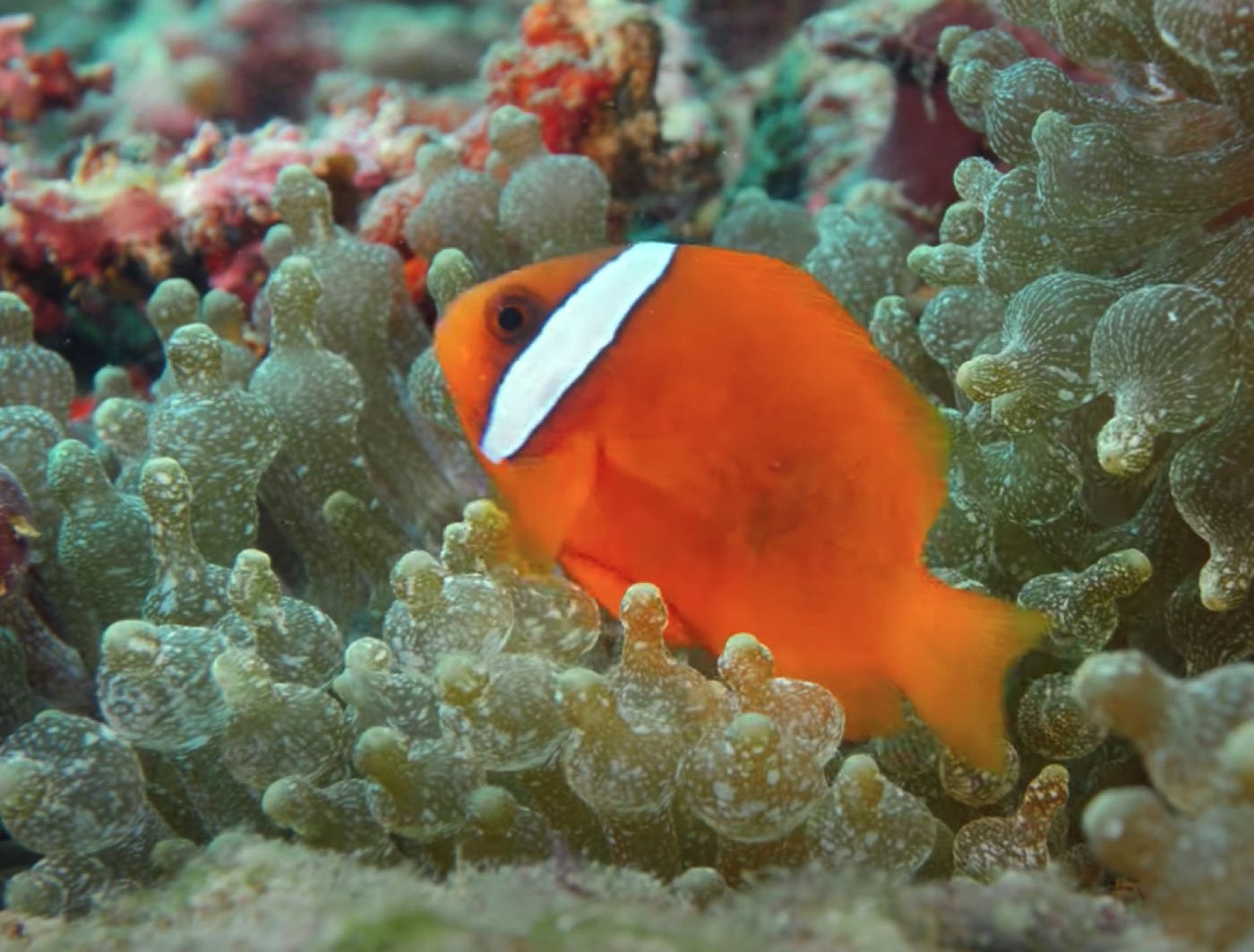
and 24 million individuals.” (p. 7). Damselfish, especially
the Blue Chromis (Chromis viridis) and the Ocellaris
Clownfish (Amphirion ocellaris), account for nearly
half the trade, with angelfish, surgeonfish, gobies and butterflyfish
making up the bulk of the remainder. A total of 140 species
of stony coral “…with the best estimate of annual
global trade ranging between 11 and 12 million pieces.”
(p. 8) are traded, primarily from the genera Trachyphyllia,
Euphyllia, Goniopora, Acropora, Plerogyra
and Catalaphyllia. Sixty-one species of soft coral
are traded, about 390,000 pieces, primarily Sarcophyton
spp. and Dendronephthya, although the latter is almost
impossible to keep alive with present knowledge. The report
includes, for the first time with reliable statistics, the trade
in invertebrates other than coral. There are more than 500 species
traded as marine ornamentals, ranging between 9 and 10 million
animals (p. 8), mostly mollusks, shrimps, and anemones, with
Lysmata spp. cleaner shrimp and Heteractis spp. anemones the
largest single groups. US aquarists account for 80 percent of
the trade in corals and 50 percent of the trade in fishes. No
marine aquarium fish except for Hippcampus spp. –
seahorses – or invertebrates other than corals and clams
are listed by CITES as endangered.
Economic
impact figures are interesting and support the contention of
aquarium trade defenders that collection from the reef for the
trade is a preferable use of the resource. In 2000, 1 kilogram
of aquarium fish from the Maldives was valued at $500 while
1 kilo of food fish was valued at $6. The value of live coral
is $7000 per ton while the use of harvested coral for limestone
production yields $60 per ton. In Palau, live rock brings $2.2
to $4.4 per pound; when used locally as construction material
it brings 2 cents per pound. Estimates indicate that 50,000
people earn their living from the export of marine ornamentals;
7,000 in the Philippines alone. Trade supporters maintain that
a properly managed aquarium industry would encourage conservation
and sustainable use of reefs while opponents point to over-harvesting,
use of destructive collection techniques and high mortality
associated with poor handling and shipping. Clearly the objections
of critics must be taken seriously.
The
report also states that only about 1 to 10 percent (about 25
species) of fish are captive bred and less than 1 percent of
traded corals are cultured. Efforts to increase the number of
species aquacultured must be established as a critical goal.
In
addition to the greatly improved methods of data collection
and analysis compared with previous studies, the report contains
important sections covering the organization of the trade as
well as conservation issues and ongoing conservation efforts.
Each topic includes important recommendations. With respect
to the trade’s organization, progress has been made in
reduction of destructive collection techniques and increased
education about on-board storage and transportation to shore
has reduced mortality. Collectors are still poorly paid –
an A. percula clownfish brings the collector 10 cents.
Analysis
of trade data indicates some troubling practices, especially
with respect to species with poor histories of aquarium suitability.
As mentioned above, Dendronepthya spp. remain among
the top ten collected soft corals, with the US as the largest
importer. The bluestreak and Hawaiian cleaner wrasses Labroides
dimidatus and L. phtirophagus, the mandarin fish
Synchiropus splendidus, as well as the foureye butterflyfish
Chaetodon capistratus and harlequin filefish Oxymonacanthus
longisrotris continue to be collected in spite of their
low aquarium suitability. In general, lack of understanding
of the population status and life history characteristics of
traded species makes it difficult to establish realistic standards
for sustainability and the need for such research is highlighted
- but for species with consistently poor aquarium survivability,
regulation should be established.
Conservation
issues primarily concern the impact of aquarium collection on
local target organism populations. The Hawai'i's State of
the Reefs Report reviewed in the August 1999 remains the
only systematic study of collection impacts on fish populations.
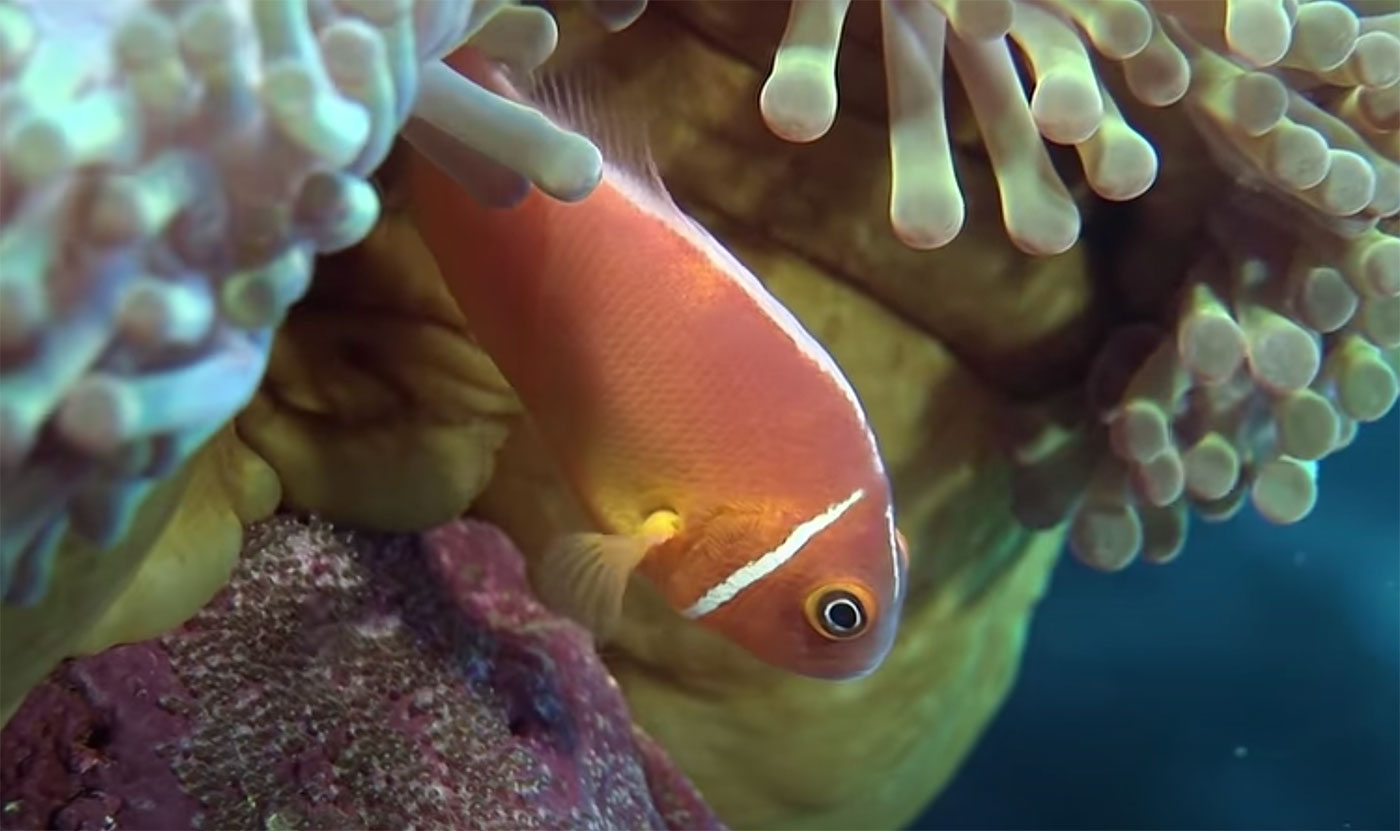
An analysis from the Maldives indicated that collection of anemones
and their anemonefish significantly reduced populations of these
species at exploited sites and that the low abundance of sea
anemones accounted for 80 percent of the reduced density of
anemonefish in collection areas. Studies of population densities
of the Banggi cardinalfish indicate reduced densities and halved
group size in areas with high aquarium collection and the species
has been proposed for listing as “critically endangered.”
For this easily aquacultured mouth-brooder there is no longer
justification for taking wild specimens.
There is virtually no information on the impact of coral collection
and very little on the life history characteristics, natural
growth rates or reproductive success of most coral genera traded.
It is clear however that “practices such as coral mining
for the production of lime rock (for construction) have a much
more significant impact on the alteration of coral populations
and community structure than the collection of corals for the
ornamental trade.” (p. 38).
Proud
sponsor of this column
The
section concludes with a listing of the most commonly captured
and traded fish species and their aquarium suitability, based
primarily on Scott Michael’s index, found in his invaluable
book, Marine Fishes; 500+ Essential To Know Aquarium Species
(reviewed in Aquarium Frontiers, Nov. 1999). As I wrote
in that review, don’t even go near your local fish store
without a copy of this book so that you can check on the needs
of the fish you eye.
Conservation
efforts focus first on the Marine Aquarium Council’s Core
Standards, covering the “reef to retail” chain.
The standards address fisheries management, the processes of
collection, fishing and holding as well as handling and holding
of organisms in transport. In addition, the report emphasizes
the expansion of mariculture for fishes, corals and soft coral
and for other invertebrates traded, with special emphasis on
the captive breeding of seahorses. The report specifically recommends
limited access to fisheries through licensing systems, establishment
of quotas, maximum and minimum (“slot”) size limits
and the establishment of reserves.
The
report concludes with an extensive, 237 item bibliography.
This
report is a great step forward in our knowledge of the realities
of the marine ornamental trade. It’s very much worth downloading
and reading this concise overview of a global trade we must
take responsibility for, if we are to continue to enjoy our
aquariums with clear conscience.