The
Seneca Park Zoo 560 gallon Reef Aquarium

January,
2004
|
Several hobbyists
from the Upstate Reef Society had noticed the450 gallon fish-only
saltwater aquarium during our family visits to the Seneca Park
Zoo, in Rochester, New York. The display seemed more like a
decoration adorning two higher profile exhibits (polar bears
and sea lions), and such was generally overlooked by many visitors.
While the location was both appealing and challenging, the setup
itself was a second-hand donation with scuffed acrylic panels,
outdated equipment, and artificial reef structures. One URS
member finally spoke up in May of 2002, believing that a reef
aquarium would be an ideal addition to the zoo and that his
local reef club would be able to sponsor, design, build, and
support such an endeavor.
The majority of
the club was quite enthusiastic of our new purpose! The URS
forum was used for preliminary discussions, and several meetings
were held to determine direction. Arguments raged over nearly
every detail of the tank, including the initial discussion as
to whether to retain the existing system or to build from the
ground up. After several attempts to refinish the old acrylic
tank, it was decided by those with sore elbows that we should
replace the tank itself and salvage all else. However, one of
the early meetings with the zoo staff brought to our attention
that the 4' tall stand was too high for the majority of the
patrons (children) to appreciate, so after another series of
meetings, it was unanimous to start from scratch. As with most
public endeavors, the zoo is somewhat under funded and its executives
made it clear that we would be responsible for raising the necessary
funds to create the project. A formal
proposal was finally submitted in August, and it was verbally
accepted by the Seneca Park Zoo Society in October.
| |
|
|
|
|
| Proud
sponsor of this column |
|
| |
|
Additional discussions
resulted in a basic plan for the tank and support system as
well as an estimate as to cost. It should be noted that while
several members assumed 'ownership' of various aspects of the
project, most decisions were made by consensus. Arriving at
such agreement was often time consuming and, at times, compromising.
We all had "deserter issues" that would cause us to drop involvement,
like tank size, which helped to order our priorities. Although
we had all maintained successful reef tanks, none of us had
ever taken on a project of such scope. Requiring consensus forced
all of the participants to consider issues that might have otherwise
not been addressed. The resulting plan combined the experience
and skill of several advanced reef-keepers into a robust, economical
system.
Raising money is
a tedious process… Of the conservative $10,000 setup estimate,
we found ourselves several months later barely half way there!
Needless to say, the next series of club "discussions" debated
the initial "all or nothing" plan or whether we should do what
we can with what we have. Miraculously, before the threads could
be closed, another member broadened the scope for donations!
Instead of focusing on money, the shift was toward equipment.
Before we knew it, numerous vendors across the country made
extremely generous donations which literally kept the project
"afloat".
After several more
months of assembling funds and equipment, a tank design was
chosen and the 10' long 560 gallon glass tank was ordered in
February, 2003. In March, members simultaneously worked on demolition
of the old system and construction of the new stand. Site construction
actually began by moving the door to a storage closet... Though
the old tank was against a wall, the new one would stand out
3' from to enable covert access from behind, allowing us to
perform maintenance even during peak hours.
To our dismay, the
tank arrived later that month broken, so it was solemnly returned.
But, prerequisite work continued. The stand was completed, the
light rack was built and installed, electric systems started,
and even much of the plumbing could be done while we waited.
Virtually every aspect of the system was designed and constructed
from clean sheet. When the replacement tank arrived in June
with a damaged corner, we consulted the builder, and installed
additional support cleats for reinforcement opposed to another
setback. Several other "opportunities" reared their heads during
the final completion, but thorough planning resulted in a comprehensive
design that attempted to address any possible contingency and
allow for flexibility. It was during this construction phase
that the skill and dedication of all the participants became
brilliantly apparent.
When saltwater was
finally added to the system on July 27, 2003, it was the culmination
of efforts from a group of would-be strangers, who met through
reef keeping, and shared the dream of having a 'world-class'
reef tank in our community. The dedication of these individuals
continues today both in providing regular maintenance and support
as well as livestock and equipment donations. The result is
a reef aquarium that lives up to the dream.
System Specifications:
Tank:
Custom designed
560 gallon tank (120"Lx36"Wx30"H) built by Interamerican with
¾" glass panels and cross braces.
Four 1.5" drilled
bulkheads spread across the back top of the tank for return
plumbing, and two glass overflow boxes adorn the return corners
providing a total of (4) 1.5" drains and (2) 1.5" closed loop
intakes.
The sump is a Model
7222 Ecosystem package (approximately 100 gals running volume)
| |
|
| |
Click
on any of the photos for full size image and caption.
|
Stand and
canopy:
The stand design
is unique with access only from the back of the tank. One of
the obstacles was cleanly routing all the 1.5" plumbing from
the rear of the tank as viewed to the "front" of the stand,
and then back for return to the tank. The front of the cabinet
is seamless, covered in laminate counter top material, the back
is open. Because the tank is nestled between two walls spaced
13' apart, a novel canopy was created. First, a 12" tall header
was bolted 18" over the front edge of the tank between the walls.
Then the locking doors were suspended from it. The sides were
closed in with "facades", whose design maintained a full height
window for looking down the full 10' length of the tank!
Circulation:
The 10' length of
the tank posed a few challenges in creating adequate water motion
throughout. To make better use of only 2 pumps, each is equipped
with a Hayward 1.5" actuated ball valve, which alternate on
3 minute intervals to concentrate flow. The main pump, a Sequence
4600 SEQ22, returns about 2000 gph through 2 pairs of spray
bars along the back of the tank. Each has a vertical pipe directing
current left (or right), and a horizontal bar providing surface
(or bottom) movement. Additionally, a closed loop system, fed
by an Iwaki 100RLD, pushes a similar amount of water from either
end of the tank where it exits via a 1" seaswirl and 3 nozzles
directed towards the opposite side. Though it may be desirable
to switch directions more often, the current interval requires
a low level of valve maintenance.
Controllers:
The system is monitored
and controlled via a purchased Neptune ACII.
An isolation coupling
on the electrical panel was required to filter electrical noise
produced by other equipment in the building. There are (2) 500
watt titanium heaters, one being run from it's own thermostat
for backup. Cooling is provided by several 4.5" fans which blow
across the water and circulate air to the rest of the room.
Filtration:
About 500 lbs. of
mixed live rock was aquascaped by a LFS owner so there wouldn't
be any arguments over "artistry differences" amongst the group.
Skimming is provided by a MyReef dual becket MR-4 driven by
an Iwaki 70 RLT pump. The sump was modified to accept an egg
crate tray which holds 12"x18" filter pads (changed every other
day). It is also home to macro algae (Chaetomorpha) which resides
on top several inches of mud substrate whose 6' length is lit
by (4) 28watt pc (12 hr reverse light cycle). A single cup of
carbon is changed every week or two.
Water Purification:
All water used in
this system passes through an Aqua FX 200gpd 5stage dual membrane
RO/DI system located remotely in a supply closet. Top off is
through a direct feed solenoid, time controlled via X-10 using
a float switch and a float valve back up. The system evaporates
about 4 gallons per day.
Lighting:
The display is lit
by (2) 400 and (3) 250 watt Ushio 10kK metal halide bulbs in
PFO pendants (glass removed), and (8) 5' 150watt Actinic VHO
florescent bulbs, all mounted to a custom designed light rack
which suspends 10" over the tank. Icecap electronic ballasts
power the VHO's and center 250MH; Hamilton ballasts run the
other lamps.
Substrate:
There is 1-2" layer
of Pure Caribbean Aragonite sand covering the bottom of the
aquarium.
Additives:
Alkalinity and Calcium
are maintained via a Korallin 3002 calcium reactor package from
Premium Aquatics. B-ionic is added periodically to maintain
levels.
Maintenance:
A 40 gallon water
change is done about every two weeks. All water removed from
the tank is siphoned off the top of the sand and rock in the
display or sump.
Feeding:
The system is fed
once daily with an alternating combination of frozen and dried
foods. The main staple is 3 cubes of Mysis shrimp and ¼
sheet of Seaweed Selects on one day, and 1 tbs. of flake food
is given the next.
Water Chemistry:
- Temperature:
78 winter, 82 summer, usually held within one half a degree
of set point.
- Salinity: 35
ppt
- Calcium: 360-400
ppm.
- Alkalinity: 2.5-3.0
mEq/l.
- pH: 8.0 to 8.2
- Salt: Instant
Ocean
Livestock:
|
Photos
of various animals that call the Seneca Park Zoo Aquarium
home. Click for full size image.
|
Fish:
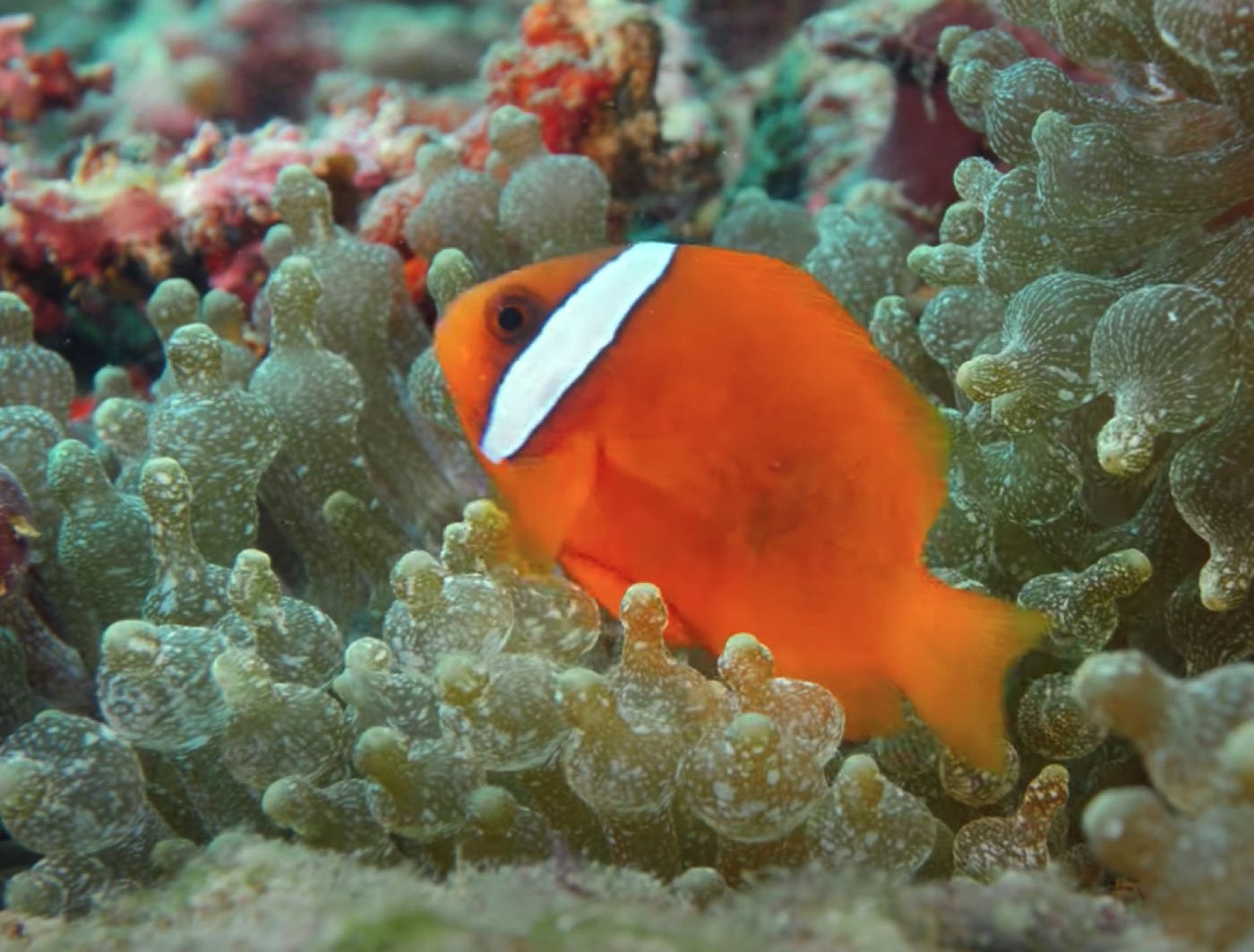
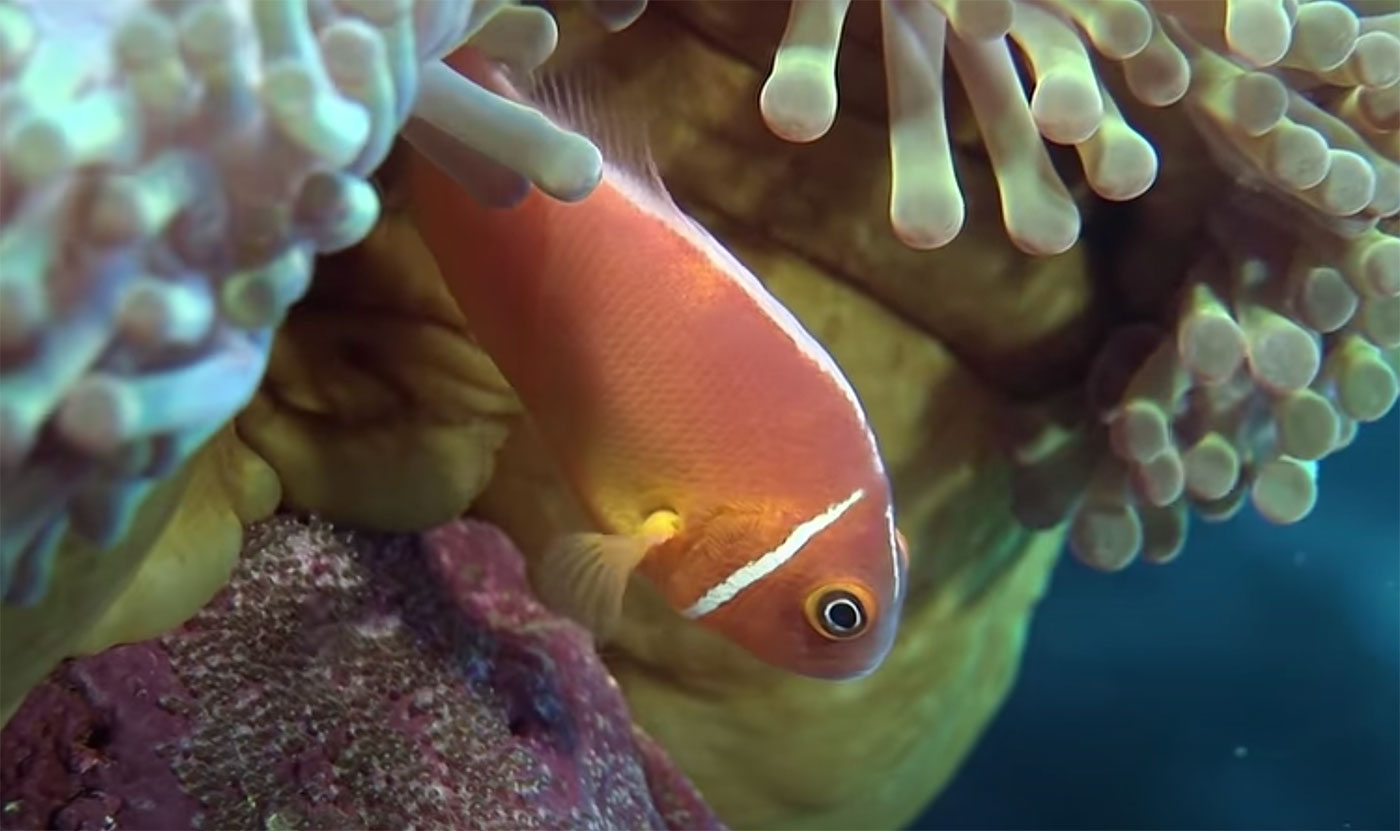
- 2 False percs,
a pair from the previous display tank Amphiprion ocellaris
- 3 Bar Gobies
Ptereleotris zebra
- 5 Yellow tangs
Zebrasoma flavesenes
- 4 Blue Chromis
Chromis cyanea
- 1 Flame Hawkfish
Neocirrhitus armatus
- 1 Foxface Siganus
vulpinus
- 1 Golden accessor
(sp)
- 1 Carpenters
Wrasse
- 1 Blue spot Watchman
Goby
- 1 Blonde Naso
tang (male)
- 2 Fire clownfish
Amphiprion ephippium
| |
|
|
|
|
| Proud
sponsor of this column |
|
| |
|
Corals:
Several species
each of Montipora, Acropora, Pocillopora, Lobophyllia, Platygyra,
Sinularia, Caulestrea, Pavona, Pagoda, Pachyseris, Favia, Euphyllia,
Turbinaria, Echinophyllia, Echinopora, Zoanthus, Ricordea, Xenia.
Most were propagated from members' home reefs.
Clams:
Tridacna maxima
Anemone:
Captive grown rose
colored E. quadricolor
Click
here for more information and images about the Seneca Park Zoo
Aquarium
A pictorial
chronology of the Seneca Park Zoo Aquarium

July 28, 2003

July 30, 2003
August 2003
September 2003
October 2003
November 2003
|