I would like to thank the staff of Advanced Aquarist and Reefs.Org for selecting
my reef tank as a Featured Aquarium.
I began in the aquarium hobby around 1991. Actually it was my father who
got the ball rolling. I lived at home at the time and we had a 58 gallon
Oceanic aquarium. It was basically a salt water fish tank with decorator
corals in it. Later, I ended up with that same tank in my apartment along
with 4 others, one of them would become my first reef tank. It was an old
55 gallon aquarium on a wrought iron stand, no sump, no top, a cheap strip
light, and a protein skimmer siliconed on one end of the tank. This was my
first crack at reef keeping. Since then, things improved. I went out and
bought a brand new 55 gallon system. I had this tank running for over 5 years.
It contained mostly large polyp and soft corals. During those 5 years I bought
a house, got married, and had a child (not in that particular order but who's
keeping score). Since I was now settled down I could set up my dream tank.
I always wanted to run metal halides because I loved the way they look and
I wanted to try other corals that demanded more light. My main concern was
heat. I had a friend who was an AC technician. We talked about doing a split
chiller system. He assured me that we could do it. In August of 2002 I began
setting up this 180 gallon reef tank. The plan was to transfer everything
from my 55 gallon to the new tank and add new things over time. I decided
I was going to set this tank up right, no cutting corners like I had done
so many times previously. I designed and built the stand and canopy to my
specifications. I built the stand 3 feet tall so the tank would set at eye
level. The canopy would contain 1390 watts of metal halide and fluorescent
lighting. I then had a custom 75 gallon acrylic sump with filter bags made.
For a skimmer, I chose a Euroreef CS12-2. I run an Ampmaster 3000 as my main
pump. This is fed to four 1" returns, two of which are Sea Swirls. I had
a 20 gallon acrylic tank made to fit under my stand for my refugium. I also
bought a Mag-Drive 12 to feed my refugium and chiller. For my chiller I used
a 6000 BTU window unit air conditioner outside that would feed refrigerant
to a 1/2 ton titanium heat exchanger. My heaters and chiller are both controlled
by a Ranco ETC. I ran the tank this way for about a year. In about July of
2003 I decided I wanted a bigger refugium. I built a stand behind the adjacent
wall to hold the new 40g refugium and the old 20 gallon one. The 20 gallon
would now be used as a kalk top-off system. This is connected to a float
valve in the sump.
Proud
sponsor of this column
Proud
sponsor of this column
The entire system would now consist of about 250 gallons of water and 200lbs.
of live rock with many caves and ledges. Since day one, I had been removing
all my soft and large polyp corals and replacing them with SPS corals. Yes,
this was the beginning of my REAL addiction. As these corals began growing,
it became very hard to keep my calcium levels up. In the later part of 2003
I bought a 6" X 18" Geo reactor to hopefully eliminate this problem. It is
filled with 90% CaribSea crushed coral and 10% Grotech Magnesium Pro. This
reactor is controlled by a Milwaukee pH controller. I run the same model
controller on the main tank to monitor my pH there as well. After doing some
reading I decided to use xenia in my refugium instead of macros as a nutrient
export. I also built egg crate shelves in there to hold frags. It's more
of frag tank now than a refugium. I've tried many different things for more
water flow like power heads and closed loop systems. In April 2004 I added
external powerheads in each front corner of the tank. They sit in acrylic
brackets that are screwed inside the canopy. They each produce 1109 GPH and
are running on a Natural Wave Timer.
Today, 2 ½ years into it, the tank is doing great. Corals need to be
fragged on a regular basis. I change roughly 50 gallons each month using
water produced by a 150gpd Spectrapure RO/DI system. I use Peladow calcium
chloride (ice melter) for raising my calcium and Epsom Salt to raise the
magnesium levels. I also use pickling lime for making kalkwasser and baking
soda as buffer. I test calcium, alkalinity, and magnesium religiously (once
a week, if not more). I normally feed about 1 teaspoon of PE mysis mixed
with Cyclop-Eeze each day. Other foods include frozen brine, zooplankton,
Angel & Butterfly cubes, Selco, Golden Pearls, and Garlic Extreme.
(3) 250w Aqua Connect 14K Metal Halides (10 hours)
(4) 160w URI Actinic VHO's (12 hours)
(2) IceCap 660 Ballasts
(3) 250w IceCap Metal Halide Ballasts
(8) 1w Coralife Aqualight Moon Lights (2 hours)
(2) 175w Hamilton 55k Metal Halides (7 hours on refugium)
(2) 40w URI actinics (9 hours on refugium)
GE Electronic & ESU Ballasts (refugium)
(4) 4" Fans in Canopy - (2) 4" Fans on Refugium (70cfm)
Fish
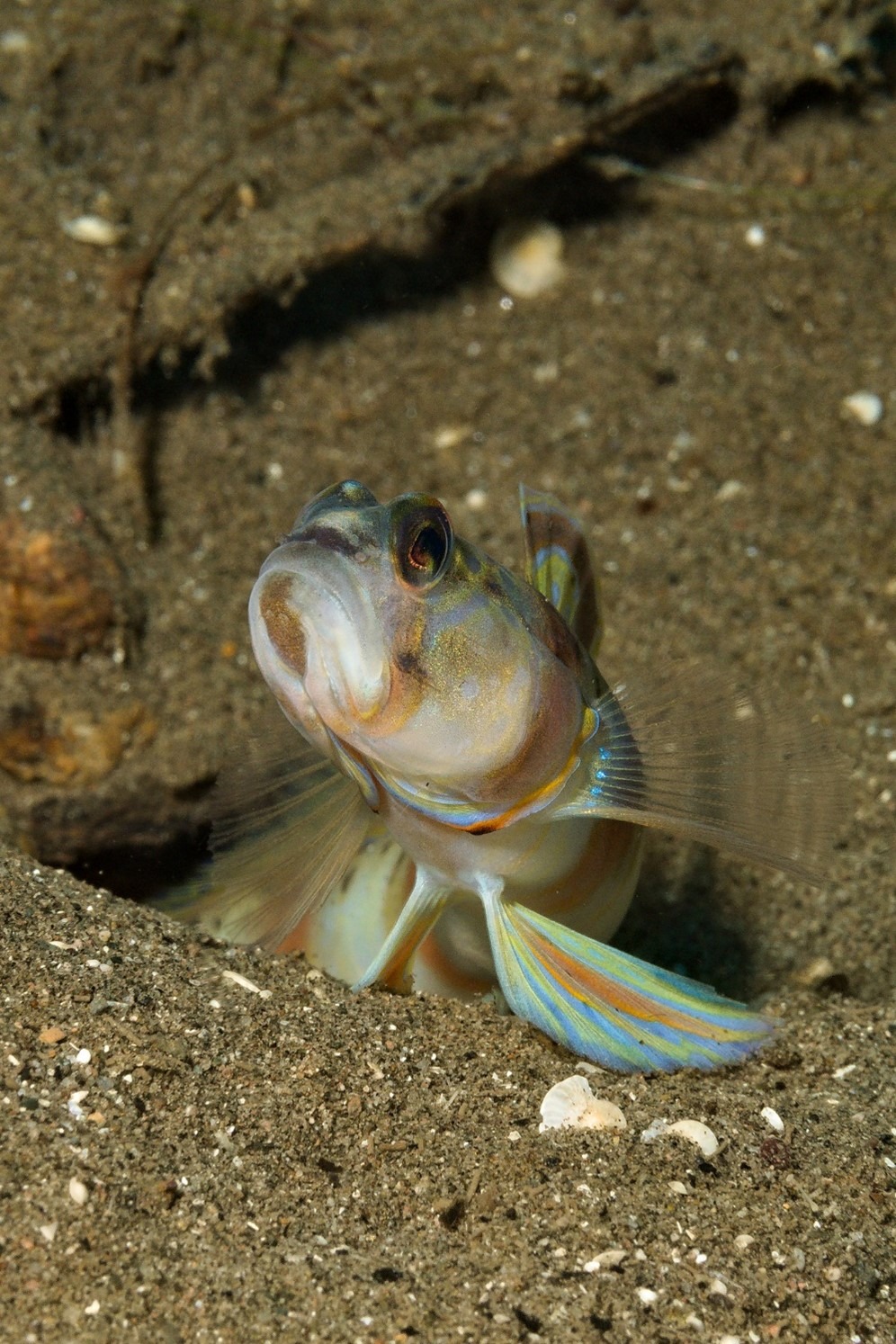
Pair of Pearly Jawfish
Pair of Bangaii Cardinals
Pair of Blue Eye Cardinals
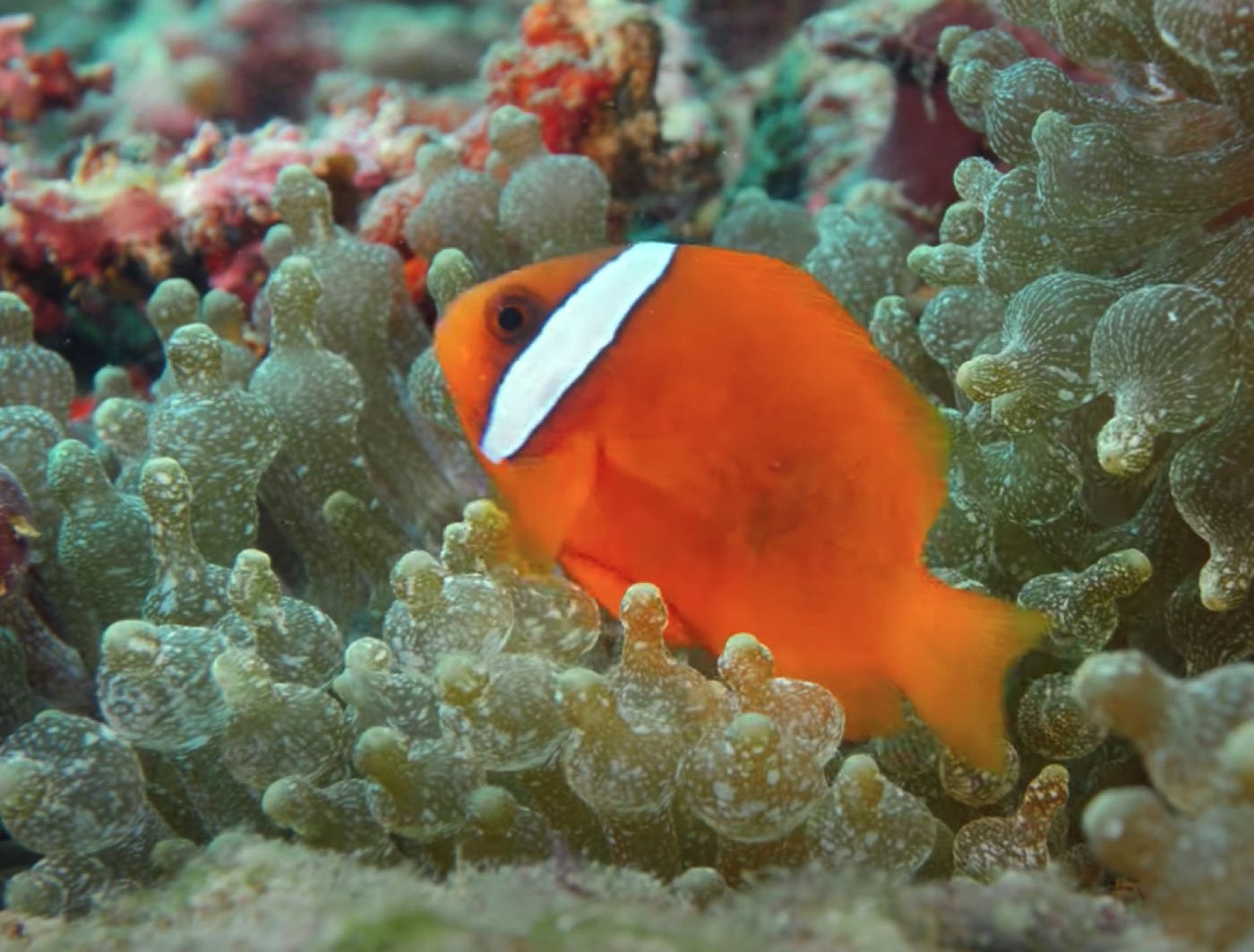
Pair of Orange Skunk Clowns
Pair of Bar Gobies
Pair of Yellow Wrasses
Spotted Leopard Wrasse (M. meleagris)
Splendid Leopard Wrasse (M. bipartitus)
Black Leopard Wrasse (M. negrosensis)
Kole Tang
Orange Spot Blenny
Spotted Mandarin Goby
Flame Hawkfish
Invertebrates
(2) Cleaner Shrimp
(2) Sea Cucumbers
(100) Nassarius Snails
(75) Astrea Snails
(5) Mexican Turbo Snails
(1) Tuxedo Urchin
(50) Scarlet Hermit Crabs
(15) Various Hermit Crabs
(2) Sand Sifting Starfish
12" Derasa Clam
Gold Teardrop Maxima Clam
Blue Maxima Clam
(3) Blue Crocea Clams
Purple Crocea
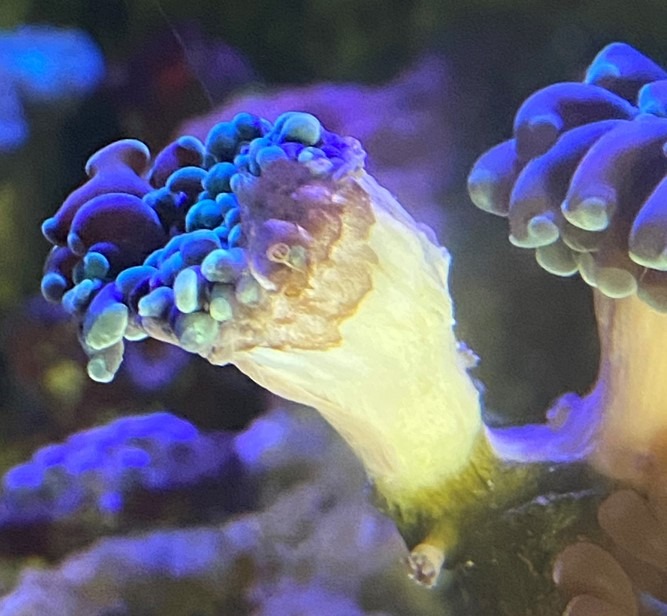
Rose Bubble-Tip Anemone
Proud
sponsor of this column
Proud
sponsor of this column
Corals
Approximately 75 different SPS corals
Orange Plate Coral
Yellow & Purple Plate Coral
Red Lobophyllia Brain
Various Zoanthids
Various Ricordia
3 Species of Xenia
Green Star Polyps
Green Button Polyps
Brown Button Polyps
Cinnamon Polyps
Tube Polyps
Red & Green Blastomussa
Yellow Scroll Coral
Philosophy
High random water flow
1"-2" shallow sand bed
Test calcium, alkalinity, magnesium religiously
Siphon or turkey baste sand and rock religiously
Run filter bags/socks for collecting sediment
Run Poly Filters
Run phosphate remover in a reactor
Run carbon in a canister or reactor
Dose kalk 24/7
Use a calcium reactor
This past year I battled red bugs. I have hopefully rid my tank of them
for good thanks to Dustin Dorton at ORA. The latest problem I am having is
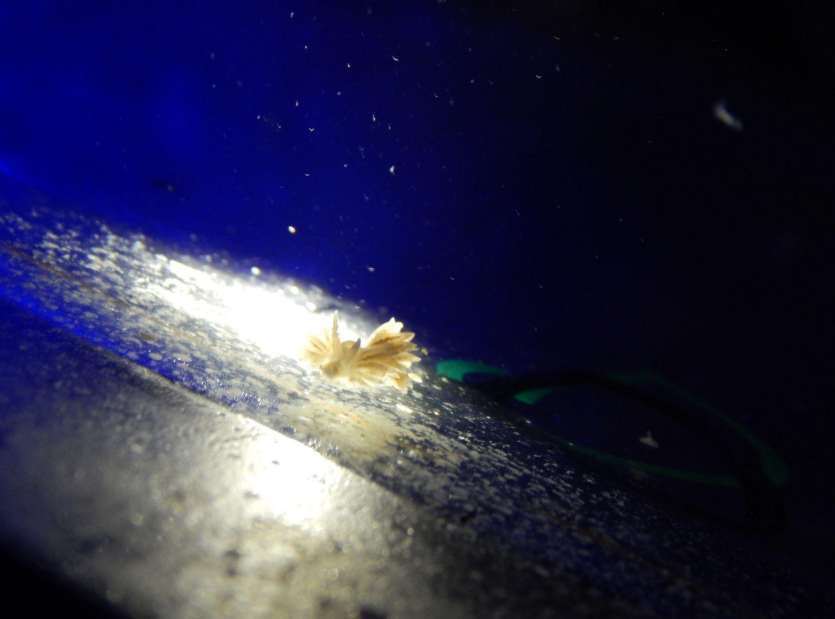
with Montipora eating nudibranchs. I just found out this month that I have
them. Fortunately for me, I have only found a few. I will search all the
montis each night and manually remove any nudibranchs until they are gone,
I give up, or Dustin finds a cure "hint, hint". It's a never ending battle.
I think that's what makes this hobby so interesting and entertaining. For
more information about my tank, please visit http://www.ReefRelated.com.
If
you found this article worthwhile, help support future
AAOLM publications with your generous contribution.