Nutritional
Value of Live Foods for the Coral Reef Aquarium, Part
2
This is second
part of my article on fish nutrition and live foods for
the reef aquarium, so if you missed the first
installment, I suggest that you go back and read that
introductory section first. In the first part of this
article, I discussed the nutritional value of 1) phytoplankton;
2) feeder fish (in particular guppies & goldfish)
and 3) ciliates & rotifers. Continuing on from where
I left off last time, we now move onto the fourth potential
live food source, brine shrimp…
Proud
sponsor of this column
4) Brine
Shrimp
Brine shrimp
(Artemia spp.) is probably one of the most common
planktonic foods offered to marine animals. There are
a variety of reasons for this, but two of the most significant
are probably history and ease of availability. Virtually
everyone is already familiar with brine shrimp, and it
is a rare petshop that does not offer packets of frozen
brine for sale. That does not, however, mean that it is
one of the most nutritious foods available on the market
to feed your saltwater tank inhabitants. Like the grocery
bag analogy listed above, brine shrimp themselves are
often not the most nutritious of food sources for marine
fishes and invertebrates. However, it is a little more
complicated than the rotifer example I just discussed.
The nutritional value of adult and baby brine shrimp can
be very different, and even if we consider only newly
hatched baby brine shrimp, it is not possible to make
any sweeping generalizations about the nutritional value
to your tank. The reason that nutritional value varies
so much is because it depends on a number of factors,
including the age, the source, and the quality of the
brine shrimp "eggs" from which baby brine are hatched
how nutritious the newly hatched brine shrimp will be.
How much difference
does the source and quality of your brine shrimp "eggs"
make? Well, there are great differences in the nutritional
value of different batches of baby brine shrimp hatched
from different sources, and the dealers separate the stock
according to the quality into at least 4 or more categories:
premium, high- and low quality aquaculture grade, and
then hobbyist grade (in that order). As suggested by this
list, the brine shrimp available to us in the hobby is
not exactly the best quality stuff out there. Even among
the aquaculture grade cysts there are enormous differences
in the nutritional profile of the baby brine hatched from
different locations.
For example,
a number of studies have shown that growth and survival
of fish larvae (including milkfish, striped & hybrid
bass, and cod among others) fed unenriched premium baby
brine shrimp (bbs) from San Francisco Bay was the same
as those fed enriched premium bbs from the Great Salt
Lake in Utah (e.g., Webster and Lovell 1990; Han et al.
2000; Lin and Zhang 2001). In addition to these growth
experiments, direct comparison of the nutritional profile
of these different bbs suggests that unenriched newly
hatched bbs from San Francisco Bay (SFB) were approximately
equivalent to HUFA enriched (in a variety of ways) bbs
from Utah in terms of growth and survivorship (there were
no statistic differences among the treatments). However,
both unenriched premium brine from SFB and enriched premium
brine from Utah vastly outperformed (showed significantly
higher growth and/or survivorship than) unenriched Utah
brine shrimp (reviewed by Sorgeloos et al. 2001). And
even the best of enriched brine shrimp do not perform
nearly as well as copepods (covered below) when it comes
to the nutritional value for raising marine fish in captivity
(e.g., Coutteau and Mourente 1997; McEvoy et al. 1998;
Shields et al. 1999).
Again, I emphasize
that these comparisons are made with the aquaculture grade
brine shrimp that never even make it into the hobby: don't
expect to go to your local petshop and be able to ask
for premium brine shrimp 'eggs' from SFB! But don't let
the location of collection fool you into thinking that
all brine shrimp 'eggs' from SFB will be fantastic: there
is actually far higher variability among SFB cysts (from
premium aquaculture down to hobby-grade) than there is
among the Utah cysts. Also, brine shrimp are not just
being sold from the U.S. anymore: there are also numerous
other sources of brine shrimp including China, Russia,
South America and Canada as well. As with all the other
sources that we have discussed previously, brine shrimp
sold from each of these areas have a variety of qualities
and different nutritional profiles as well (e.g., Webster
and Lovell 1990; Webster and Lovell 1991). Regardless
of which location the cysts are collected, the bottom
line is that the quality of the cysts is usually more
important than the location of collection, and hobbyist
grade cysts from any location are equally low in their
nutritional value without enrichment. In fact, it turns
out to be difficult for hobbyists to even get premium
cysts. That may well be a significant factor in the variable
success of hobbyists in rearing larvae of any of our animals
fed baby brine in captivity.
Well, I've
been talking about enrichment throughout this article,
but I haven't really given you any guidelines for how
exactly to accomplish that enrichment. Let's use brine
shrimp as an example, and go through how to enrich your
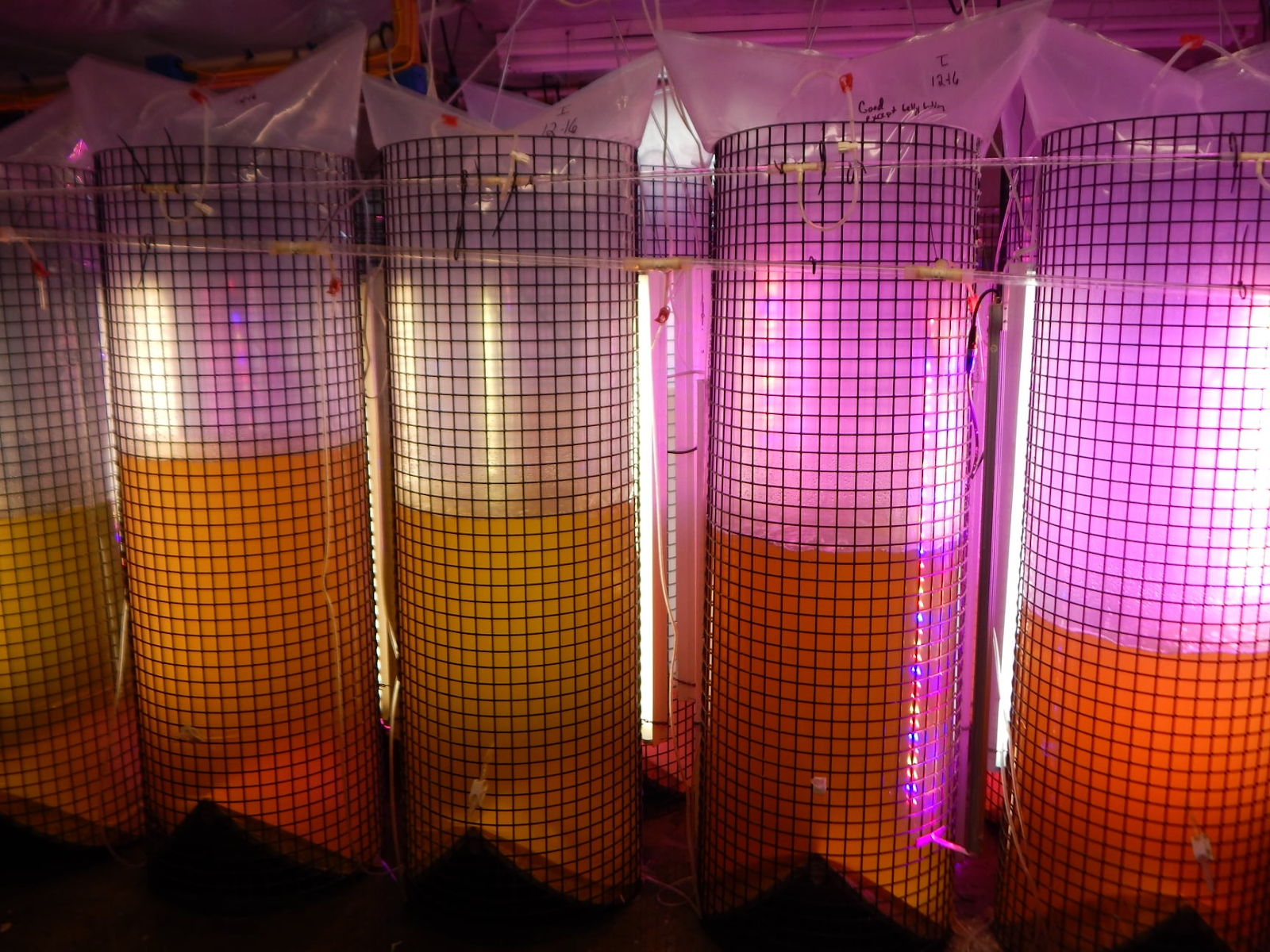
food before feeding it to an aquarium. When Artemia
nauplii first hatch (Instar I), they do not have a complete
gut, and it is not until they develop to Instar II that
the baby brine start to feed. The time of development
to Instar II depends on a variety of factors (most importantly
temperature, but also salinity), but occurs within 6 to
30 hours after hatching. At 28°C (roughly 82°F)
it takes about 8 hours for the newly hatched nauplii to
begin feeding, and as the temperature drops, that time
becomes much longer. As soon as the nauplii hatch, they
begin to digest their yolk and become less nutritious
with time after hatching, however, once they reach the
second instar, they can begin to feed, and you can enhance
their nutritional value by feeding them a highly unsaturated
fatty acid (HUFA) supplement that provides high concentrations
of essential fatty acids for the health of most marine
animals (reviewed by Coutteau and Mourente 1997; Rainuzzo
et al. 1997; Sorgeloos et al. 2001).
Proud
sponsor of this column
Many people
seem to have the idea that you're trying to soak the nauplii
in the stuff to coat them before feeding. While that may
be true of frozen foods, it is not particularly effective,
and most of the enrichment solution ends up floating freely
in your aquarium as dissolved nutrients (just as if you
had dumped it into the tank directly) rather than getting
into your fish. In this case, what you're really trying
to accomplish is to get the baby brine shrimp to eat the
stuff, so that they are basically swimming grocery bags
full of those nutrients when you feed them to your reef
tank. The problem is that baby brine shrimp are very inefficient
feeders, and it takes a long time for them to ingest enough
of the HUFA supplement that they become "enriched" (e.g.,
Evjemo et al. 1997; Han et al. 2000; Han et al. 2001).
For newly hatched brine at the second instar, it takes
at least 12 hours to get decent enrichment - in fact,
its much better to enrich your Artemia nauplii
for two 12 hour periods (with a water change between them
to limit the growth of bacteria in the culture water).
To clean the nauplii, simply pour the culture through
a "brine shrimp net" (one of the fine, white mesh nets
available at any pet shop) and rinse them a couple of
times before setting them up in clean water and adding
new HUFA. After the two 12-hour feedings of the HUFA supplement,
the nutritional value of the nauplii is typically much
greater than when they are newly hatched (reviewed by
Coutteau and Mourente 1997; Rainuzzo et al. 1997; Sorgeloos
et al. 2001).
The same is
true of adult brine: they are largely devoid of nutritional
value when you purchase them at the local petshop, and
it is important to enrich them before feeding brine shrimp
to your fish. For live adult brine shrimp, it is relatively
simple to enrich them with a HUFA supplement (such as
Selcon or Zoecon), and that greatly enhances the nutritional
value of these animals as a food for your aquarium pets.
Brine shrimp become more efficient feeders as they grow,
and as a result, larger Artemia can be enriched
in shorter times due to that increased efficiency of filter-feeding.
In fact, although live Artemia can benefit from
periods of enrichment equivalent to those of the nauplii,
adults can be significantly enriched in as little as about
1-2 hours of feeding in a HUFA supplement. Be enriching
live brine prior to them being introduced to your reef
aquarium, you not only provide a popular treat to your
animals, but also gain the maximum nutritional benefit
from feeding these foods to your pets.
(click
for larger image)
Blackworms
-- Photo by Gary Lange
5) Tubifex
or black worms
I include
this section primarily as a caution against using these
foods for your marine tank. Although many fish appear
to like them, these freshwater worms die almost as soon
as they are added to salt water, and if not eaten on their
way to the bottom, likely begin to rot soon after they
sink. In addition, the nutritional profile of these freshwater
worms is completely unknown (which is why I didn't include
them in Tables 1 & 2). Although I have no real basis
on which to make a decision, I personally doubt that they
are particularly nutritious for a marine fish. Therefore,
it is my opinion that they should be avoided in favor
of some of the other food choices listed in this article.
6) Freshwater
crustaceans
If you remember
back to the start of the article, I went on a rant about
using freshwater fishes to feed to your saltwater pets.
Now, all the sudden you're reading a section about freshwater
crustaceans in an article about feeding saltwater animals
- what gives!? Well, the nutritional profile of freshwater
crustaceans is actually surprisingly close to that of
marine crustaceans (Tables 1 & 2).
Table 1: Total amount of various nutrients in
a 100g sample of tissue from selected species
of potential food fish as compiled by the US government
(Dept of Agriculture) for nutritional comparisons
of foods that are available to consumers.
Food Fish
Energy
Protein
Total
Lipid
Vit.
B complex
Vit.
C
Freshwater
fishes
Catfish
565
kj
15.55
g
7.59
g
3.5
mg
0.60
mg
Carp
531
kj
17.83
g
5.60
g
2.8
mg
1.60
mg
Anadromous
/ Brackish fishes
Wild
Salmon
594
kj
19.84
g
6.34
g
11.0
mg
0
farmed
Salmon
766
kj
19.90
g
10.85
g
10.0
mg
3.90
mg
Striped
Bass
406
kj
17.73
g
2.33
g
3.3
mg
0
Marine
fishes
Cod
343
kj
17.90
g
0.63
g
2.5
mg
2.90
mg
Snapper
418
kj
20.51
g
1.34
g
1.5
mg
1.60
mg
Freshwater
crustaceans
Crayfish
301
kj
14.85
g
0.97
g
2.6
mg
0.50
mg
Marine
crustaceans
mixed
Shrimp
444
kj
20.31
g
1.73
g
3.0
mg
2.00
mg
Spiny
Lobster
469
kj
20.60
g
1.51
g
4.8
mg
2.00
mg
Unlike the
freshwater feeder goldfish comparison with marine fish,
in which the fat content can be more than 20 times higher
than the natural diet, freshwater crustaceans are actually
slightly lower in both fat and Vitamin C content, as compared
to marine crustaceans (Tables 1 & 2). There are other
differences, too, but in this case, the deficiencies can
be easily compensated for by using a commercially available
HUFA supplement, because the freshwater crustaceans tends
to be roughly equal, or perhaps a bit lower in saturated
fat as well as essential fatty acids than the marine prey
that make up the natural diet (Table 2). This major difference
makes the use of freshwater crustaceans a much better
option than freshwater fishes for feeding to your marine
aquarium.
Table 2: Amount of saturated fat and a number of
essential highly unsaturated fatty acids (HUFA)
for each of the species groups listed in Table 1.
Values for Saturated fats, LA (Omega-6, linoleic
acid - 18:2), ALA (Omega-3, alpha-linolenic acid
- 18:3), EPA (Omega-3, eicosapentaenoic acid - 20:5),
and DHA (Omega-3, docosahexaenoic acid - 22:6) are
again measured in grams from a 100g tissue sample
as presented in Table 1, above. These fatty acids
are among those typically included in HUFA enrichment
products to supplement the diet of marine fishes
in captivity. Small, non-zero numbers are denoted
by < 0.01.
Food
Fish
Saturated
Fat
LA
(18:2)
ALA
(18:3)
EPA
(20:5)
DHA
(22:6)
Freshwater
fishes
Catfish
1.77
0.88
0.10
0.07
0.21
Carp
1.08
0.52
0.27
0.24
0.11
Anadromous
/ Brackish fishes
Wild
Salmon
0.98
0.17
0.30
0.32
0.29
farmed
Salmon
2.18
0.59
0.09
0.62
1.29
Striped
Bass
0.51
0.02
0.02
<
0.01
<
0.01
Marine
fishes
Cod
0.08
0.01
<
0.01
0.08
0.13
Snapper
0.28
0.02
<
0.01
0.05
0.26
Freshwater
crustaceans
Crayfish
0.16
0.08
0.03
0.12
0.03
Marine
crustaceans
mixed
Shrimp
0.33
0.03
0.01
0.26
0.22
Spiny
Lobster
0.24
0.01
<
0.01
0.27
0.11
This is fortunate
for most of us, because in most places small freshwater
crustaceans are much easier to come by than their marine
cousins. I'll discuss some of the most common and easily
available of these below and explain the potential drawbacks
to using them as a food for the inhabitants of your marine
tank.
The water
fleas (Daphnia and their relatives)
These tiny
crustaceans belong to the class Brachiopoda, and are commonly
found in ponds, streams and small lakes during the summer
months. These animals are commonly called "water fleas"
and can range from clear to brightly colored, and in size
from almost microscopic to about the size of a dried split-pea.
They swim with very jerky movements similar to that of
copepods (discussed below), which often stimulates the
feeding response of even the most picky of plankton feeding
fishes. Daphnia and their relatives (I won't go
into the taxonomy of this group here, but consider them
all together for the purpose of this article) thrive in
freshwater habitats by filtering tiny phytoplankton and
organic detritus from the water column, and can reproduce
very rapidly under ideal conditions. They can be easily
cultured in a small wading pool in the backyard, or collected
by net from a local pond or stream.
Freshwater
copepods (e.g., Cyclops)
These tiny
freshwater relatives of the marine versions seen in virtually
any coral reef aquarium often provide a simpler and cheaper
alternative food than their marine cousins for feeding
to planktivorous marine fishes. They are also usually
devoured by coral reef invertebrates such as cleaner shrimps,
gorgonians, soft and hard corals, brittle stars and sea
cucumbers as well, making them a highly desirable food
item. Although marine copepods are not easily available
as a commercial food product, freshwater copepods can
be harvested from local ponds or lakes, and there are
a couple of commercial sources for either frozen or freeze-dried
copepods as well. The reason that I am emphasizing these
little "bugs" (no they are not really bugs, but that is
what most people consider them to be) is that copepods
are among the most nutritious of all food items in the
ocean. Fortunately, even if the fish do not naturally
feed on copepods, many plankton feeders (even picky feeders
like pipefish and Anthias) in the sea readily accept
freshwater copepods as a suitable alternative.
Proud
sponsor of this column
Given that
copepods are a commonly offered and readily accepted by
most plankton-feeding marine fishes, the easy availability
of freshwater species makes them a simple option for feeding
your fish. But remember, that I said there were two important
things to consider for any food: 1) the right size/taste,
and 2) the nutritional value of the food. So, I've said
that the size, shape and taste of these tiny crustaceans
appear to be acceptable for most plankton-feeding marine
fishes, what about the nutritional value? Well, it turns
out that copepods are one of the most nutritious plankton
foods in the ocean, and a variety of studies have shown
that feeding them can significantly decrease the rate
of disease and death among juvenile fishes raised in captivity.
For example, a recent presentation by Todd Gardner at
the International Marine Aquarium Conference (IMAC) in
Chicago showed that feeding baby seahorses on a diet of
copepods for a few days before switching them onto enriched
baby brine shrimp led to dramatic increases in the rate
of survival compared to treatments in which the juvenile
seahorses were fed only on enriched brine shrimp. Results
such as Todd reported (Gardner 2003) are becoming more
common, both in the hobby and in aquaculture efforts.
In fact, copepods are so highly sought-after that many
commercial aquaculture facilities are actively pursuing
techniques to raise copepods in sufficient numbers to
use as a reliable food supply for juvenile fishes. There
are also a number of popular fishes (such as the Mandarin
Goby or Scooter Blenny) that actually specialize on these
little crustaceans. Unfortunately, there are currently
no commercial sources of live copepods for either the
aquaculture or aquarium industries, but there are a couple
of suppliers of freshwater copepods in frozen or freeze-dried
forms. In addition, there is always the tried-and-true
method of going out to harvest your own, and whether fresh-
or saltwater, adding copepods to the feeding regimen of
your marine aquarium is sure to be a benefit to many of
your pets.
Freshwater
amphipods (e.g., Gammarus)
These freshwater
relatives of the shrimp-like amphipods commonly seen in
reef aquaria at night are again a common inhabitant of
ponds, streams and small lakes during the summer months.
Although not quite as simple to culture in your backyard,
they are often locally abundant and easily collected with
a dip net throughout most of their range. They swim more
quickly, and in a much smoother manner than either the
water fleas or copepods, and are therefore not quite as
useful as the first two groups that I just discussed.
Because they are freshwater, they do not survive for long
in a marine environment, and because they are relatively
quick swimmers that will head directly for the cover of
a rock, coral or macroalga when introduced to the tank,
there is a reasonable chance that they will find cover
and hide until they die from the salt stress of being
tossed into a marine tank. Obviously this is not ideal,
and can easily contribute to a nutrient problem if too
many of these little gammarids escape being eaten and
die/rot in your tank. However, many fishes love these
tiny 'shrimp' and provided that you add them slowly and
allow your fish a chance to catch them, they make an excellent
and nutritious treat for your fish.
7)
Mosquito Larvae
Like the gammarid
amphipods that I just discussed, mosquito larvae probably
make a great treat food for your fish, but should not
be relied on too heavily. This is both because of the
fact that the exact nutritional profile of mosquito larvae
is unknown, and also because there is an increased chance
of overfeeding. Any larvae added to the tank that are
not immediately eaten will die due to the osmotic shock
of being tossed into saltwater, and then quickly begin
to rot in your tank. As with any uneaten food, excess
that begins to rot leads to a rapid decrease in water
quality and usually leads to health issues as well. The
advantage of mosquito larvae is that, unlike gammarid
amphipods, they float freely around the aquarium when
not actively swimming, and should bob to the surface quickly
if they were not immediately eaten. This both gives the
fish a "second chance" at eating them before they die,
and makes it easy to remove any excess if they are not
eaten immediately.
(click
for a larger view)
Ghost Shrimp
(click for a larger view)
Clam
(click
for a larger view)
Squid
(click for a larger view)
Shrimp
--
Photos by Gary Lange
8) Ghost
shrimp and crayfish
As I mentioned
earlier in the section about goldfish, I would suggest
these freshwater and brackish crustaceans as a better
choice for feeding live foods to a marine predator. Ghost
shrimp are a euryhaline (able to acclimate to water
of various salinities ranging from fresh to full-strength
saltwater) shrimp that is frequently imported for sale
as feeder in many petshops. These tiny clear shrimps are
one of my favorite choices for feeding to large marine
predatory fishes (such as grouper, snapper and lionfishes)
that are picky about eating. Crayfish are not nearly so
tolerant of saltwater as are ghost shrimp, but if you
live in an area that has an abundance of crayfish and
can easily collect your own, this may be a cheaper and
easier alternative for you than going to the local petshop
and buying ghost shrimp. In addition, the larger size
of the crayfish makes it possible to feed larger predators
such as adult grouper or octopuses.
The primary
advantage to using these prey is that the addition of
live food usually stimulates even the most fussy of eaters
into gorging themselves. As outlined above in the feeder
goldfish section, ghost shrimp or small crayfish allow
you to feed your animals on a live food other than goldfish
while slowly training them onto a healthier alternative.
In addition, with both ghost shrimp and crayfish, the
nutritional value can be enhanced by feeding an enriched
flake or frozen food that includes a reasonable amount
of HUFA.
9) Squid,
shrimp, mussels or clams on the half shell
Many predatory
marine fish and invertebrates go crazy for live mussels
or clams on the half shell. I have spoken to several people
who were having little success with getting fertilized
eggs from some reef tank fish or invertebrate that they
were trying to breed, but after regularly incorporating
fresh whole mussels or clams into the diet, their success
rate suddenly increased dramatically. Fresh whole seafood
(whether squid, shrimp, clams, mussels, snails or whatever
else is available) is really THE food on which your animals
feed naturally. So, including some fresh or live seafood
into the diet of your aquarium is almost always a good
idea from time-to-time. However, these same ingredients
are usually the staple of most commercially available
frozen foods on the market. Look through the ingredients
list of your favorite frozen food next time you're at
the pet shop, and you're sure to see some (if not all)
of these listed in the ingredients. There are also a number
of home-made recipes for preparing your own frozen food
floating around on the internet if you're interested,
and these are again the primary ingredients for those
recipes. Thus, if you're already providing these through
your normal aquarium diet they are probably low on the
priority list for diversifying the diet provided to your
reef aquarium.
In fact, that
is probably the best advice that I can offer you: vary
the diet of your animals on a regular basis. Numerous
studies with marine fishes and invertebrates have shown
that a varied diet almost always outperforms (in terms
of growth, disease resistance, and/or survivorship) any
single prey item as a staple diet. So vary your feedings.
Continue to use a high quality frozen food with a wide
variety of ingredients as a staple, but don't be afraid
to add some variety to the diet of your tank from time
to time. Many of the food items listed in this article
are great alternative foods, and it's a benefit to your
fish to add them to your feeding routine if you are not
already doing so. It's not only likely to be better for
their health, but the animals will probably appreciate
it and feed better as a result. After all, you wouldn't
like to have to eat the same thing every day for the rest
of your life would you?
10) Macroalgae,
Nori or leafy vegetables
Well, last
but not least, I come to the section about greens. It's
certainly not because they are least important, but simply
because they didn't seem to fit very well at any point
earlier in the article. Many coral reef fishes specialize
on algae of various sorts (this is called herbivory),
and without sufficient greenery in their diet, they are
subject to a variety of malnutrition maladies. This may
be because of an excess of animal fats in their diet,
or it may be because many trace nutrients and vitamins
for these animals are found in highest concentration,
or almost exclusively in algae. The truth is that we just
don't have the research available to determine the "perfect"
diet for our pets still at this point. Without the carefully
controlled experiments necessary to determine exact nutritional
requirements, the best we can do is to mimic the variety
found in the natural diet to as great a degree as possible.
There are a number of great books out there now that detail
the natural history of coral reef fishes, aquarium corals
and other invertebrates, and I encourage anyone who is
really interested in the hobby to track down some of these
texts.
In terms of
the size, most fishes and invertebrates that specialize
on marine macroalgae (by this we're talking specifically
about the large-bodied algae we see growing on live rock,
rather than phytoplankton) are well-adapted to chopping
off the appropriately sized bites to eat, so that is not
a serious concern. However, the nutritional value of the
food certainly is a concern. Many, if not most petshops
recommend using leafy lettuce, broccoli, or some other
green vegetable to supplement the diet of grazing marine
fishes such as tangs, rabbitfishes, and surgeons. The
simple fact is that we know nothing about how such foods
affect the digestive system of coral reef fishes, and
to date no controlled studies have been published that
compare growth, health or survival on diets of terrestrial
versus marine greens. That does not mean that terrestrial
greens are necessarily a poor source of nutrition for
these fishes, only that we don't really know. Traditionally,
they were the only easily available source of plant matter
to include in the diet of our herbivorous pets, but that
is no longer the case. There are now a variety of dried
or frozen "sea veggies" available for sale through most
local petshops, and these are simply a dried or frozen
seaweed that is a natural component of the diet of these
fishes. Unlike the terrestrial greens which provide unknown
nutritional value, we can be pretty confident that these
natural seaweeds are providing some nutritional benefit
to our herbivorous pets.
However, having
said that, drying seaweed also has a variety of effects
on the structure and nutritional value as a food. For
example, researchers at the Bamfield Marine Station found
that growth and survival rates of juvenile urchins fed
on air-dried kelp were significantly lower than siblings
raised on fresh kelp (De Jong-Westman et al. 1995). The
researchers concluded that "air-drying causes chemical
changes in the kelp that are ultimately detrimental to
urchin health." However, the researchers never determined
exactly what the difference was between dried and fresh
kelp that resulted in the decreased growth rates of urchins,
and they never tested anything other than urchins (such
as herbivorous fishes) to see whether or not these results
were generally true for a range of species that specialize
on marine algae. I realize that few people have ready
access to fresh kelp, and for most of us, the dried red,
green and brown algae available from the petshop is the
best that we can offer. However, it is a concern that
dried kelp may not be equally nutritious as fresh kelp
(at least so far as we have data now), and so when possible,
I usually recommend that people supplement the diet of
their herbivores with some fresh (preferably live, but
frozen will work) macroalgae as well. Some people have
luxurious growth of various types of macroalgae in their
refugium or algal scrubbers, and are usually happy to
give some away from time-to-time. In addition, there are
now a couple of mail-order sources of live macroalgae,
so one of these "Tang Heaven" packets may be a good option
for an occasional treat to feed your grazing fish. Even
if you can't provide live or fresh macroalgae to your
reef tank inhabitants, providing as wide a variety of
dried seaweeds to your pets as possible can never hurt!
However, there
is more to providing your surgeonfish with suitable food
than simply dropping it into the tank. Researchers have
shown that different species of algae-grazing fishes can
have very different dietary preferences and feeding habits
in the wild. For example, Acanthurus chirurgus
actively seeks out sand and brown and green algae, and
A. bahianus selectively ingested sand and green
algae, while A. coeruleus avoided ingesting sand
and actively sought out leafy red brown and green algae
(Tilghman et al. 2001). When dissected, the researchers
found that the stomachs of these fish matched their diets:
the sand-eating species (A.chirurgus &A.
bahianus) had very thick and muscular stomachs, while
the leafy algae-eating species (A. coeruleus) had
a very-thin walled stomach (Tilghman et al. 2003).
You may wonder
why I am explaining these details, but there is a very
important reason to do so. Tangs, particularly when young,
must feed almost continuously to gain sufficient nutrition,
because they are relatively inefficient at digesting their
algal food (reviewed by Tilghman et al. 2003). The typical
habit of marine aquarists to feed their fishes sparsely
every day or two is highly counter-productive for herbivorous
reef species. These fishes are adapted to nipping at a
variety of algae on a continuous basis as they cruise
the reef all day, and have a nutritional requirement for
frequent and varied feeding (Tilghman et al. 2003). Anyone
who has been diving on a natural reef will immediately
be struck by how fat these fish appear in nature relative
to in the aquarium. These fish are the cows of the reef,
and should appear plumply stuffed at all times when they
are healthy: a flat tang is a sickly and underfed one!
Furthermore, the types of food these fish require, and
the way in which they break up their food so that they
can digest it varies among species (even within the closely-related
group used as an example above). Despite what your local
petshop tries to tell you, there are no simple generalizations
that can be made about the nutritional requirements of
all the surgeons, rabbitfishes and tangs…
Proud
sponsor of this column
Lastly, to
come back to the issue of feeding these fish veggies,
species with a long thin-walled intestine are well-suited
to absorbing nutrition from crushed algal cells, but are
poor at handling cellulose (which is a large component
of terrestrial greens such as broccoli and lettuce). Species
with a thick, muscular gut, on the other hand, may do
a better job of handling high cellulose foods (such as
the terrestrial greens) provided that they are given the
opportunity to properly grind them up. Let me explain
what I mean by properly grinding up food. Herbivorous
marine fishes are not known to produce cellulose or any
other enzyme to digest the cell wall of plants or algae
(Lobel 1981). However, they can digest and absorb the
materials contained inside plant cells, if they are able
to break open the cells and release the contents. Species
with thin-walled stomachs usually rely on very thorough
chewing (hence the cow comparison), together with strong
acidic secretions of the stomach, to release the contents
of cells for subsequent digestion (Lobel 1981). However,
species with thick-walled, gizzard-like stomachs often
ingest sand particles of a specific size for the purpose
of grinding plant and algae fragments in order to break
cell walls to allow the fish to absorb the cellular contents
of their food (Lobel 1981). These types of fish rely on
the action of their stomach, combined with the grinding
activity of the fine sands that they swallow, to break
apart the algae they ingest and gain nutrition from it.
Thus, the first type of fish (thin stomachs) would probably
not gain much nutritional benefit from high cellulose
foods such as terrestrial greens, while the second type
of fish (thick stomachs) may be able to grind these high
cellulose foods and gain some nutritional benefit from
them. This difference among fishes may explain why some
species of tang have traditionally fared well in the aquarium
while others with apparently similar needs have consistently
withered. However, even if your surgeonfish, rabbitfish
or tang had a thick stomach, they will not be gaining
much nutritional benefit from any plant matter
in their diet unless also provided with fine calcareous
reef sand to use as a grinder in their muscular gut (Tilghman
et al. 2003). This may one of the reasons that some species
appear to be showing increased success since the widespread
use of sandbeds has come into greater favor.
So, what I
am basically trying to tell you here is that it not only
matters that you provide the right food for your fish,
but you provide it on an almost constant basis, and for
many species of herbivorous marine fishes, that you also
provide them with some fine reef sand so that they can
break up the food they ingest and gain some nutritional
benefit from that food. I can't give you any specifics
here about the "color" of algae (the color itself is not
really important, but different fishes feed on different
groups of macroalgae usually identified by their color:
red, brown or green algae), or the requirement for sand
of your herbivorous fishes, because they vary greatly
among species. What I can do is tell you the generalization
that young fishes need to feed almost continuously throughout
the day, whereas older fishes can survive on more periodic
feedings. Also, the fish themselves are excellent at choosing
the foods that they require, and so the more varied the
diet, the more likely your fish are to be long-lived and
healthy. Regardless of these matters, if you keep herbivorous
reef fishes in your aquarium, you should make a serious
attempt to provide them with a consistent source of algal
food for grazing throughout the day if you want to maintain
a healthy animal.
Well, now
that I've managed to get through all those details and
have covered my list of the most common and easily obtained
live foods for the reef aquarium, I hope that I have given
you some good ideas to diversify the diet of your saltwater
pets. Although it was very difficult at one time to get
anything other than flake food for our pets, there are
now a wide variety of alternatives on the market, and
by offering a diverse and varied diet to the inhabitants
of your reef aquarium, you should increase the health
and vigor of your animals. Together with a suitable environment
(in terms of the tank conditions and maintenance), a well-rounded
and proper diet should ensure many years of enjoyment
from your aquarium.
Coutteau
P, Mourente G (1997) Lipid classes and their content
of n-3 highly unsaturated fatty acids (HUFA) in Artemia
franciscana after hatching, HUFA- enrichment and
subsequent starvation. Marine Biology 130: 81-91
De
Jong-Westman M, Qian PY, March BE, Carefoot TH (1995)
Artificial diets in sea urchin culture: Effects of dietary
protein level and other additives on egg quality, larval
morphometrics, and larval survival in the green sea
urchin, Strongylocentrotus droebachiensis. Canadian
Journal of Zoology 73: 2080-2090
Evjemo
JO, Coutteau P, Olsen Y, Sorgeloos P (1997) The stability
of docosahexaenoic acid in two Artemia species
following enrichment and subsequent starvation. Aquaculture
155: 135-148
Gardner
T (2003) The copepod/Artemia tradeoff in the
captive culture of Hippocampus erectus, a vulnerable
species in Lower New York State. In: Cato JC,
Brown CL (eds) Marine Ornamental Species: Collection,
Culture & Conservation. Iowa State Press, Blackwell,
Ames, Iowa, pp 297-303
Han
KM, Geurden I, Sorgeloos P (2000) Comparison of docosahexaenoic
acid (22 : 6n-3) levels in various Artemia strains
during enrichment and subsequent Starvation. Journal
of the World Aquaculture Society 31: 469-475
Han
KM, Geurden I, Sorgeloos P (2001) Fatty acid changes
in enriched and subsequently starved Artemia franciscana
nauplii enriched with different essential fatty acids.
Aquaculture 199: 93-105
Lin
JD, Zhang D (2001) Effect of broodstock diet on reproductive
performance of the peppermint shrimp, Lysmata wurdemanni.
Journal of Shellfish Research 20: 361-363
Lobel
PS (1981) Trophic biology of herbivorous reef fishes:
alimentary pH and digestive capabilities. Journal
of Fish Biology 19: 365-397
McEvoy
LA, Naess T, Bell JG, Lie O (1998) Lipid and fatty acid
composition of normal and malpigmented Atlantic halibut
(Hippoglossus hippoglossus) fed enriched Artemia:
a comparison with fry fed wild copepods. Aquaculture
163: 237-250
Rainuzzo
JR, Reitan KI, Olsen Y (1997) The significance of lipids
at early stages of marine fish: A review. Aquaculture
155: 103-115
Shields
RJ, Bell JG, Luizi FS, Gara B, Bromage NR, Sargent JR
(1999) Natural copepods are superior to enriched Artemia
nauplii as feed for halibut larvae (Hippoglossus
hippoglossus) in terms of survival, pigmentation
and retinal morphology: Relation to dietary essential
fatty acids. Journal of Nutrition 129
Sorgeloos
P, Dhert P, Candreva P (2001) Use of the brine shrimp,
Artemia spp., in marine fish larviculture. Aquaculture
200: 147-159
Tilghman
GC, Francis-Floyd R, Klinger R (2003) Captive nutritional
management of herbivorous reef fish using surgeonfish
(Acanthuridae) as a Model. In: Cato JC, Brown
CL (eds) Marine Ornamental Species: Collection, Culture
& Conservation. Iowa State Press, Blackwell,
Ames, Iowa, pp 101-105
Tilghman
GC, Francis-Floyd R, Klinger-Bowen R (2001) Feeding
electivity indices of surgeonfish (Acanthuridae) of
the Florida Keys. Aquarium Sciences and Conservation
3: 215-223
Webster
CD, Lovell RT (1990) Response of striped bass larvae
fed brine shrimp from different sources containing different
fatty acid compositions. Aquaculture 90: 49-62
Webster
CD, Lovell RT (1991) Lipid composition of three geographical
sources of brine shrimp nauplii Artemia sp. Comparative
Biochemistry & Physiology - B: Comparative Biochemistry
100: 555-560