I began reefing
in the 80's when algae covered rocks were thought to look good
and bio balls were the end-all of water quality control. After
working in several LFS in LA for 5 years, I moved to the SF
Bay Area and took a hiatus from the hobby. When my wife and
I were lucky enough to buy our first house I jumped back in
with a 50 gallon and labored to catch up with all the new information
that had become available. I was very happy with the tank, but
always thought about doing something bigger and better.
Tank
Shot: 2004
Tank
Shot: 2002
Click here
for a Shockwave time lapse of Richard's tank.
My chance came in
2002. My wife was pregnant and we decided to move a whopping
5 blocks to a bigger home that would better suit our growing
family. And, of course moving meant NEW TANK. The situation
worked out perfectly because we had two months to prepare for
the move, and I was able to use that time to design and collect
the components for the new system. Best of all, beneath the
new house was a 40 inch crawl space with great access, so a
remote sump was high on the list.
Being on a budget,
I searched the Internet for used equipment, and based my system
around what I found. I knew I wanted a bigger tank, and soon
I found a 150, 5x2x2, drilled with overflows and perimeter bracing
(I love perimeter bracing because it allows you can put all
kinds on stuff right by the tank where you need it). I also
got a used Euro Reef CS-3, some used 250 watt DE pendants, a
used Ampmaster 3000, and a used 180 acrylic tank for the sump.
All these were significantly less money than the same items
new, so if you have the time, searching for used equipment is
the way to go.
Proud
sponsor of this column
A custom-made stand
and canopy were a must because the old tank was rigged with
temporary solutions that seemed to always become permanent,
and the room it was in was slowly taken over by the kudzu-like
growth of reef equipment…it drove my wife crazy. The stand
and canopy were the single most expensive purchase for the new
system: red oak, 30 inch high stand, 16 inch high front opening
matching canopy - mmmm pretty. I now completely believe that
a good looking stand and canopy are a must because they make
your tank look like showpiece rather than a cobbled together
hobby.
I wanted to locate
the tank in our living room because that's where I spend most
of my relaxing time, but there really wasn't a good place for
it. I considered another room, but knew I wouldn't be happy
with it there. I posted diagrams of the house on RDO and asked
for input. There was a perfect wall for the tank, but in that
wall was a door to a bathroom. Someone suggested I move the
bathroom door, an idea I never considered. This strategy had
the added benefit of allowing me to access the back of the tank
from inside the bathroom. So a contractor friend and I moved
the door, reinforced the floor under the tank, and began the
move-in.
Set up for this
system officially began in August of 2002. The first order of
business was moving the old tank to the new house (the move
actually went very well, only needing 2 friends and 20 containers
for livestock…and the result was almost no losses). The
livestock stayed in the 50 gallon until the new system was up
and stable, which was pretty quick because almost all the live
rock came from the old system and any new rock had been curing
for months at the LFS. In the third week of August I moved a
couple of LPS and softie frags over and they did well, so over
the next two weeks I moved everything over.
Two years later,
the system is flourishing, (knock on wood, we all know how quickly
that can change!) allowing me a constant stream of frags for
sale or trade to other hobbyists.
Philosophy
My idea about how
the system should work was based largely on the idea of 'a little
bit of everything'. In building this system, I have tried to
incorporate the best techniques from the reefing world. In my
opinion, this includes:
The biggest show
tank possible.
A big, remote
sump for macros and coral farming. I think the benefits of
a big sump are huge: stable temperature, stable water quality,
hidden mess (which, from the pictures, you can tell is important)
and no noise in the living room. I am currently thinking about
adding a 300 gallon tub to the sump as cheap additional water
quality insurance because I have the room under the house.
An over tank
refugium to keep the in-tank supply of pods stable for the
fickle fish.
A medium sand
bed mainly because I like the look of it, and I like the stability
it provides. I also regularly 'storm' the sand with a power
head to help remove detritus build up.
A big skimmer
running wet to take out the nasties quick.
A calcium reactor
for the stability and peace of mind.
Good lighting
that will allow the keeping of practically anything.
High water turnover
rate and strong, random circulation.
Automate everything
possible - timers for lights, temp controllers for fans, auto
top off, auto skimmer shut off - because it is more fun to look
at your tank than to spend time doing menial tasks.
Water Circulation
Ampmaster 3000
as return, feeding 2 1 inch Sea Swirls located in the front
corners of the tank.
Mag 9.5 on a
SQWD closed loop, entering tank in the bottom back corners.
The pipe into the tank can be rotated so the direction of
the output can be changed.
Mag 7 running
a SQWD, one output to the above tank 'fuge, the other I move
around the tank depending on where I think more circulation
is needed.
2 power heads
on an MVT wave maker to eliminate dead spots, and one large
power head, also on the MVT to act as a 'surge' across the
top of the tank.
Currently adding
another Mag 9 and SQWD for additional circulation.
Lighting
2 250 DE PFO
mini pendants, running 20K X bulbs
2 250 DE PFO
mini pendants, running 13K Geisman bulbs
3 48 inch super
actinic VHO bulbs, two in front and one in back
DIY moonlight
with 8 LED's
The lights come
on staggered. At 10:30 am the VHO's come on, then the 20 K's
at 11:00 am. The 10 K's come on at 2:30 pm and go off at 8:30
pm. The 20k's go off at 9:30pm and the VHO go off at 10:30.
The moonlight comes on at 10:30 and goes off at 1am.
Additional Equipment
Euro Reef CS-3
skimmer
2 350 Watt Won
titanium heaters, one in an overflow, one in the sump.
100 GPD RO/DI
unit
DIY Kalk reactor
DIY Calcium reactor
Failsafes
I am a little bit
of a redundancy and anti flooding freak. My auto top-off has
two float switches: one for low water, one for high. The return
pump is on a float switch in the main tank in case the 1.5 inch
overflows clog. The 'fuge pump is on its own float switch and
has 2 drains to the main tank, one above the other in case of
clogging.
DIY skimmer auto
shut off, so the skimmers stops foaming when its external collection
container is full.
All power cords
are clearly labeled; so it is easier to trouble shoot something
over the phone.
My one vulnerability
right now would be in case of a catastrophic power failure.
Eventually I will acquire a generator of some kind; in the meantime,
I employ several Penn Plax battery powered air pumps on the
tank and the sump that kick on if the power goes out. I also
have a 600 watt inverter in case of longer outages.
Maintenance
Proud
sponsor of this column
I feed PE mysis
and Cyclop-eez every day. I occasionally feed
Golden Pearls and flake food. I've tried using other supplements,
but was unconvinced by the results.
I clean the interior
surface of the tank with a magnetic cleaner every couple of
days using a magna scraper when coralline is present. I use
vinegar on a paper towel to clean the exterior surface of the
tank, particularly if guests are coming over..
Once a month I harvest
Macros from the sump.
At least once a
week I check to make sure that all the pumps the house and all
the reactors under the house are working properly.
I add some salt
to the sump when the 5 gallon skim mate container is full.
Due to the large
volume in the system, I don't perform regular water changes,
and I do generally run carbon and at least one polyfilter. However,
I will occasionally do a water change when I get worried, when
I 'steal' water from this system for my other tanks, or if something
looks unwell.
Aquascaping
The basic layout
for the tank consists of two distinct pinnacles, with some shallow
rubble between them. I arranged each pinnacle with multiple
swim-throughs for the tank denizens, as well as overhangs and
cavelets to shelter some of the shyer tank-dwellers. I use the
vertical surface of the back and side tank walls for additional
aquascaping, and to provide the illusion of depth of field.
As the tank has
matured, I've encountered the happy problem of having the space
between the two pinnacles close organically. While this "crowding"
disturbs my minimalist friends, I see the changing landscape
in the tank as being part of the fun, and content myself with
only minimal intervention. I do harvest frags when they threaten
other corals, or when a colony simply gets overwhelming. But
for the most part, I let them do their thing. Of course, when
a cool new frag comes into my possession, I somehow always find
a way to place it!
I have also come
to look forward to the occasional rock shift or slide, as it
gives me the opportunity to re aquascape making me feel like
the tank is new again.
Livestock
Fish
Purple tang
3 Bartletts
Anthias
3 chalk bass
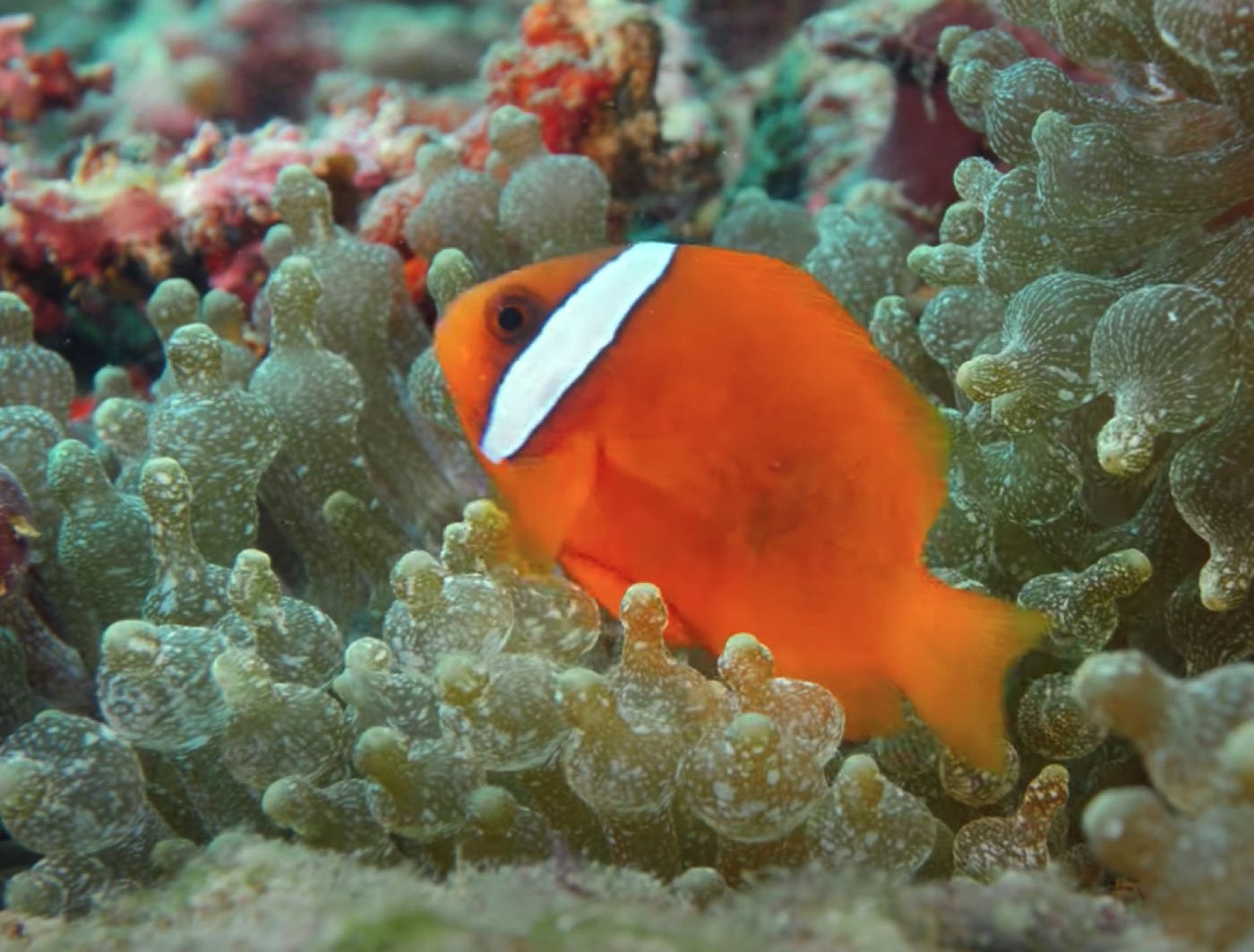
2 black perculas
1 Yellow Watchman
Goby
2 garden eels
4 various pipefish
1 psychedelic
mandarin
7 blue eyed
cardinals - the coolest fish ever!
Inverts
2 fire shrimp
2 cleaner shrimp
3 sexy shrimp
Various snails,
tubeworms, tiny brittle stars, and cucumbers
a host of 'pods
Corals (P = propagated,
WC = wild Collected)
SPS
Purple/blue
tortuosa (P)
Blue stag
(P)
Blue table
(P)
Purple, green,
and orange digitata (P)
Blue, green,
neon green, orange, and red capricornis (P)
Pink, purple
Millepora (P, WC)
Pavona (WC)
Porites and
worms (WC)
Green Slimer
(P)
Mycedium
(P)
Echinophyllia
(P)
Hydnophora
(P)
Yellow Turbinaria
(WC)
Tricolor
(P)
Asst sps
frags (P)
Deep water
acro (P)
Efflorescens
(P)
Blue tipped
acropora (P)
LPS
Pagoda Cup
(WC)
Metallic
Green Frogspawn (WC)
Bi colored
frogspawn (WC)
Hammer coral
(WC)
Green Candy
Cane (P)
Red Candy
Cane P)
Pink Candy
Cane (P)
Green Tubinaria
(WC)
Red Green
brain (WC)
Green Bubble
(WC)
White Bubble
(WC)
Elegance
(WC)
Heliofungia
(WC)
Red Scolymia
(WC)
Multicolored
Cynarina (WC)
Softies
Encrusting
Gorgonian (P)
Purple Gorgonian
(P)
Green Star
Polyps (P)
Clavularia
(WC)
Yellow and
green open brain (WC)
Various Zooanthids
(P)
Green tree
(P)
Colt (P)
Assorted
mushrooms and Ricordias (P)
Xenia (P)
Umbrella
Leather (P)
Yellow Tonga
Leather (P)
Green Toadstool
(P)
Other
Green and Blue
Maxima clams (WC)
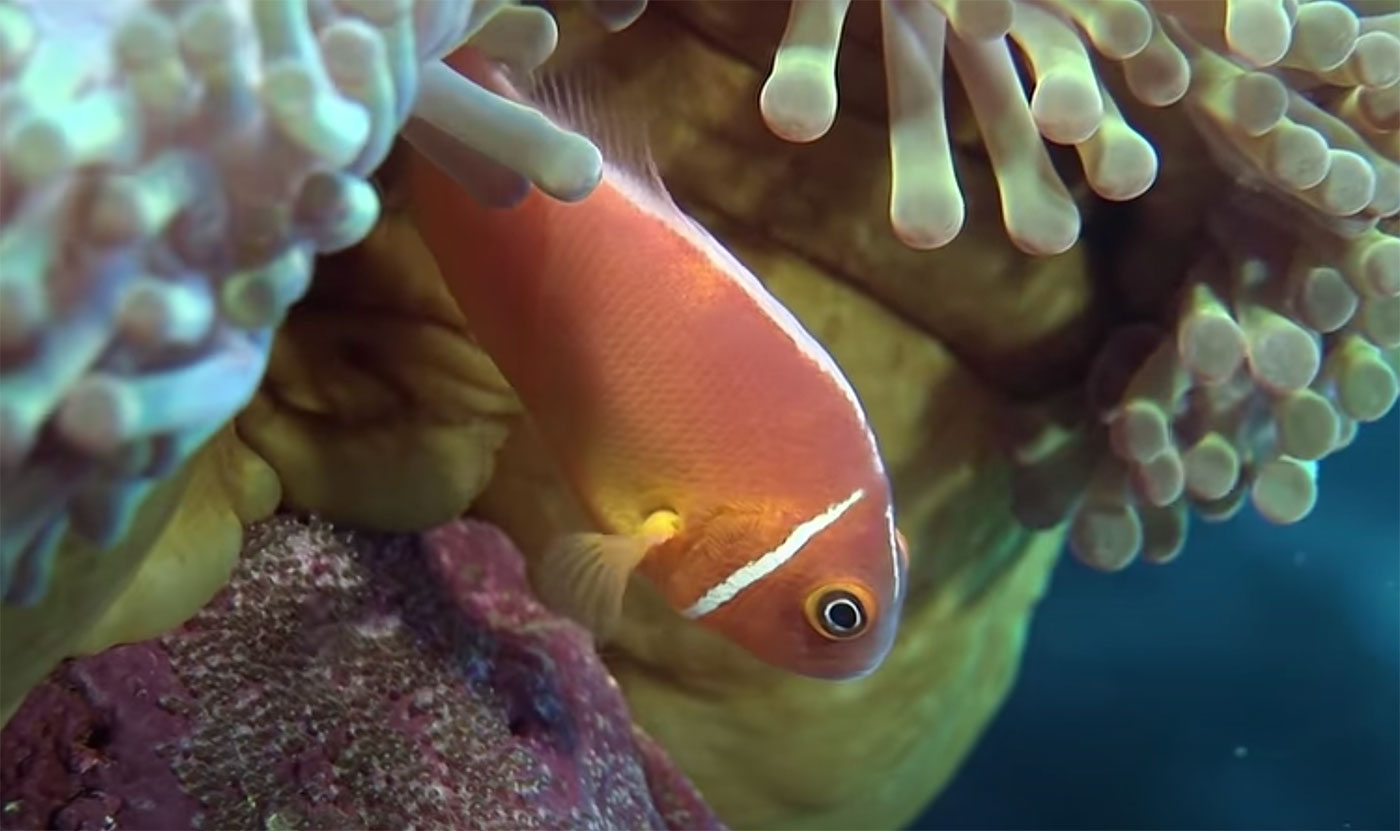
Rose Anemone
(P)
Odds and Ends
I decided not to
clean up all my equipment before I took photos for this article.
I am always more interested in seeing how people actually 'work'
their systems than sanitized pictures for display.
I am not a stickler
for the Latin names of my critters, especially corals because
they are so hard to id correctly - for instance, it looks like
my "Bay Area" tortuosa is actually gomezi.
I don't try to maintain
a particular kind of biotope; rather I choose corals I want
to look at.
I try to buy propagated
corals as often possible, I frag and trade both privately and
to LFS, and if I am buying a Wild Collected coral I like to
split it with at least one other reefer.
Thanks to RDO and
Advanced Aquarist for their support over the years, and for
including my reef as a featured aquarium.