Hey
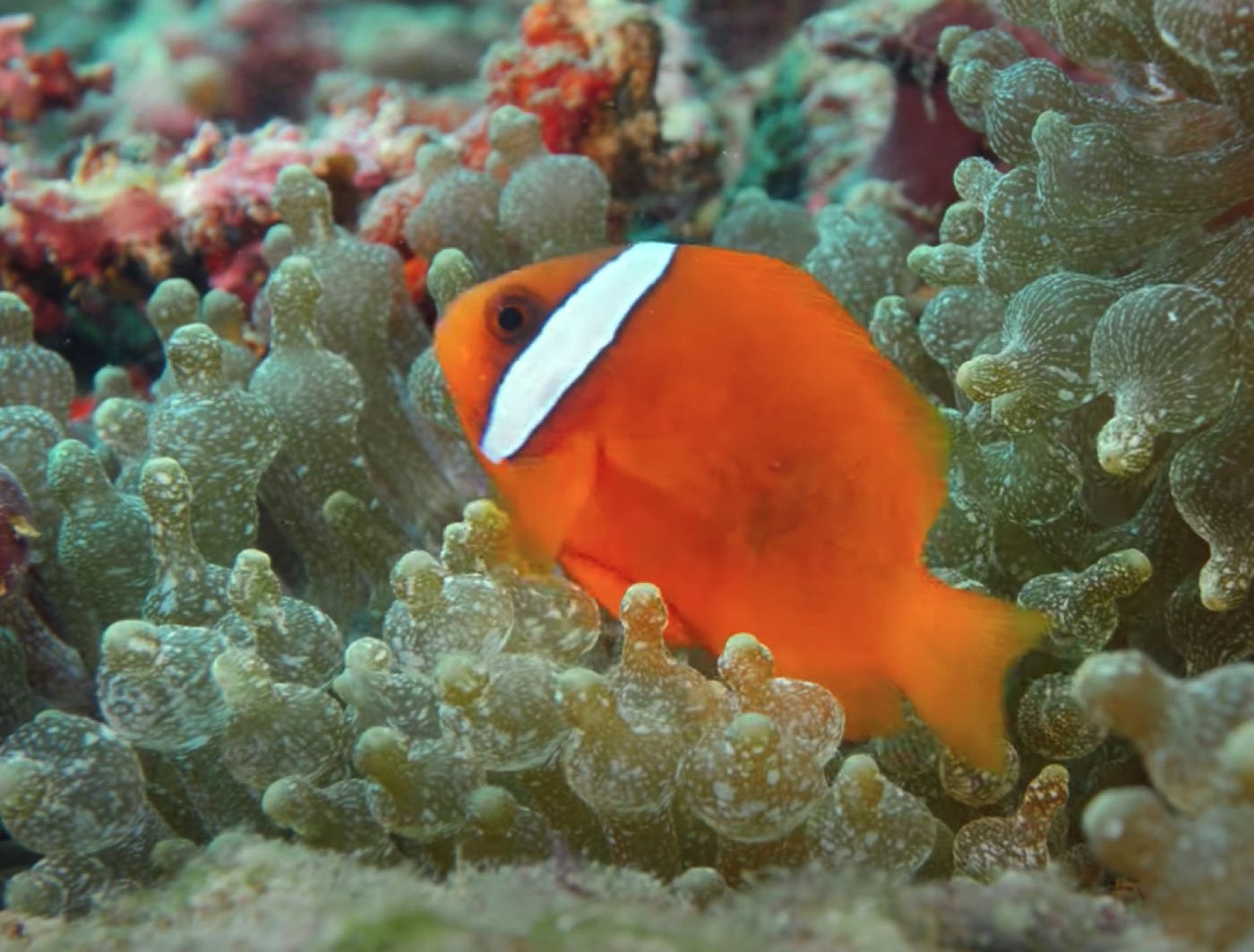
Sally, come look at this. The clownfish spawned!
No!
Really?
Yeah,
look at that egg patch, there must be 500 little yellow eggs
there. And Joe is working them over with his fins and Sally is
chasing off all the other fish. They’re so cute.
Seven
days later.
Wow,
the eggs are still there and they’re all dark and silvery
now. I think that they are going to hatch soon. Do you think
we can we raise them, Joe?
Maybe,
you know they sell for $6.00 apiece in the pet shop. Let’s
see, 500 fish at $6.00 each, gee, that’s $3000.00 dollars.
You know, since Sam moved out we have that spare room in the
back now that we don’t use much. We could set up a little
hatchery in that room. We could move the tanks we have in the
bathroom, the bedroom, the kitchen and the family room in
there. Just leave the big reef tank in the living room, and
that would put all the maintenance in just one place. And sale
of the fish would sure help the bottom line around here….
Yeah,
I read that they spawn every ten days or so. That would be
about $6,000.00 a month. We could quit our jobs!
But
if they hatch, how are we going to raise them? The eggs are so
tiny. Maybe just put a little liquid fry food in the tank?
One
year later.
Boy,
am I glad you’re home. Pair 7 and pair 12 spawned today,
pairs 3, 5 and 10 are due to hatch tonight, three larva tanks
need to be cleaned, we’re almost out of algae paste for the
rotifer cultures, you’re going to have to make up some
vegetable juice formula for them until the new algae paste
shipment arrives, we have to count, pack and ship the fish
from grow-out tanks 4 and 5 to make room for the new juveniles
out of larval tanks 2 and 4, and I accidentally overflowed the
salt mix tank so we have to clean up the floor also. And on
top of that, there are some funny white spots on the juveniles
in grow-out tank 1. And that store on Clover Street, Funny
Fancy Fish, just dropped the price that they pay on the clowns
to $1.50, they say their overstocked. Don’t plan on going to
bed tonight!
Ahhh….
The joys of marine fish culture.
Proud
sponsor of this column
Photo
1. The simplest type of grow-out tank works well but it
can be easily overloaded. This 75 gallon tank is equipped
with a foam pad on the bottom that serves as an "undergravel"
filter. The foam pad can be easily cleaned between batches
of juveniles. This particular spawn produced 952
juveniles, all grown to 3/4 inch size in the same tank.
Photo 2. The Aqualife
grow-out system in the Keys installation in the late
1970s. Wooden stands, overhead delivery of water and
electricity for the lights, and a semi open system made
for a functional, no frills grow-out system that delivered
partially grown out fish to the 300 gallon tanks in the
outside grow-out system.
Photo 3. The Aqualife
grow-out system on Walkers Cay in the late 1980s contained
a couple of hundred 300 gallon tanks. Each tank had its
own water input and lighting was delivered by the
translucent roof. The large yellow ball with the red
circles barely discernable just over the head of the
grow-out technician is designed to scare off birds. Herons
would occasionally get into the grow-out area and fill up
on clownfish. The water system was open but the volume of
exchange could be controlled with a valve on each tank.
Those marine fish breeders
that find success through a lot of vision, hard work, passion
and dedication soon learn that making a hatchery out of a hobby
creates a different breed of cat, sort of like turning a kitten
into a lion. It can take over your life.
But
it that’s what you want to do, you will soon find out that
treatment of water in a grow-out system in the culture of marine
ornamental fish and invertebrates is a situation quite different
from the maintenance of a typical marine aquarium system.
Assuming that the culture project is successful, a grow-out
system will contain a biomass that begins relatively small with
numerous post-larval juveniles and expands relatively rapidly as
the animals grow to large juvenile or young adults. The feeding
regimen also changes, typically with live food quickly giving
way to dry and/or wet particles of processed feed. Then, as the
animals are transferred out of the system for sale or dispersal
to other systems, the biomass in the system declines either
rapidly or slowly. This pattern of increasing and decreasing
bioload in the system requires filtration that can adapt to
these changing demands. In a grow-out system that demands
maximum production of organisms in the available space, the need
for flexible filtration is essential.
Filtration methods that can adjust rapidly to changing demands,
such as protein skimming and mechanical particle removal helps
maintain a stable system. Highly efficient biological filtration
methods such as fluidized bed filters and rotating disks are
most useful when they can be moved, or water flows redirected,
from tank to tank as the biological filtration demands change
from tank to tank or system to system. A successful marine
aquarist who becomes a successful breeder has to reevaluate the
methods and practices of filtration on grow-systems. In
relatively large-scale culture, methods that are successful on
display and brood stock systems are usually not adequate for
grow-out systems.
Anyone with experience in grow-out of marine ornamental
organisms knows that water treatment is essential. For optimum
growth and survival, the water delivered to the enlarging body
of growing fish or invertebrates has to have an adequate
temperature and salinity, an acceptable water quality and, of
great importance, be free of disease organisms. And it is here
that economic problems rear their ugly head. Unless one is
independently wealthy (or doing research for the government) and
the culture of a particular marine organism is being conducted
independent of the necessity to sell the organisms at a profit
(or most likely just the break even point), the breeder very
soon becomes aware of disparities (usually a negative figure)
between the cost of culture
and the financial return from the cultured organisms. There is
always the need to maximize survival and reduce costs of
production. After the capital costs, food and water treatment
practice most greatly affect survival, and thus the bottom line
in marine organism culture.
There are three basic
types of grow-out systems. These are open systems
where water is taken from a natural source, treated as
necessary, put through the system and then discarded, and a
closed system where water is recirculated through all necessary
filtration and treatment and reused in a system as long as
possible. The third is a hybrid of these two where a source
of natural water is available, but recirculation with variable
filtration is employed to create the best system for both
function and economics. In all these water management schemes,
after adequate water quality is assured, elimination and/or
control of disease organisms rapidly becomes absolutely
essential. In a grow-out tank, it is basically impossible to
eliminate a disease problem through rapid water flow alone
unless the incoming water contains a powerful enough chemical
agent that can permeate the tank to the degree that the disease
organism is totally destroyed.
There
are two basic rules in the construction and operation of a
grow-out system.
1.
Construct each grow-out tank so that it is independent in water
flow from every other grow-out tank. In an open system this
means that each tank has its own water supply that originates
from the source. No tank should ever flow into another tank. In
a closed system this means that there is a barrier of some sort
that prevents infection from traveling from one tank to another.
A type of filtration, usually a very effective ultraviolet
filter, must be placed to isolate each tank from a
microorganism infection that might be in another tank.
2.
When disease is observed in one grow-out tank, immediately
isolate and treat that tank appropriately. Also make every
effort to avoid contamination between tanks by sterilization of
nets, siphons, and tools between uses and washing hands between
working in different tanks. A breeder of ornamental marine
organisms (or any other aquatic organism for that matter) soon
learns that, careful or not, a disease can wipe out months of
effort and expense in space of a few hours or days.
Given good water quality and good nutrition, probably the most
common and destructive disease problem in marine fish culture
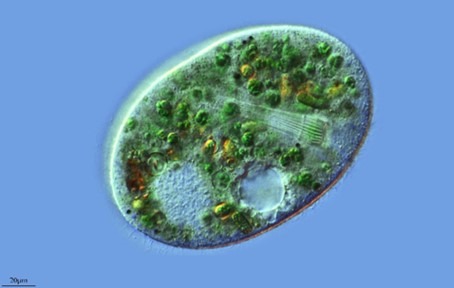
are protozoan parasites, in particular the dinoflagellate,
Amyloodinium ocellatum. This bug is especially insidious because
it can propagate in both closed and open systems within a single
grow-out tank despite large volume changes within a short period
of time, can easily get carried from tank to tank, and is
quickly lethal to most fish once large numbers have infested a
fish. There are many various treatments for this parasite out
there, but the most effective treatment that I have found, at
least in a cultured fish grow-out tank, is use of citrated
copper. In fact, in the open system grow-out set ups that I have
used in the past, we use a metering pump to add citrated copper
to the incoming water at levels of between 0.05 and 0.1 ppm to
prevent this organism from invading the grow-out tanks.
Photo 4. Even
more sophisticated is the grow system at ORA. A foot bath
prevents carrying disease organisms from other areas and
each tank has its own water supply.
In our hybrid systems, the water was treated
with chlorine and/or copper in a storage tank before use to prevent
introduction of protozoan parasites. In a totally closed system that
uses artificial seawater for exchange, the only source of protozoan
parasites is introduction from wild fish or other organisms or
material introduced from wild sources. In this case quarantine for
three weeks and/or treatment is the only barrier to potential
infection. Totally separate systems for incoming fish, larval rearing,
and grow-out are also important not only for management of water
treatment but also as a barrier to transmission of disease organisms.
The brood stock, the "seed corn" of the operation, must be
protected by all means possible from introduction of parasitic
disease. Of course, there is the potential for infection from either
spontaneous generation or just plain magic, both of which I think I
have experienced.
There are many other problems and diseases that
can be (and if you do it long enough, certainly will be) experienced
by a breeder of marine organisms. Various bacterial diseases are at
the top of the list, and the best protection against bacterial
infections is to keep a clean tank, reduce organic matter in the
system, and provide good water quality despite however high the
bioload in the system. A pro-biotic approach is gaining popularity
with farmers of food fish and this may have application with
ornamental fish. This is a system where bacteria that are good for the
system and reduce the growth of disease causing bacteria are
introduced into the system before the culture begins. A subject that
requires much more exposition than I can provide in this article.
There is a disease syndrome that I have experienced in the grow-out of
almost every fish I have cultured. It culminates in the death of all
the fish (or almost all) in the grow-out tank within usually a single
day. It may be caused by a bacterial toxin, perhaps a species of
Vibrio, that is released by the bacteria and not by the action of the
bacteria itself upon the fish. The bacterial colony is apparently
contained mostly within the biological filter since this syndrome was
most severe in those tanks that contained a biological filter within
the tank. Once the appearance of the syndrome is noticed, marked by
the behavior of the fish, the only method of preventing wholesale
death to the fish in that tank, is to quickly move the fish to a tank
has not been affected by this condition. If moved quickly
enough, the fish recover completely. Any fish that are not moved are
doomed. The signs of the syndrome are rapid gilling, rapid loss of
body mass (probably due to loss of water from body tissues), heading
all in the same direction toward incoming water flow, and a noticeable
shimmy in the swimming motion. We termed this condition the
"toxic tank syndrome" and it was the primary reason for
turning our early fish farm to open rather than closed grow-out
systems.
This same syndrome may also be responsible for the great difficulty we
had with culture of the large French and gray Atlantic angelfish,
Pomacanthus spp. We could not rear them through the larval stages in
any numbers until we began using the antibiotic streptomycin in low
levels in the larva tanks. The success of this treatment certainly
pointed to a bacterial toxin as the cause of the problem. However,
antibiotics and other expensive chemical treatments in grow-out
systems with large volume water exchange and/or biological filtration
is certainly not cost effective. Use of antibiotics as a water
treatment makes sense when used as a temporary treatment in a grow-out
tank without water flow but not as continuous prophylactic large-scale
treatment of an entire system. When antibiotic treatment of a tank or
system of grow-out fish is required, it can be economically and
biologically effective to put the treatment in the food of the fish
rather than in the water. That way the treatment, usually an
antibiotic, is delivered most effectively to the target organism and
the presence of the antibiotic in the water is minimized. The effect
of any treatment in a grow-out system on the biological filtration
must be considered before application of the treatment. This is one of
the strongest reasons for building in physical separations and the
potential of individual operation of each grow-out tank.