Ferrous
Oxide Phosphate Removers
| |
|
| |
|
| |
Proud
sponsor of this column |
| |
|
There
are two kinds of reef keepers, those who have had algae problems
and those who will. Controlling algae growth is one of the
challenges that virtually every reef keeper faces at one time
or another. One reason is that nutrients tend to accumulate
in a reef tank, and one of the most opportunistic organisms
that can use those nutrients is algae. One key nutrient for
algae is phosphate. Phosphate is essentially a fertilizer
for plants including algae, so controlling phosphate is critically
important for controlling algae.
For
many years reef hobbyists have had success lowering excessively
high phosphate levels with products such as SeaChem's PhosGuard.
Some hobbyists, however, have avoided using this type of phosphate
remover because they use aluminum oxides to bind the phosphate.
Aluminum oxide does remove phosphate, but isn't an ideal product
for a reef tank. First, while aluminum oxide can reduce seriously
high phosphate levels, it often leaves enough phosphate in
the water for nuisance algae to remain a problem. A second
issue is the presence of aluminum in the filter material.
The material has to be washed thoroughly to remove fine aluminum
particles, but even if washed the material can increase aluminum
levels in a tank. See this Advanced Aquarist article for more
information. www.advancedaquarist.com/issues/july2003/chem.htm

Figure
#1: PhosBan and Rowaphos |
|
Some
time ago European hobbyists began using a new approach to
phosphate removal. Instead of using aluminum oxides to remove
phosphates, they began using ferrous (iron) oxides. Advocates
of iron oxide phosphate removers argue that iron oxide has
two primary advantages over aluminum oxide for removing phosphates.
First, it can remove a greater proportion of phosphate enabling
hobbyists to reduce phosphates to lower levels than they can
with aluminum oxide. Secondly, they point out that iron oxide
phosphate removers contain no aluminum. The iron oxide based
products began appearing on American shelves last year, and
initial reports have been very positive.
The
two best known products available in North America are Two
Little Fishes PhosBan and Rowa's Rowaphos. Both products are
iron oxide based, but there are physical differences between
the two products. Rowaphos is wet with a caviar-like appearance.
The manufacturer recommends keeping the material moist and
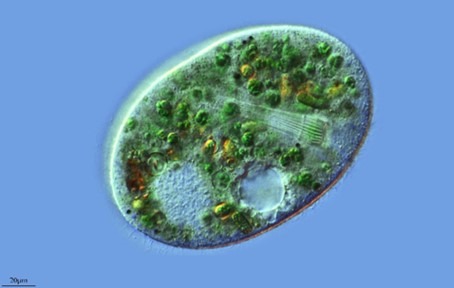
the container tightly closed. Phosban particles appear similar
from a distance, but under the microscope look quite different
(figure1). It ships dry and there are no cautions about its
storage. Both materials are quite fine and can end up dispersed
in the tank if a hobbyist is careless in securing the media.
Fortunately both products include filter bags to contain the
media. Recommended dosage differ somewhat. Rowaphos recommendations
are based on volume. They recommend 2 milliliter per gallon
of saltwater. In contrast, Phosban recommendations are based
on weight. They recommend 1 gram for each gallon of water.
I paid about the same for one hundred milliliters of Rowaphos
and 150 grams of Phosban, so using the respective company's
recommendations, the smallest package of Rowaphos will treat
50 gallons while Phosban will treat three times that volume.
To
test the effectiveness of Phosban and Rowaphos, I used both
products on small test tanks filled with water from mature
heavily fed reef tanks. One test run used water from a tank
with orthophosphate levels that could only be detected using
a spectrophotometer. The second run used water from a tank
with levels easily detected by a hobbyist test kit like Salifert.
The test tanks held a little over two gallons of tank water.
Five grams of each media were sandwiched within filter media
and placed in Marineland Duetto internal filters. Orthophosphate
levels were measured using a Hach DR4000 Spectroradiometer.
Phosphate levels were measured at the start and then hourly
until levels failed to decline further, generally about seven
to eight hours.
The
bottom line is that both products work, and using similar
quantities of material work similarly. Figure 2 shows the
results. Each product reduced phosphate very quickly and ultimately
lowered levels by two thirds. At these levels, phosphate was
undetectable (to my eyes) by the Salifert test kit and at
the detection limit of the spectroradiometer. The second run
began with phosphate levels twice as high as the first run.
Again, the products performed similarly (data not shown).
Orthophosphate levels dropped to less than 0.02 mg/l, which
while 50% less than initial levels is still higher than recommended.
This suggests that the media was exhausted.

Figure
#2 |
Iron
oxides and bleaching
Some
hobbyists have reported problems with the iron oxide based
products. Hobbyists have reported a reduction in pH while
using the products, and in a few cases the bleaching of stony
corals. If the observed decline in pH is reflecting a decline
in alkalinity, this may mean that oxides are precipitating
some component of the reef tank's buffering system. A rapid
change in alkalinity has been linked to bleaching in reef
tanks. To examine this issue, a third test was devised. Water
from the reef tank with high phosphates and an alkalinity
of 7 dKh was divided between three test tanks. Water in one
tank was simply circulated using a small powerhead. The second
tank was filtered using 5gm of Rowaphos in a Marineland Duetto.
The third tank also had 5gm of Rowaphos in a Marineland Duetto.
However, to this tank I added a small amount of ESV B-Ionic
to increase alkalinity to nearly16 dKh. This would tell us
whether elevated alkalinity had any impact on the results.
I monitored pH and phosphate over the next 22 hours.
The
pH in the tank with no Rowaphos dropped slightly over the
22 hours, from 8.19 to 8.09. As figures 3 and 4 show, pH dropped
for both tanks with Rowaphos. The tank with elevated pH and
alkalinity dropped the furthest, nearly one pH unit. In contrast,
the tank with lower initial pH dropped only 0.2 units. The
tank with alkalinity of 7 dKH at the beginning of the run
was still 7 dKH at the end. In contrast, the tank with alkalinity
of 16 dKH declined to 11 by the end of the run. While further
study is necessary to draw definitive conclusions, the super-saturated
state that some hobbyists operate their tanks may account
for the problems reported. Regardless of the explanation,
a hobbyist using iron oxide based phosphate removers should
be aware of the potential decline of pH and plan accordingly.

Figure
#3 |

Figure
#4 |
In
summary, iron oxide based phosphate removers are effective
at lowering phosphate levels in a reef tank and can reduce
them to natural seawater levels. There appears to be little
difference in effectiveness of the two leading brands, so
one can use either depending on price and availability.
| |
|
|
|
Proud
sponsor of this column |
Proud
sponsor of this column |
| |
|