Patience and thoughtful planning are
important
factors in achieving a stable and long-lived captive reef. Pictured is a close-up of the
center section of Pratt Reef highlighting a pleasing mixture of hard corals, soft corals,
clams and fish.
I am honored to be asked to continue writing my column
for novice reef hobbyists in this exciting new venture called Advanced Aquarist.
While planning for this first installment, my attention was once again drawn to the
question that began my very first Reefkeeping 101 column ( see http://www.reefs.org/library/aquarium_frontiers/Reefkeeping_101.html for 101 columns) for Aquarium Frontiers On-Line: What place does a beginners
column have in a magazine dedicated to the" advanced aquarist"? In answer, I ask
you all to consider your own humble entrance to this passion we know as reef-keeping. I
for one was wide-eyed, giddily enthusiastic and largely clueless regarding the
practicalities, realities and demands of the successful reef-keeper. It took a long time
and much trial and error before I was finally able to sort through and make sense of the
flood of complicated and seemingly contradictory information coming my way. I had my share
of difficulties and unnecessarily jeopardized the lives of far too many beautiful
creatures. I learned a lot along the way, but it took quite a while to be in a position to
meaningfully engage the level of material presented in the rest of this outstanding
publication.
The 11/2 year old, 210 gallon reef system known as
"Pratt Reef' is located in the Writing Center on the Pratt Institute campus in
Brooklyn, NY. Highlighting aquacultured and captive bred organisms, the system design and
maintainance practices follow closely the general philosophies and recommendations to be
detailed in this column.
In short, "advanced aquarists" dont
become advanced over night. It is my hope that this column will provide the foundational
information necessary for novices to thoughtfully design, build and maintain healthy,
responsible reef systems. To do so, I will rely on my own experience, the anecdotal
evidence of the many aquarists that I know, and the expert advice of the other authors of
this publication. By keeping the discussion practically oriented, and relatively
non-technical, beginners can start to achieve success with a minimum of heartache and more
quickly "advance" to the more complex issues of reef keeping.
Proud sponsor of this column
Blastomussa wellsi is a very durable
coral tolerating a wide range of lighting and water quality perameters. This uncommonly
beautiful red specimin has been in captivity for many years.
Whenever I am asked for advice about starting a reef
aquarium, I always respond by asking, "Are you sure you want to do this"? An
annoying response perhaps, but one which cuts to the heart of a lot of issues that
surround the ultimate success or failure of many aquarists. Setting up and properly caring
for a reef system is time consuming and costly. While we all strive for efficient, low
maintenance, self-sustaining marine systems, novices should understand that a casual
relationship to your reef is not realistic. The commitment to the animals in our care is
long-term and needs to be taken seriously.
It has
been my experience that novices who carefully consider these realities and then decide
they want to proceed are far more likely to succeed than those who dont.
So how much of a time commitment does one have to make?
This is a hard question to answer definitively, but I can say with confidence that you
will end up investing far more time than you initially think you will. Moreover, you may
not even realize it until something changes and you no longer have that time to give. Let
me give you a personal example. I have always felt the need to reserve at least 15-20
minutes a day to deal with the minimum requirements for my system, dealing with things
like calcium supplementation, top-off water, feeding etc. I also budget an additional 2-3
hours a week for more substantial tasks like cleaning the glass, maintaining the skimmer,
and observing the system and its inhabitants for changes that may indicate the onset of
problems. Additionally, I always cleared the better part of an afternoon once a month to
deal with larger maintenance issues like cleaning pumps, changing light bulbs, water
changes, testing water quality, pruning and general fiddling with things. I havent
even mentioned the endless hours of pleasurable amusement watching, talking about, and
shopping for this wonderful undertaking!
As a sucessfully planned and
maintained reef
system matures, the relatonships between corals and fish begin to resemble those found in
nature. Here a Green Chromis (Chromis virdis) finds a natural refuge in the branches of a
green Montipora digitata.
Proud sponsor of this column
About a year ago marked
the joyous arrival of my son Alexander in my life. I no longer have those afternoons to
play with my systems as playing has taken on a whole new meaning for me. However, my
systems do suffer from the lack of attention. Things that should get done dont, and
things that must get done dont get attended too as frequently or as soon as I would
like. My point here is that as your life situation changes so does the level of attention
and care to your reef system. It is helpful to think about this before you decide to get
started. If you are planning to make some significant lifestyle changes in the near
future, maybe now is not the time to start dabbling with reef tanks.
Once youre convinced you are willing to make the
time sacrifices necessary to succeed you need to think about how much money you are
willing to spend. Without a realistic budget, you cant plan much further. Beautiful
reef systems can be achieved in a variety of sizes, with a variety of approaches, and for
greatly varying price tags. None of them come cheaply. There are lots of hidden costs, and
I would suggest you pad your budget accordingly. If you are handy, you can save a lot of
money building your own components. If youre not, you need to research your
purchases carefully or be prepared to buy a lot of stuff you ultimately dont need.
Once you have a budget in mind, you really need to start doing a
lot of reading, and asking a lot of questions. You need to evaluate the physical space the
system will occupy. How much weight can the floor hold? Is there an accessible water
supply? How about electrical outlets? Things like proximity to windows have real impacts
on captive systems. Noise is another consideration. Really, there is a lot to think about.
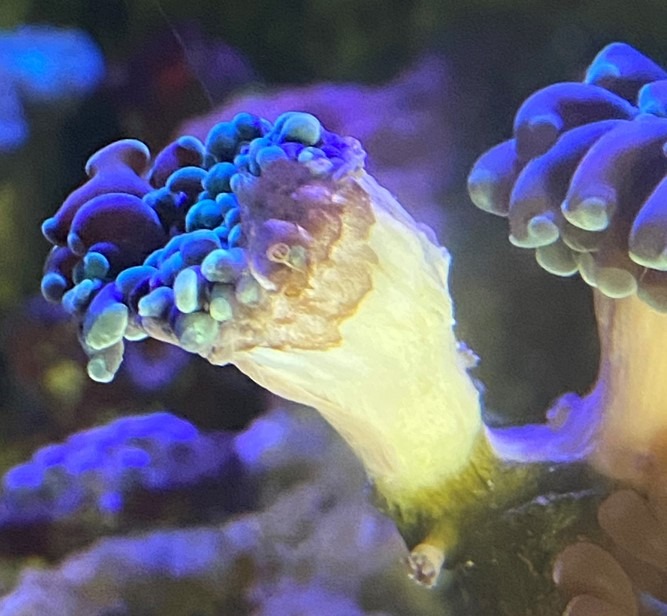
Fungia sp. corals are representative of several
large, single polyped species appropriate for the home aquarium. While reasonably hardy
under stable conditions, I would not recommend this coral to true novices. The specimin
pictured here is thought to be aquacultured in the South Pacific presumably the result of
budding off of a mother colony.
Montipora capricornis is a very
popular coral that is readily available as captive raised fragments. It is hardy, fast
growing, and forms beautiful cupping formations in the aquarium. One of my personal
favorites, the red morph pictured here is one of the center pieces of Pratt Reef.
Most important of all, you
need to think about what kinds of organisms you want to keep. Ultimately, this will
determine the type and size of the system you put together, the kinds of equipment you
need to acquire, and how much this is going to cost in time and money.
My recommendation is
that you take a step back and read actively. Develop
questions you want answered and familiarize yourself
with the language and concepts of the hobby. Ill
be available to help you in the interactive forum
of this publication.
Those of you, who are beginning now, are fortunate that
there is a wealth of quality information readily available to you. There is no better way
to succeed in this pursuit, than to arm yourself with accurate and useful information.
There are wonderful books, magazines and web resources that can give you a tremendous
start in the right direction. If you are reading this article, you have already found your
way to Reefs.Org. This is a wonderful place to start your inquiries and I suggest you
browse through the archives and FAQ files. My next column will take a closer look at some
of these resources and help you to focus your inquiries more efficiently. I hope this
column will prove useful to you, as I intend it to address directly and clearly things
that novices need to know to successfully become "advanced aquarists".
Seastars like this Fromia species are
beautiful and
reef safe, but they are delicate with a spotty record of survival in captivity. All
Seastars must be acclimated very slowly to aquarium conditions and are especially
sensitive to rapid changes in salinity and pH.