I set up a 60 gallon refugium aquarium about
9 months ago and seeded it with various species of macroalgae. Im happy to report
that the aquarium has met my expectations, despite the fact that commensal flatworms of
the Order Acoela hitchhiked into the aquarium on some of the macroalgae. The exact species
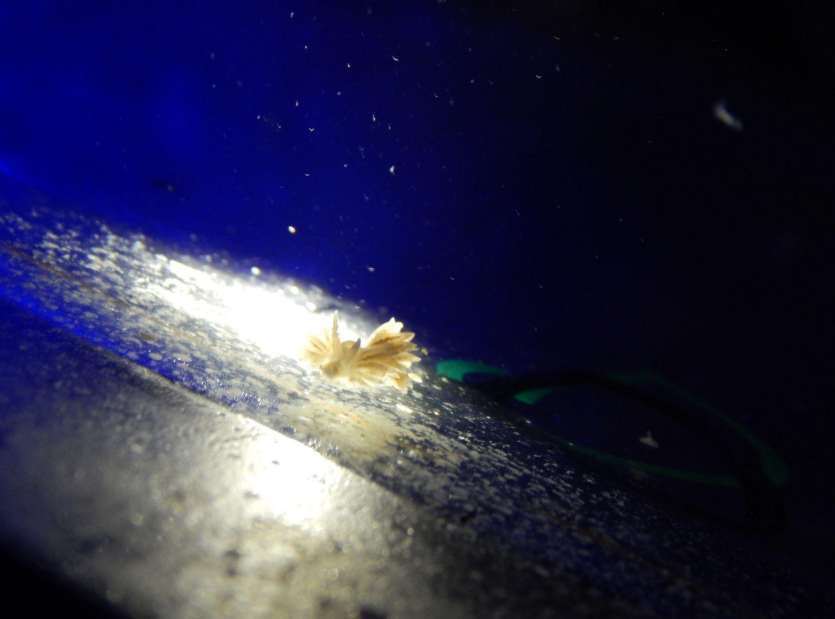
is Convolutriloba retrogemma. This is a non-parasitic flatworm that presumably
feeds on algae and detritus in the aquarium. It can grow to a length of 5-7 mm and is
red-yellow in color. Similar to corals, this species of acoel flatworm incorporates
zooxanthellae in its body. Given enough food and enough light, it multiplies asexually by
fission and can become an unsightly plague in the aquarium. I discovered that they can be
removed by siphon easily enough, but I intentionally let them multiply in order to
experiment with biological controls.
I introduced various species of Anampses and Macropharyngodon
wrasses, which include small marine worms as part of their natural diet, but these
fish showed no interest in the flatworms. The spotted mandarinfish (Synchiropus
ocellatus) is purported to feed on acoel flatworms, so I added two of these to the
aquarium. I never observed them feeding on the worms and the flatworm population continued
to increase. These flatworms are apparently distasteful to most fish because they
accumulate toxic substances within their bodies.
Julian
Sprung and Charles Delbeek wrote in Reef Aquarium Volume Two that certain
nudibranchs of the genus Chelidonura feed exclusively on acoel flatworms. I was
able to acquire two Chelidonura varians nudibranchs at a local store. These
attractive nudibranchs measured 5 cm in length and sported electric blue lines along their
jet black bodies. Interestingly, they are shaped similar to their flatworm prey and
possess two streamer-like appendages and a hammer-shaped head. Within minutes of being let
loose in the aquarium, they began devouring the flatworms. Their feeding actions can best
be compared to vacuum cleaner. As they come upon a flatworm, they fold part of their body
and form a straw-like proboscis that they use to "suck" up the worms. They
definitely began to make a dent in the population of flatworms, but there was still plenty
to eat.
Proud sponsor of this column
Within a few weeks of feeding
on the flatworms in the aquarium, I noticed that both specimens became larger and more
"plump." One evening they came together and spawned. They left behind a large
curly mass of white-colored eggs attached to strands of algae by a sticky substance.
Nudibranchs are simultaneous hermaphrodites and over the past few months they have taken
turns laying egg masses throughout the aquarium. The egg mass is typically 5-6 cm in
length and 2-3 cm in width. The eggs hatch within three to four days but I have not seen
any larvae, which isnt surprising since they are smaller than rotifers and not
visible to the naked eye. I plan to place a subsequent batch of eggs in a petri dish and
view them under a stereo microscope. I hope to observe the development and eventually
hatching of larvae.
The
author's refugium, discussed in this article. The psychedlic wrasse in the photo is
discussed in this month's Aquarium Fish column as well.
Many tropical species of
nudibranchs have extended planktonic stages and I dont anticipate any of the pelagic
larvae will settle out and become juveniles in the aquarium. They will most likely become
food for other organisms in the main aquarium, which is one of the reasons for maintaining
a refugium in the first place!
Acoel
flatworm close-up.
Acoel
flatworms on aquarium glass.
Chelidornura
feasting on flatworms.
Chelidonura
feeding on flatworms on rhodophyta algae.