Morgan
Lidster's "Cultured Marine Ornamentals, 2003"
This
is a review that I've wanted to do since the last meeting
of the Marine Aquarium Conference of North America (MACNA
XV), in Louisville, Kentucky. At that conference Morgan
Lidster of Inland Aquatics made a very important presentation
titled, "Cultured Marine Ornamentals, 2003." Other issues
that needed timely discussion came up in the interval since
MACNA XV, but I'm glad to have the opportunity to inform
you of his information gathering now. Lidster has been involved
in the ornamental mariculture industry since the early 90's,
and is currently maintaining a large facility in Terra Haute,
Indiana. (http://www.inlandaquatics.com/).
He currently acts as a clearinghouse for available cultured
fish and non-sessile invertebrates, supplies broodstock
to mariculture facilities and cultures a number of organisms
other than fish.
Proud
sponsor of this column
In my conversations
with him about his presentation, Morgan stressed the need
for supporting successful efforts to provide marine
aquarists with fish that have a high probability of survival
in the tanks of amateurs. We now know more and more about
the failures. In my March column on the Marine Ornamentals
Conference 2004, I reported that fish mortality in the "chain
of custody" from collector to importer to retailer and hobbyist
is appalling. In that column I stated, "Peter Rubec of the
International Marinelife Alliance Fish estimated mortality
to be 50% in the process of removing fish from the reef to
on-shore holding facilities of uncertain quality, then at
30% at each additional step in the chain, culminating in what
may be an over 90% mortality before retail purchase. Experimental
evidence indicated that the combination of the collection-induced
stress of capture associated with removal from shelter, bagging,
crowding etc. and from starvation for 3 days of 'purging,'
in addition to high ammonia levels in the holding bags, produced
more than 66% mortality within 13 days from capture. An additional
indication that stress from these procedures is lethal is
that reports from retailers of deaths on arrival or within
4 days after arrival is 30% on the west coast, 40% in the
mid west and 60% on the east coast, as the fish are moved
from west to east in space and time."
These statistics
not only alarm conscientious aquarist, they contribute to
the poor reputation our hobby has among conservation and
fisheries management groups. How can we justify taking these
fish from the reef if a substantial majority of them are
essentially doomed? To the extent that we can encourage
aquarium culture and aquarium breeding of important ornamental
species we can provide and obtain fish with a far higher
likelihood of adjustment and survival in our tanks, while
at the same time repairing our reputation. In this light,
Morgan Lidster's work to assemble information on cultured
aquarium species is an important step forward.
In his presentation,
Morgan gave a comprehensive overview of the contributions
of workers in the field of culturing marine aquarium species
and the current availability of cultured stock. He gave
an historical overview of the successful developments in
the aquaculture of marine aquarium fish, listed the currently
available species and their producers, and suggested candidates
for home breeding attempts. He also discussed some of the
difficulties involved in the marketing of aquacultured specimens
and pointed to developments for the future.
He started by
stating that although there is a wide and continually changing
variety of cultured ornamentals available, little information
has been made available to hobbyists about them. This makes
it unlikely that "information empowered" aquarists will
request or demand cultured specimens and will understand
the need to support and promote both mariculture efforts
and the distribution of their products. He chose to emphasize
the available fish and non-sessile invertebrates rather
than focusing on coral propagation. A list of suppliers
and their contact numbers will be provided at the end of
this column. As noted, the number and type of species available
is constantly changing. Contact suppliers for up-to-date
lists.
Lidster organized
his listing of cultured species by dividing culture successes
into three periods. In the first period, breeders like Martin
Moe, Frank Hoff, Chris Turk and others produced "pioneer
species" more than 30 years ago. Like many such efforts,
these largely proved unprofitable for the pioneers. Nevertheless,
these species have remained more or less in constant production
ever since.
A. Pioneer
Species
Organism
Current
Suppliers
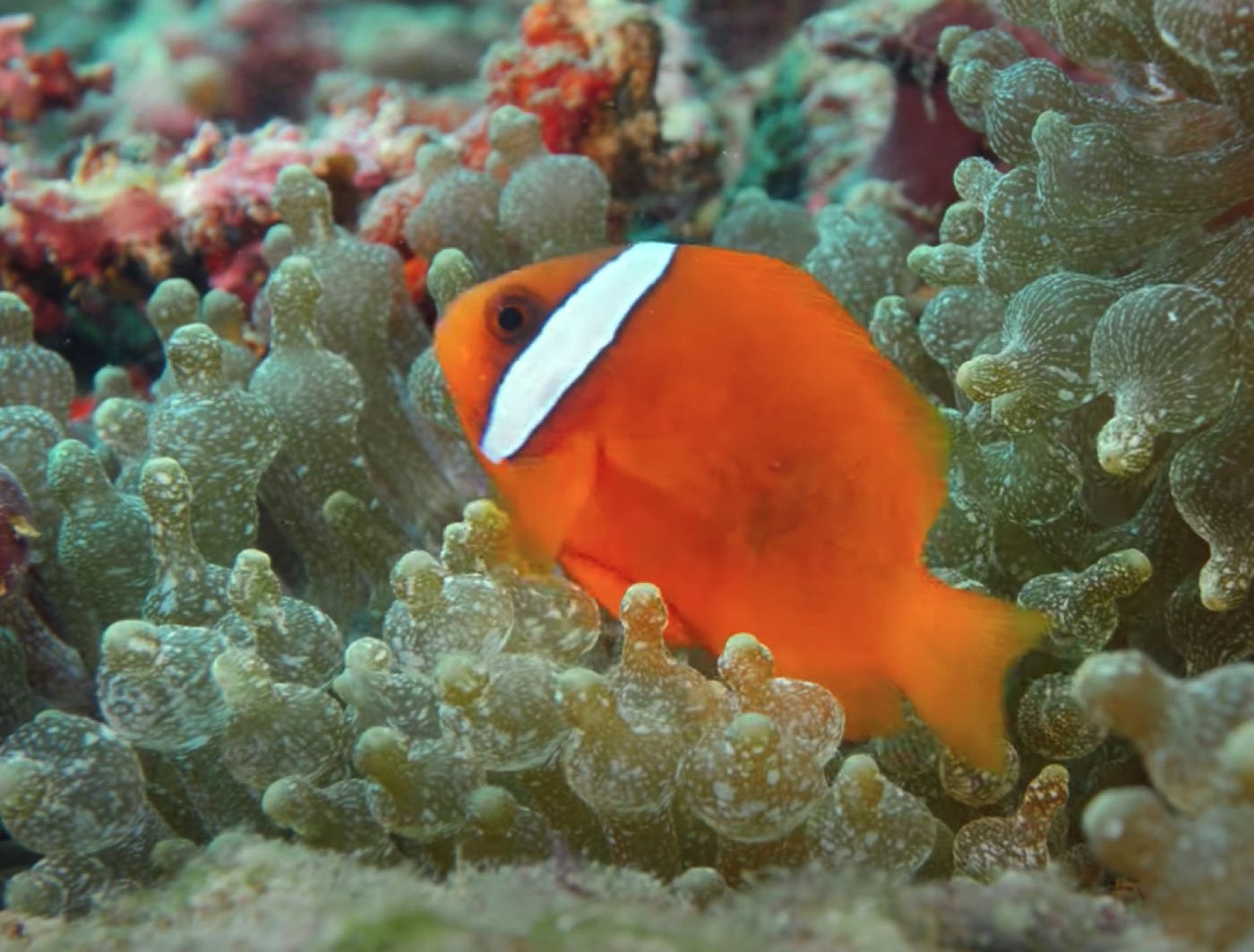
Anemonefishes
- Amphiprion sp.
A. ocellaris,
percula, frenatus
C-Quest,
Fish Fetish, ORA, Reef Propagations, Tropicorium.
Next Lidster
lists a group initially raised 10 to 15 years ago, largely
by C-Quest and Aqualife Research. Bill Addison's work during
this period was particularly important.
B. Second Generation
Species
Organism
Current
Suppliers
Anemonefishes
- Amphiprion sp.
A.
sandaracinos, akallopisos, periderion
C-Quest,
ORA, ProAquatix.
A.
melanopus, clarkii, ephippium
C-Quest,
Fish Fetish, ORA, ProAquatix, Reef Propagations.
A.
ocellaris ("Tangerine")
Inland
Aquatics.
A.
percula ("Onyx")
C-Quest,
Inland Aquatics.
Gobies
- Gobiosoma sp.
G.
multifaciata
C-Quest.
G. randalli
Fish Fetish
ORA, ProAquatix.
G. randalli
x G. oceanops
ORA, ProAquatix
Basslets
- Pseudochromis sp.
P. fridmani,
aldebrenis, flavivertex
C-Quest,
Fish Fetish, ORA, ProAquatix.
P. fuscus
C-Quest.
P.
sankeyi
C-Quest,
ORA, ProAquatix.
P. olivaceous
C-Quest
P. springeri
C-Quest,
Fish Fetish, ProAquatix.
Cardinal
fish - Banggai
Pterapagon
kauderni
Inland
Aquatics, ORA, ProAquatix.
Next were listed
those species cultured in the last 2 or 3 years, most notably
by ORA and ProAquatix. These years also saw improved marketing
and distribution. The most significant additions have been
in community and schooling species.
C. Recent Additions
Organism
Current
Suppliers
Anemonefishes
- Amphiprion sp.
A. bicincius
ORA, ProAquatix.
A. chrysopterus,
A. negripes
Inland
Aquatics, ORA.
A. polymnus
C-Quest,
ORA, ProAquatix.
A. sebae
ProAquatix.
A. tricinctus
ORA.
Gobies
- Gobiosoma sp.
G. chancei
C-Quest.
G. puncticulatus
C-Quest,
Fish Fetish, Tropicorium
Gobiodon
prochilus
C-Quest.
Cryptocentrus
cinctus, leptocephalus,Lutheri
ProAquatix.
Basslets
- Pseudochromis sp.
P. splendens
C-Quest,
Fish Fetish, ORA, ProAquatix.
P. stenei
C-Quest.
Assessor
flavissimus
ORA.
Gramma
loreto
ProAquatix.
Cardinal
fish - Banggai
Sphaeramia
nematoptera
ORA.
Fang
Blennies - Metacanthus sp
M. atrodorsalis,
grammistes, bundoon
ProAquatix.
Seahorses
- Hippocampus sp.
H. barbouri,
erectus,kuda. procerus
Ocean rider,
ORA, others.
Angelfishes
- Pomacanthus sp.
P. asfur,
maculosus
ORA (Taiwan)
Other
fishes
Marine
Betta - Callopesiops altivelis
ORA, ProAquatix.
Puffer
- Arothron meleagris
ProAquatix.
Non-sessile
invertebrates
Shrimps
- Lysmata sp.
ORA
Nudibranch
- Berghia verrucicornis
Inland
Aquatics, ProAquatix, ww.seaslugs.com
Lidster concluded
by pointing to future goals and major obstacles. First and
most importantly, successful commercial mariculture in all
its forms will ensure that our hobby has a future. The major
obstacles to the achievement of this goal are significant.
Overhead and other costs present major economic obstacles
for producers. Aquaculturists may be highly skilled at breeding
and rearing animals and passionate about these activities
but they seldom have the same skill and enthusiasm about
marketing and distributing them. (This is not a problem
for breeders of ornamentals only. In my experience working
with commercial producers for food fish species, marketing
skills are their weakest point also.) Here is where the
end-point consumer, the aquarium hobbyist, must play a more
active role. We must encourage our LFS to provide cultured
organisms - even demand that they do - and we must be prepared
to pay a premium price for these specimens. Our reward is
that we acquire organisms with much better ability to adapt
successfully to our tanks and to survive over a period of
time that corresponds to their natural life span.