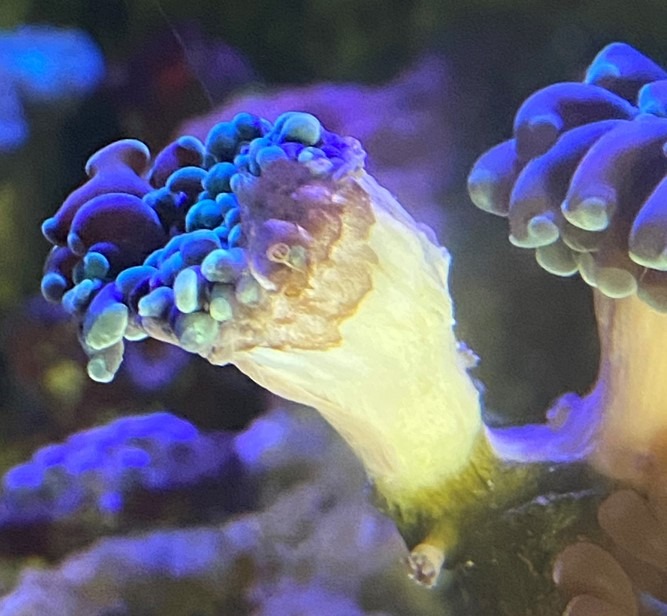
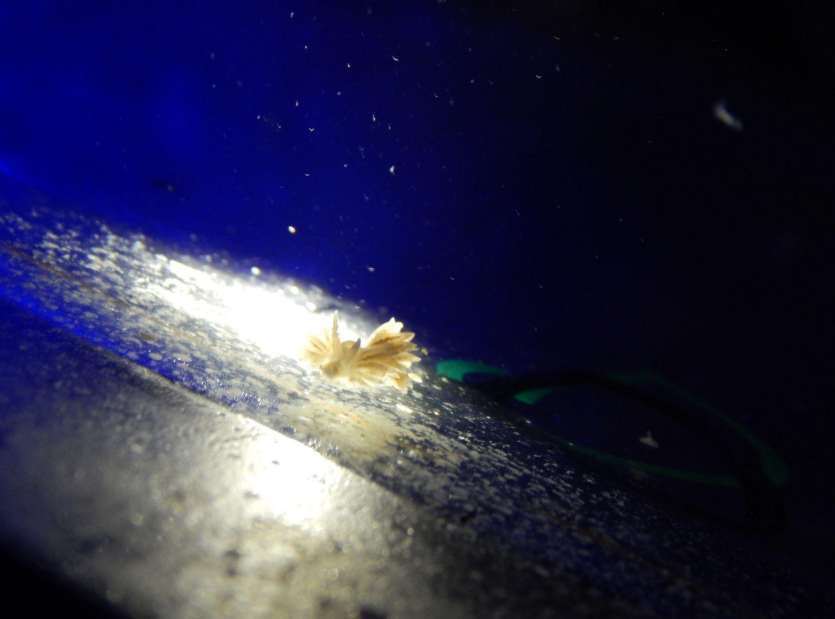
A
newly hatched Cryptocaryon irritans seeking a
host might very well fall victim instead to a hungry Euphyllia
ancora in editors tank. Photo
by Terry Siegel
I don’t
think it’s an exaggeration to say that for virtually
every marine aquarist the number one enemy standing in the
way of success with coral reef fish is the pathogen know as
Cryptocaryon irritans, often call saltwater Ich.
Through out the Seventies it reached epidemic concentrations
in almost all fish only aquariums. It could be eliminated
with a combination of copper and formalin, but at concentrations
that often brought the host (fish) near elimination simultaneously.
I often felt that killing saltwater Ich was like trying to
kill cancer in humans with chemotherapy – would the
patient survive the so-called cure? Wise and seasoned aquarists
learned to quarantine new fish to prevent the reintroduction
of the pathogen.
With the establishment
of reef tanks a superior environment was provided for reef fish,
and fewer became afflicted with saltwater Ich, either because
fish’s immune system’s were healthier, or it was
harder for the parasites to reproduce and find hosts, before
becoming food themselves for hungry invertebrates. A newly hatched
Cryptocaryon irritans seeking a host might very well
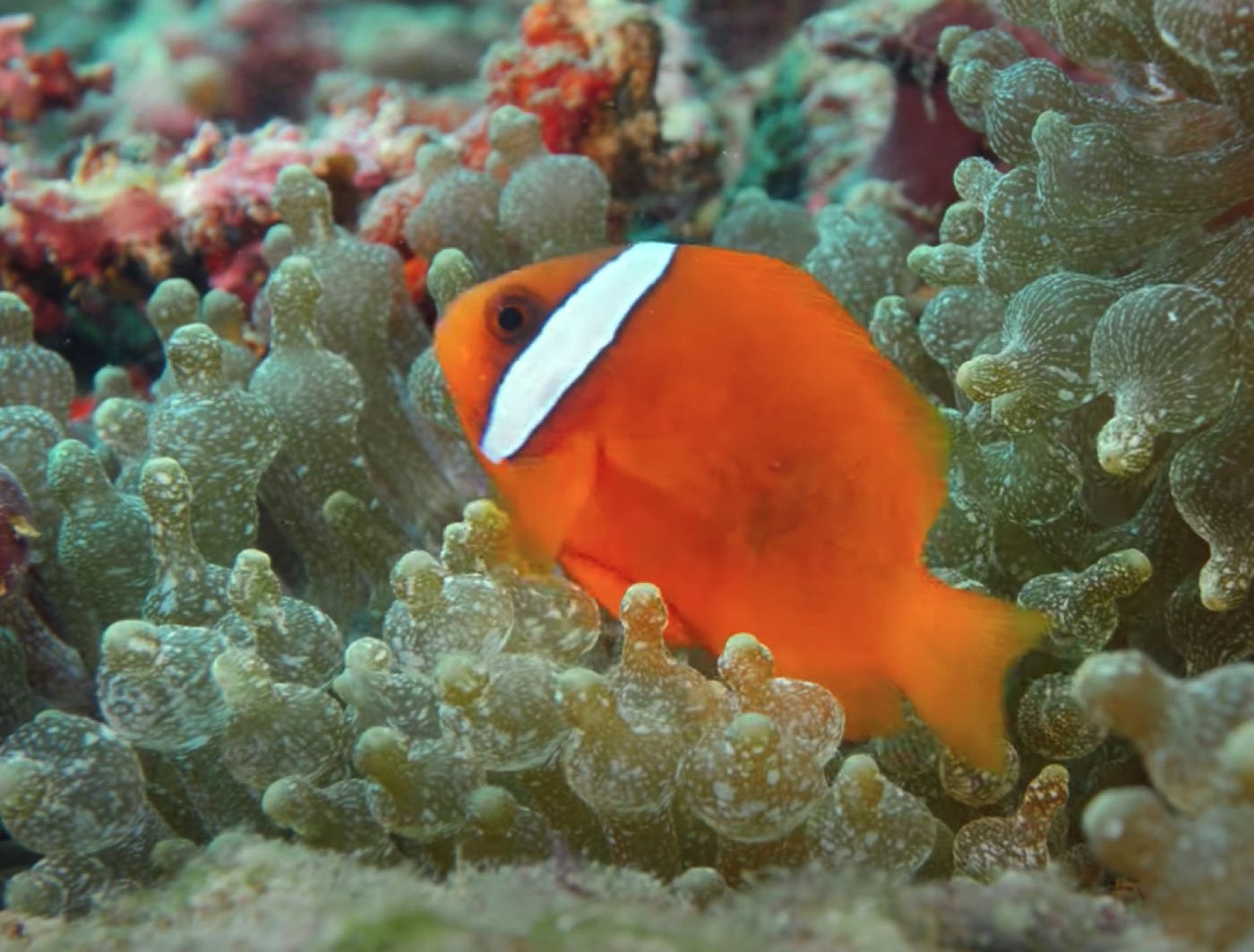
fall victim instead to a hungry Euphyllia ancora. See
the photo of the author’s 15 year old E. ancora.
Unfortunately, despite
healthier fish and predatory corals, newly introduced parasites
often do find hosts and begin to reproduce to numbers dangerous
to ones fish. What compounds the problem is that the most effective
cures known to this author cannot be used in a reef tank. Saltwater
Ich is after all an invertebrate, and what will kill it will
also kill other invertebrates in ones reef tank. This is the
dilemma faced by all too many reef keepers, especially those
too impatient to quarantine their new fish first.
With this in mind,
Advanced Aquarist begins in this issue a five part series on
Cryptocaryon irritans. The author, Terry Bartelme,
has studied this parasite in great detail and will offer the
benefit of his research in this series. I understand that if
you are having problems with saltwater Ich now you can not afford
to wait 5 months for advice, but I’m sure that Terry will
offer you advice if you post your question to our Author’s
Forum. This is one of the great benefits of online publications
– immediacy.