BETA
GLUCAN AS A BIOLOGICAL DEFENSE MODULATOR:
HELPING FISH TO HELP THEMSELVES
Sponsored
in part by:
Have
you ever watched helplessly while a favorite fish battled an
illness and you didn’t know what to do? Identifying fish disease
is difficult, especially for hobbyists. Many of the most common
symptoms that fish exhibit when ailing are shared by a multitude
of possible causes. Unless a correct diagnosis (or educated
guess) is made the odds of a happy ending are not in your "wet
pet’s" favor. Most hobbyists are forced to make a "best
guess" as to what is causing the problem and how to counteract
it. A water change is usually a good first step, but is there
anything more that can be done without first becoming a fish
disease expert?
Wouldn’t
it be great if there were one thing that we could give any sick
fish that could help it? Aquarists dream of a “magic bullet”
that could be used as a treatment for a plethora of problems.
Ideally this “magic bullet” would be helpful regardless of whether
the infecting agent is bacterial, viral, fungal, or parasitic.
It would even help fish to recover from stress, abnormal growths,
and exposure to toxins such as ammonia. Let’s not forget that
our magic bullet would have to be safe for fish, easy to administer
and have no known side effects. It could even be used in conjunction
with any medication.
We
all know that finding such a magic bullet is just a pipe dream,
sort of like searching for the “Holy Grail”, right? Does anything
like this actually exist that can be used with animals? I know
that this will come as a surprise, pleasant as it may be, and
it sounds so fantastic that it may be hard to accept, but something
on this order is available! I wouldn’t say that it is a “cure
all”, but it is useful against pathogens and other threats to
fish health management. Evidence for its effectiveness is abundant.
A significant number of studies have been published in scientific
journals that can be used as references. These reports comprise
of trials in human and veterinary medicine, as well as studies
performed on fish and invertebrates.
A
Polleni Grouper (Epholopholis polleni): a rare
and beautiful species, but one that may still derive the
same health benefits from Beta Glucan as other species.
What
is it?
Beta 1,3 glucan is the chemical name for a molecule that comes
from the cell wall of Baker’s yeast. This natural substance
is extracted from Baker’s yeast or saccharomyce cerevisiae
by stripping away layers of carbohydrates, proteins and other
materials that make up a yeast cell.
Endogenous
substances that stimulate cells of the mononuclear phagocyte
system are called immuomodulators. Beta glucan, or more specifically
B-1,3 D polyglucose, is an immunomodulating agent that enhances
major host defense mechanisms.
It
is categorized by the Food and Drug Administration as “Generally
Recognized As Safe” or GRAS and it is non toxic to fish with
no known side effects. Beta glucan is safe to use in conjunction
with herbal remedies (i.e. garlic) or pharmacological drugs.
It has also proven to enhance the effects of vaccines and antibiotics.
Proud
sponsor of this column
How
does it work?
Macrophages are a type of white blood cells that
are found in most tissues and organs of the body.
They play a central role in the defense of all multi-cellular
animals against invading pathogens. Beta glucan
is strongly stimulatory to macrophages (Seljelid
et al., 1984). These white bloods cells, in turn,
set in motion a cascade of other immune system activities.
Macrophages circulate the body in search of foreign
invaders (antigens).When they find a foreign invader
they then engulf them through a process known as
phagocytosis. They degrade the invader into peptides
that are used to communicate the presence of foreign
bodies to B-cells and T-Cells in the immune system.
These cells are a part of the acquired immune system
that learns to adapt and defend the body against
specific threats. Simplified, acquired immunity
is how the body becomes more resistant or immune
to certain pathogens after exposure.
Non-specific
defense mechanisms of the immune system are vitally
important in protecting fish (Secombs and Fletcher,
1992). Beta 1, 3 D glucan is a non-specific immune
system stimulant, meaning that it activates the
immune system to respond in a general way rather
than against a specific type of pathogen or invader.
This makes it a valuable tool against bacterial,
viral, fungal and even parasitic pathogens, but
it is not limited to these.
Beta
glucan works as a biological defense modifier. It
activates the immune system by stimulating receptors
on macrophages that cause them to react as if a
fungus is attacking the body. Biochemical studies
have identified this receptor on fish macrophages
and netrophils (Engstad and Robertsen 1993; Ainsworth
1994; Engstad and Robertsen 1994). Administering
beta glucan begins a chain reaction of events which
heighten cellular immune response. It stimulates
the production of white blood cells such as macrophages,
neutrophils and monocytes that combat invading pathogens.
Cellular mobilization is increased helping immune
system cells to recognize antigens and move to where
they are needed most. The immune system’s capacity
to engulf non-self cells is augmented and the productions
of anti-microbial agents are increased.
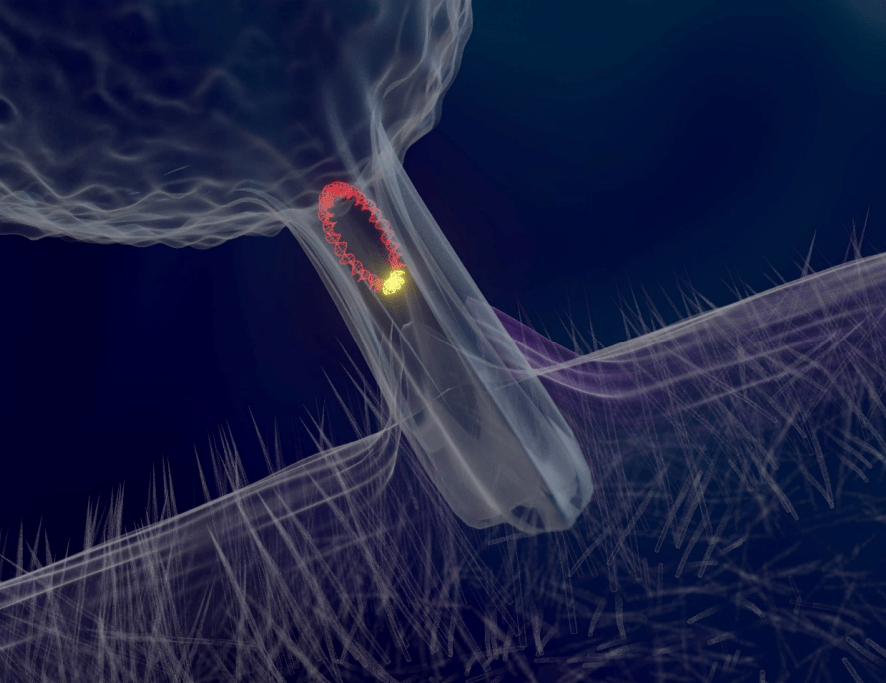
Illustration
by Leita Earl
Figure
1: Macrophage adheres to bacterium
Figure
2: Pseudopodum formation is the protrusion of the cell
membrane engulfing the invader
Figure
3: A phagosome is formed when the macrophage encapsulates
the invading bacterium
Figure
4: Phagosome moves deeper into the macrophage
Figure
5: Phagosome comes into contact with lysosome
Figure
6: Lysosome and phagosome fuse together forming a phagolysosome
Figure
7: Lysosomal enzymes and toxic oxygen compounds dissolve
contents in the peptides
Figure
8: Digested material moves towards the cell wall
Figure
9: Digested material is expelled (exocytosis) from the
macrophage
Why
use it?
Beta glucan has shown promise in trials against viral, fungal,
parasitic and bacterial infection. It has proven in numerous
scientific studies to be an immodulating agent that can enhance
the major host defense mechanisms of the immune system. It is
safe to use with any drug or chemical and it works synergistically
with all current modes of therapy.
It
has long been known that antibiotic treatment brings with it
the risk of creating mutant or resistant strains of bacteria.
Beta glucan could avoid this problem and is especially helpful
when used in conjunction with antibiotics.
Pretreatment
with Beta glucan means that the host can activate and proliferate
defense mechanisms at a faster rate than invading organisms.
This will give the animals a head start against pathogens. Fish
that have been exposed to an ill tank mate should be given beta
glucan to prevent the spread of contagious disease.
Proud
sponsor of this column
When
should it be used?
Stimulating immune function prior to attack can prove
to be especially effective against facultative pathogens.
This would include infections such as those caused by
Vibrio anguillarum, Flexibacter columnaris, Trichodina
spp. and fungal infections such as Saprolegnia
spp. Beta glucan may also help fish combat obligate
pathogens such as the parasite Cryptocaryon irritans
and viral diseases such as Lymphocystis.
Beta 1-3D
glucan can be administered to newly acquired specimens
during the quarantine period. Fish that have recently
been netted, transferred or otherwise handled are stressed.
Stress inhibits immune function. Beta glucan helps to
alleviate the effects of stress and it can prevent illness.
It helps wounds to heal more quickly. Beta glucan is useful
for helping fish recover from exposure to toxins in the
water. Beta glucan has also shown to give positive results
against tumors, or abnormal growths.
Beta
glucan has proven useful in mice suffering from lymphocytic
leukemia that were infected with Staphyloccal Aureus or
“Staph” simultaneously. This suggests that it may be employed
in immuno-compromised animals to avert infectious and/or neoplastic
disease (abnormal growths).
Animals
that are obviously sick should also be fed beta glucan. Do not
forgo all other treatments for fish diseases or disorders in
favor of beta glucan. It is especially helpful when used in
conjunction with other therapies such as antibiotics.
Beta
glucan has applications for spawning and rearing fish. Immersing
free-floating larvae (embryos) and juveniles of marine fish
with beta glucan will make them more resistant to infection
and improve growth rates.
Administering
beta glucan
Beta glucan has been shown to transfer to the blood circulation
of Atlantic Salmon after oral administration (Svein Bjornsson
et al, 1991). This means that it can be given to fish by adding
it to food in small quantities. If you make your own fish foods
then mix some beta glucan into the gelatin that holds it together
and then freeze it. Bioencapsulation is another effective means
of getting beta glucan into fish as a dietary supplement. This
can be accomplished by adding beta glucan to saltwater that
contains live adult brine shrimp several hours before feeding
the shrimp to fish. Brine shrimp are filter feeders so they
will ingest beta glucan and then you can feed the enriched (gut
loaded) live food to your fish. You can also simply sprinkle
a small portion on the food just prior to feeding.
It
is important to note that studies indicate that the most effective
form of Beta 1,3-D glucan is extracted from Baker’s yeast or
saccharomyce cerevisiae. The diet should also be supplemented
with vitamins and highly unsaturated fatty acids. These nutrients
may enhance the capacity of immune system cells that are stimulated
by the use of beta glucan.
Since
there are no known side effects and it is not a drug giving
the fish an exact dose is not critical. The dose of 0.02% a
day of body weight has been suggested. However, safety evaluations
indicate that beta glucan can be used over a wide dose range.
Studies with animals suggest that the optimal oral dosage of
beta glucan is in the range of 0.4-1.5 grams per 100 kilograms
of body weight per day. Feeding a larger portion probably will
not improve the results, can be expensive and is not intended
as a replacement or reduction in the amount of food normally
offered.
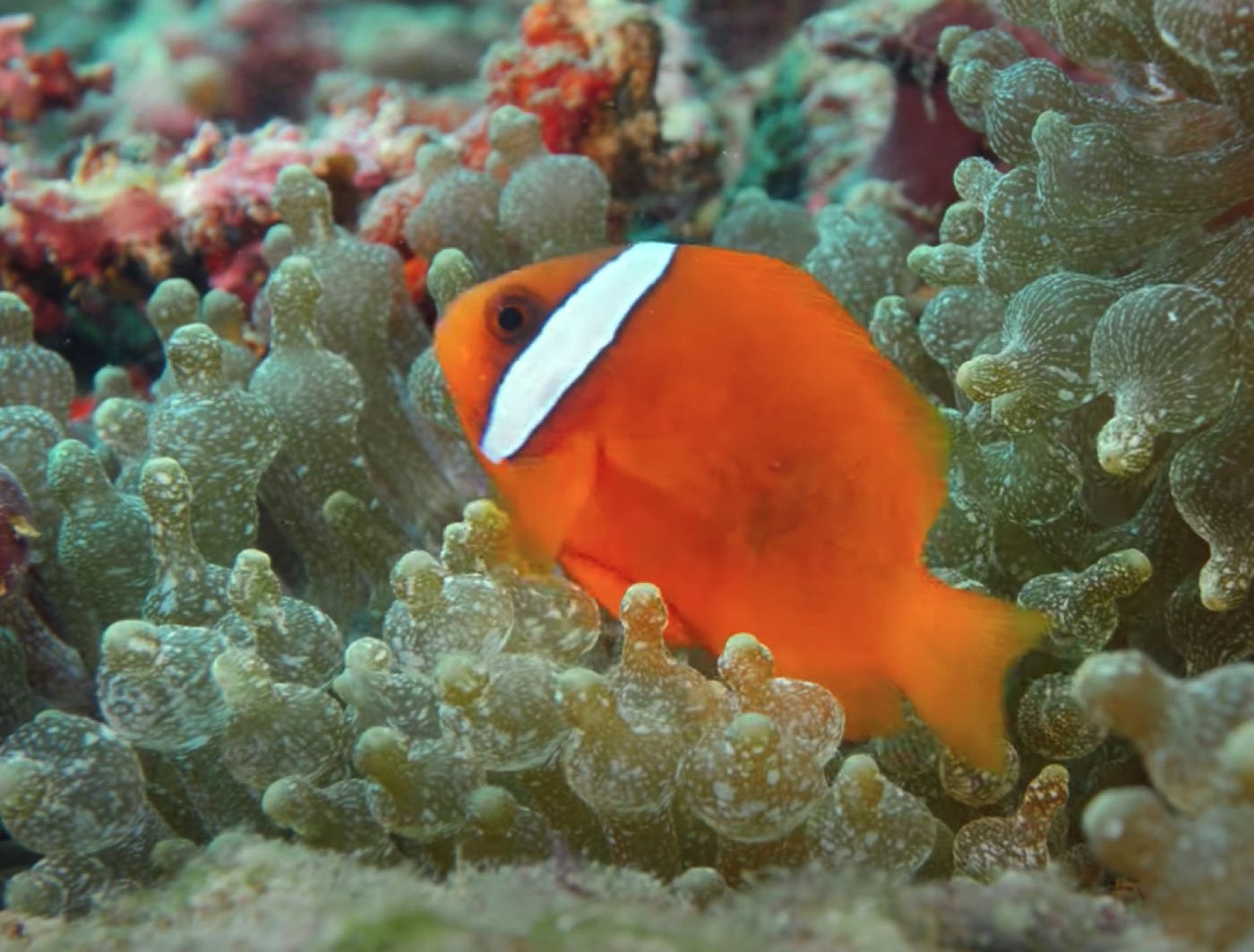
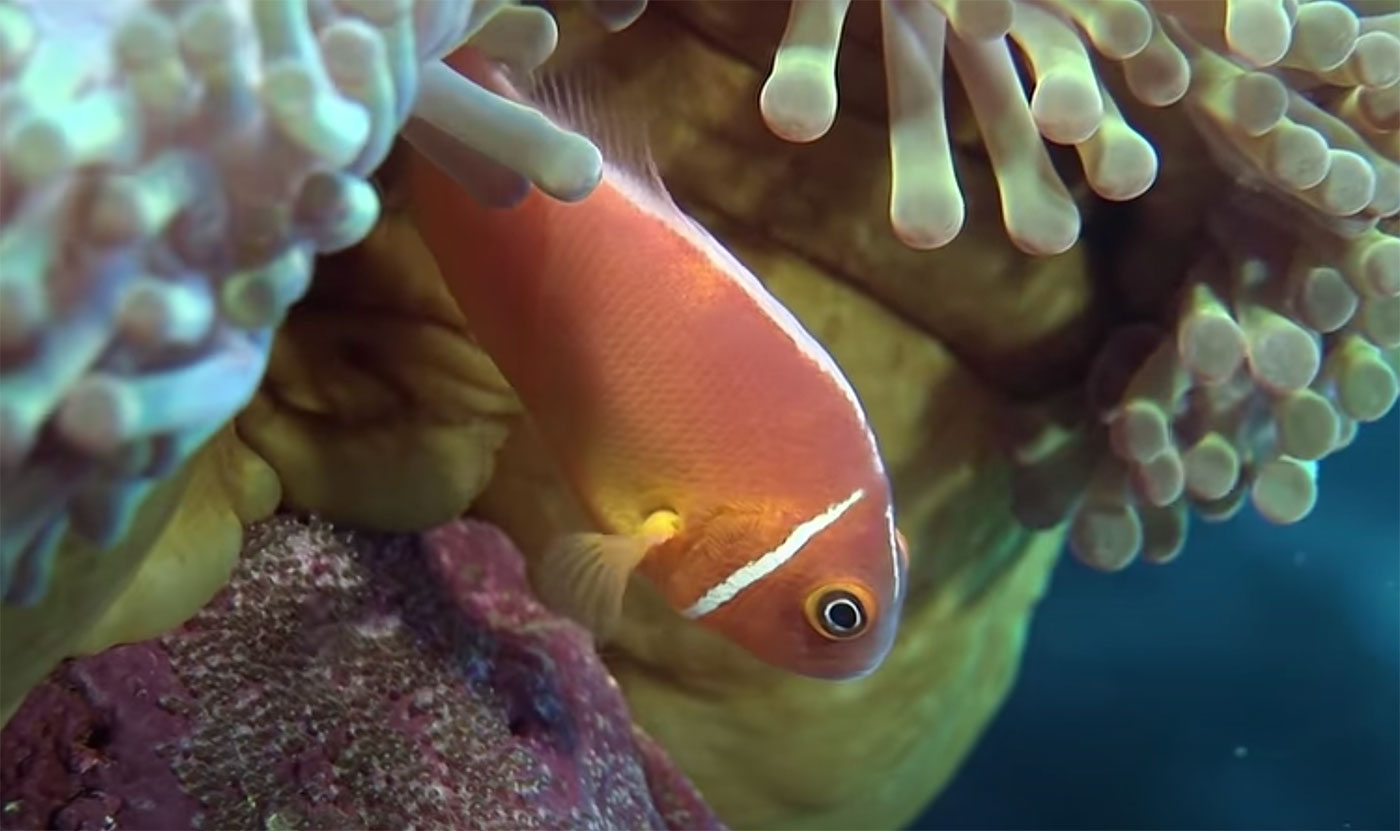
A
Clark's Clownfish (Amphiprion clarkii) in a Rose
Bubble Tip anemone (Entacmaea quadricolor). Like
most Amphiprion sp., the Clark's Clownfish is
susceptible to numerous diseases and may benefit from
Beta Glucan administration.
Where
to get it
Beta glucan can be found (albeit may take some persistence)
at some local health food stores. It is available from Source
Naturals among others. I suggest using the 7.5mg capsules because
they are a more pure form of B-1, 3 glucan. Open the capsules
and add a small portion in the food. You can find out more on
their website at www.sourcenaturals.com.
There are many other product and information sources available
on the Internet.
Foods
and additives containing beta glucan are also packaged for the
aquarium industry. One of these products is Carasius Immun™.
It can be found at http://www.dajanapet.cz/carasius_immun_A.html.
Several Ocean Nutrition products list beta glucan among the
ingredients. Marc Weiss brand products has an additive called
Marine-Fish Vital™ that contains beta glucan.
(The products mentioned above serve only as examples and are
not intended as endorsements.)
Notable
Studies of the Effects of Beta Glucan:
B-1,3 glucan has been demonstrated to enhance macrophage
phagocytic functions( Riggi, Di Luzio, 1961).
Enhancement
of macrophage number, function and size (Ashworth, Di Luzio,
Riggi, 1963) (Burgaleta, Golde, 1978)
Increased
spreading of macrophages has been used as an indicator of
activation in studies on fish (Secombs, 1987).
Beta
glucan generates a significant difference in macrophage
cell diameter and spreading as observed 12-24 hours after
incubation. (B. Sveinbjornsson, R Seljelid, 1993).
It
initiates phagocytic activity and production of anti-microbial
mediators. This includes leukotrines, super oxide, tumour
necrosis factor (TNF), prostaglandins and interleukins (Robertsen,
Engstad et al. 1994).
Feeding
beta glucan enhanced macrophage activity in turbot (Scopthalamus
maximus (L.) (Debaulny, Quentel et al.1996) and channel
catfish (Ictalurus punctatus) (Duncan and Klesius 1996).
Another
study reported that shrimp infected with Taura Syndrome
had a survival rate of less than 20%. The administration
of beta glucan increased their survival rate up to 90%.
NSC-24™ in prevention of Taura Syndrome in shrimp. 1995,
ImmuDyne, Inc. Unpublished
Summary
Beta-1, 3-glucan is effective in all mammals as it is in fish
and birds with its immunoenhancing properties established in
a number of fish species. It has applications for prophylactic
and therapeutic use. Beta glucan may be used as an alternative
to antibiotics and vaccines for protecting farmed fish against
microorganisms, or microparasitic disease. It also can be used
together with vaccines to improve the effectiveness and it is
non-toxic to fish. Beta glucan also works well in conjoint therapy
with other treatments.
Beta Glucan products have been in practical use for many years
in animal feeds all over the world to improve health of aquaculture
species, pets and farm animals. Pretreatment definitely increases
survival rates with enhanced phagocytes function and the inhibition
of cellular injury. An overall enhancement of immune response
can be achieved by the use of beta glucan. This may in turn
allow fish the opportunity to effectively combat disease. Using
beta glucan as a dietary supplement carries the potential to
significantly impact the quality of health as well as longevity.
Further
reading
Norwegian Beta Glucan Research, Clinical Applications of Natural
Medicine, Immune: Depressions Dysfunction & Deficiency Jan
Raa, PhD, Rolf Engstad, PhD, Robert Settineri, MS. http://www.immunocorp.com/research.pdf.
Further
references
1.Ainsworth, Jerald. A. A B-glucan inhibitable zymosan receptor
on channel catfish neutrophils. Veterinary Immunology and
Immunopathology, 41 (1994) 141-152.
2. Babineau TJ, Marcello P, Swails W, Kenler A, Bistrian B and
Forse RA (1994). Randomized phase I/II trial of a macrophage-specific immunomodulator
(PGG-glucan) in high-risk surgical patients. Ann Surg 220(5): 599-600.
3. Browder W, Williams D, Lucore P, Pretus H, Jones E and McNamee
R. (1988). Effect of enhanced macrophage function on early wound
healing. Surgery 104: 224-230.
4. Browder W, Williams D, Pretus H, Olivero G, Enrichens F,
Mao P, et al. (1990). Beneficial effect of enhanced macrophage
function in the trauma patient. Ann Surg 211(5): 605-612.
5. Browder W, Rakinic J, McNamee R, Jones E, Williams D and
Di Luzio N (1983). Protective effect of nonspecific immunostimulation in postsplenectomy
sepsis. J Surg Res 35(6): 474-479.
6. Chandra RK (1997). Nutrition and the immune system: an introduction.
Am J Clin Nutr 66:460-63S.
7. Chirigos MA (1992). Immunomodulators: current and future
development and application. Thymus 19(Suppl 1): S7-20.
8. de Felippe Jr. J, da Rocha e Silva Jr. M, Maciel FM, Soares
A and Mende NF (1993). Infection prevention in patients with
severe multiple trauma with the immunomodulator beta 1-3 polyglucose
(glucan). Surg Gynecol Obstet 177(4): 383-388.
9. Engstad RE and Robertsen B (1994). Specificity of a ß-glucan
receptor on macrophages from Atlantic salmon (Salmo salar L.).
Developmental and Comparative Immunology 18: 397-408.
10. Engstad RE and Robertsen B (1995). Recognition of yeast
cell wall glucan by Altantic salmon (Salmo salar L.) macrophages.
Developmental and Comparative Immunology 17: 319-330.
11. Engstad, Rolf.E.; Robertson, Borre. Recognition Of Yeast
Cell Wall Glucan By Atlantic Salmon (Salmo salar L). Macrophages.
Development and Comparative Immunology, Vol. 17, pp.319-330,
1993.
12. FDA: Federal Drug Administration, "Appendix A Food
Additives," Yeast extract (Bakers) - FL/ADJ, GRAS, See
Specs 184.1983. Washington DC.
13. Figueras A, Santarem MM and Novoa B (1998). Influence of
the sequence of administration of beta-glucans and a Vibrio damsela vaccine
on the immune response of turbot (Scophthalmus maximus L.) Vet Immunol Immunopathol
64(1): 59-68.
14. Goldman RC, Frost DJ, Capobianco JO, Kadam S, Rasmussen
RR and Abad Zapatero C (1995). Antifungal drug targets: candida
secreted aspartyl protease and fungal wall beta-glucan synthesis.
Infect Agents Dis 12(4): 228-247.
15. Jorgensen, Jorunn. B.; Robertson, Borre. Yeast B-Glucan
Stimulates Respiratory Burst Activity Of Atlantic Salmon (Salmo
salar L.) Marcophages. Development and Comparative Immunology.
Vol. 19, No. 1, pp. 43-57, 1995.
16. Jorgensen JB, Sharp GJ, et all. Effect of a yeast-cell-wall
glucan on the bactericidal activity of rainbow macrophages.
Fish & Shellfish Immunology 1993:3;267-277.
17. Kaplan J (1984). Acceleration of wound healing by a live
yeast cell derivative. Archives and Surgery 119: 1005-1008.
18. Chemical Regulation Of Immunity In Veterinary Medicine.
Proceedings of a Symposium Held in Bethesda, Maryland September
19-20, 1983. Editors: Kende, Meir.; Gainer, Joseph.; Chirigos,
Michael.
19. Klimberg VS (1990). Oral glutamine accelerates healing of
the small intestine and improves outcome of whole abdominal radiation. Arch Surg
125:1040-1045.
20. Kopp-Hoolihan L. (2001). Prophylactic and therapeutic uses
of probiotics: a review. J Am Diet Assoc 101(2): 229-238.
21. McCabe MJ Jr, Santini RP and Rosenspire AJ (1999). Low and
nontoxic levels of ionic mercury interfere with the regulation
of cell growth in the WEHI-231 B-cell lymphoma. Scand J
Immunol 50(3): 233-241.
22. National Institute of Allergy and Infectious Diseases. Antimicrobial
Resistance Fact Sheet. Bethesda, (MA): National Institutes of Health (US), Department
of Health and Human Services (US), Office of Communications and Public Liaison;
2000 June.
23. Portera CA, Love EJ, Memore L, Zhang L, Muller A, Browder
W and Williams DL (1997). Effect of macrophage stimulation on
collagen biosynthesis in the healing wound. Am Surg
63(2): 125-131.
24. Robertsen, B., R. E. Engstad and JB. Jorgensen (1994). ß-Glucans
as immunostimulants. Modulators of fish immune responses.
J. Stolen and T. C. Fletcher. Fair Haven, SOS. 1: 83-99.
25. Robertsen B, Rorstad G, Engstad R and Raa J (1990). Enhancement
of non-specificresistance in Atlantic salmon, Salmo salar L., by a glucan from
Saccharomyces cerevisiae cell walls. J. Fish Diseases 13: 391-400.
26. Ross GD, Vetvicka V, Yan J, Xia Y and Vetvickova J (1999).
Therapeutic intervention with complement and beta-glucan in
cancer. Immunopharmacology 42(1-3): 61-74.
27. Samuel, M., T. Lam and YM. Sin (1996). “Effect of laminarian
[beta(1,3)-D-glucan] on the protective immunity of blue gourami,
Trichogaster trichopterus against Aeromonas hydrophila.”
Fish & Shellfish Immunology(6): 443-454.
28. Seljelid R, Figenschau Y, Bogwald J Rasmussen LT and Austgulen
R (1989). Evidence that tumor necrosis induced by aminated beta
1-3D polyglucose is mediated by a concerted action of local
and systemic cytokines. Scan J Immunol (6): 687-694.
29. Tzianabos AO and Cisneros RL (1996). Prophylaxis with the
immunomodulator PGG glucan enhances antibiotic efficacy in rats infected with antibiotic-resistant
bacteria. Ann NY Acad Sci 797:285-287.
30. Williams DL, et al. (1989). Immunization against Trypanosoma
cruizi: adjuvant effect of glucan. Int J Immunophar 11: 403-410.
31. Williams DL, Sherwood ER, Browder IW, McNamee RB, Jones
EL, and Di Luzio NR (1988). The role of complement in glucan-induced
protection against septic shock. Circ Shock 25(1):
53-60.
32. Williams DL, Sherwood ER, Browder IW, McNamee RB, Jones
EL, and Di Luzio NR (1988). Pre-clinical safety evaluation of
soluble glucan. Int J Immunopharmacol 10(4): 405-414.
33. Yin D, Tuthill D, Mufson RA and Shi Y (2000). Chronic restraint
stress promotes lymphocyte apoptosis by modulating CD95 expression. J Exp
Med 191 (8): 1423-1428.