Corals
Aquarium Corals: Corals of the Genus Sarcophyton: The Toadstools
Overall toadstools are attractive, hardy, and easy to propagate, making it easy to see why they are a long-time hobby favorite.
Aquarium Corals: Feeding and oxygen affect coral growth: implications for coral aquaculture
It is common knowledge that many coral species depend on their symbiotic zooxanthellae to survive. Their alliance with these dinoflagellates has allowed corals to build vast underwater structures known as coral reefs, in an environment that seems almost devoid of nutrients. Research has shown that, in addition to energy gained from photosynthesis, plankton constitutes an important source of nutrients for corals. Although zooplankton supplementation may significantly enhance their growth, new findings suggest that corals are best fed when the aquarium lights are on.
Aquarium Corals: Making Corals Colorful: New Information on Acropora species
We will look at colors of some of the most popular reef aquarium corals - Acropora species (Family Acroporidae). There is a considerable amount of relatively new information presented in this article.
Feature Article: Epizoic flatworms impair coral feeding: evidence for parasitism
Flatworms are well-known in the aquarium hobby and research community. Both in the wild and in captivity, they hide between the tentacles of many corals. Despite their common appearance in aquaria, the nature of the symbiosis between corals and flatworms has long been unclear. New evidence strongly suggests that epizoic acoelomorph flatworms are parasitic. Next to suffocating coral tissue and feeding on coral mucus, flatworms have now been found to impair coral feeding.
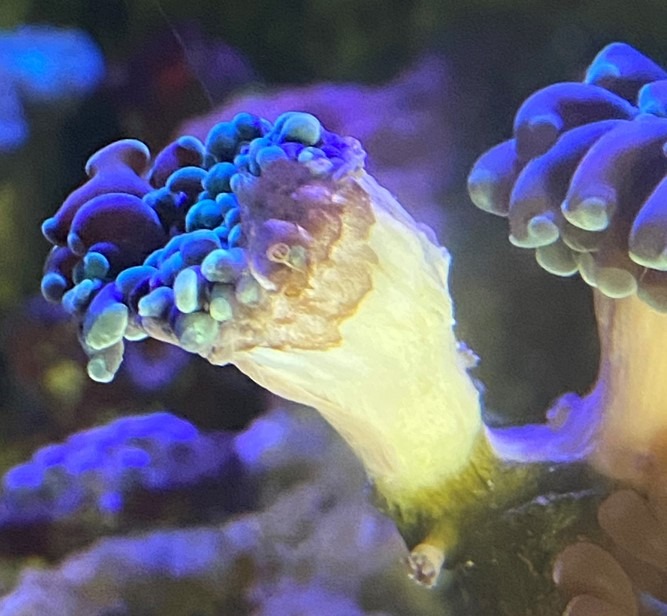
Aquarium Corals: Corals of the Genus Euphyllia
James describes the many species of one our hobby's most iconic and popular coral genus, Euphyllia, and discusses their merits, pitfalls, and husbandry requirements.
Aquarium Setup: Atlantic Biotopes
Often overlooked and underappreciated, the Atlantic biotopes are amazing aquariums. Sustainable inhabitants are here in our own backyards and ready for hobbyists to create new and interesting aquariums. Much can be learned about these animals from captive systems and hobbyists have a remarkable opportunity in front of them to participate in the process and progress.
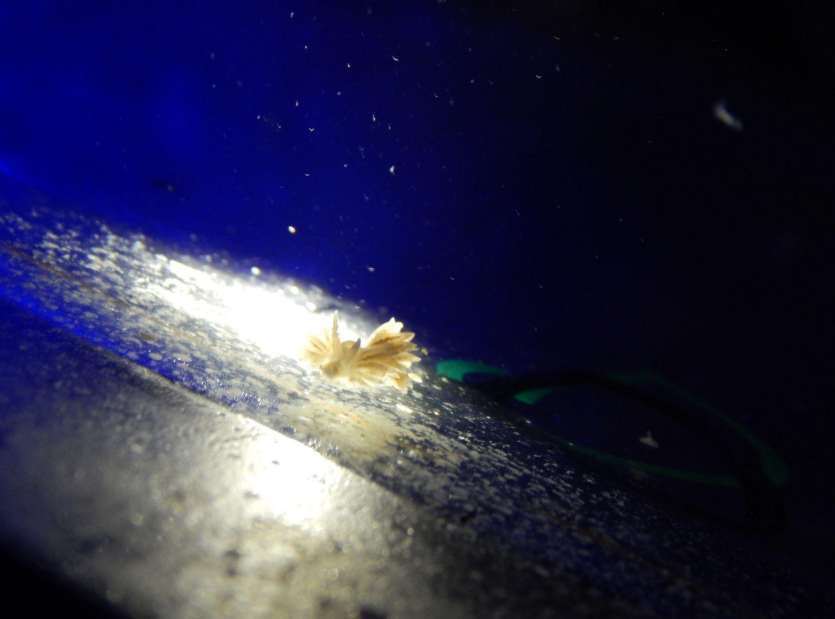
Aquarium Invertebrates: Phestilla Nudibranchs: Cryptic Enemies of Porites, Goniopora, Tubastrea and Dendrophyllia Corals and an Identification of 'Montipora-eating Nudibranchs'
Dana takes us on an in-depth look at the Phestilla and Embletonia nudibranchs that can wreak havoc on an unsuspecting coral in your tank.
Aquarium Invertebrates: Aiptasia, dinoflagellate algae and cyanobacteria - a three-way symbiosis?
Aiptasia are tropical sea anemones which are commonly found in marine aquaria. Usually introduced as hitchhikers on live rock, they rapidly colonize the aquarium due to their prolific growth. Although Aiptasia may settle on any available substrate, chemical signals may attract them to specific microhabitats. In this article I report on the settlement preference of Aiptasia for cyanobacterial mats, a finding which suggests a three-way symbiosis between sea anemones, dinoflagellate algae and bacteria.
Aquarium Corals: Applying PAM fluorometry for the advancement of coral aquaculture
(Alaska Pacific University) While the aquaculture of corals has greatly improved with recent technological advances in water parameter regulation, flow control, and lighting, a lag persists in physiological examination of the health of coral specimens. A cost-friendly, pulse amplitude modulated (PAM) fluorometer (Junior- or JR-PAM) was used to examine photosynthetic activity of corals within recommended aqua-culturing temperature ranges. A total of 24 coral fragments were used, representing four species: Acropora sp., Montipora digitata, Pavona decussatus, and Seriatopora hystrix. Exposure to typical, aqua-culturing temperature treatments (22, 24, 26, and 28°C) for three week periods revealed significant restrictions of photosynthesis at lower- and higher-end temperatures. Both maximum quantum yield (FV/FM) and maximum, relative electron transport rate (rETR) were significantly different across the four-interval temperature range. The efficacy of the JR-PAM for in situ coral research was also examined, and usefulness for determining coral productivity was assessed.
Aquarium Corals: A Look at the Sun Corals
There are numerous species of azooxanthellate stony corals out there, but more than likely the only ones you'll ever come across in the hobby are known as the sun corals, some of which are called orange cup corals. This umbrella of a common name is used for several species of the genera Tubstraea and Dendrophyllia, and these are the subject from here on out.
Aquarium Corals: Zooplankton Feeding by Corals Underestimated
New research by marine biologists from Wageningen University has shown that extracoelenteric feeding on zooplankton can far exceed internal feeding in terms of prey captured and nutrients acquired. The take home message from this research is that corals are voracious predators, perfectly adapted to capturing unsuspecting prey from the water column with their cnidocyte-bearing tentacles.
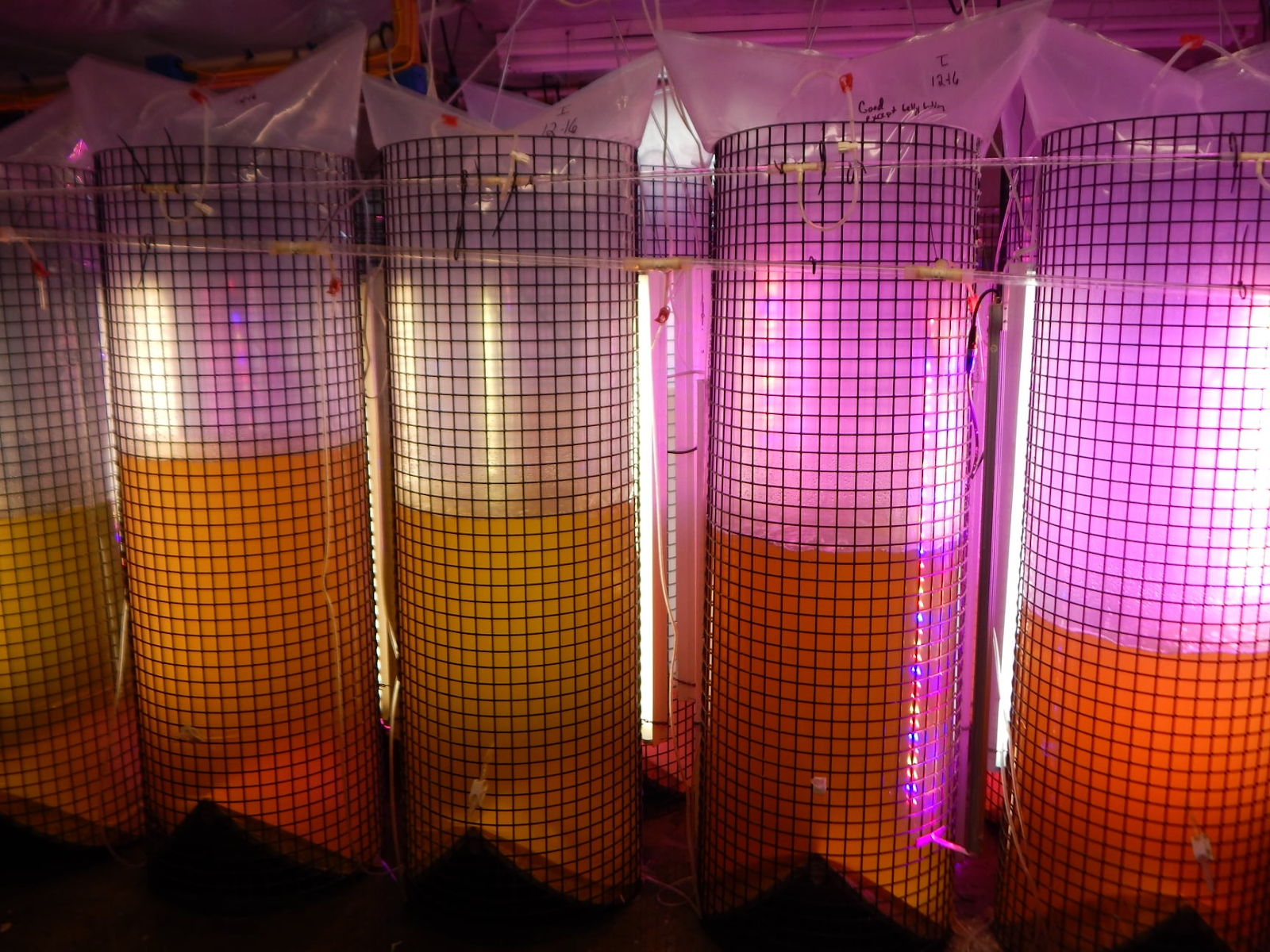
Feature Article: Inside A Coral Lab
Corals keep mystifying and challenging us, whether we are aquarists, divers or scientists. Our understanding of corals and their symbiotic organisms has been a long road, and knowledge of their biology is ever increasing. Even today, marine biologists are working hard to unravel the complex physiology of these amazing animals. The question however is: how do they do that?
Aquarium Invertebrates: A Trip to an Indonesian Coral and Clam Farm
A few years ago when I was working on my book about giant clams, I was lucky enough to get a tour of the CV Dinar coral and giant clam aquaculture facility in Indonesia. I'm sure a lot of hobbyists have heard of the "farms" in the Pacific, but I figured I'd give you something of a virtual tour of the place and show you a bit about how things are done there. It was quite interesting to say the least.
Book Review: Breeding Berghia Nudibranches - The Best Kept Secret by Dene Banger
'Breeding Berghia Nudibranches' is a new book by Dene Banger that explains how to set up and maintain a system for breeding Aiptasia devouring Berghia nudibranchs, sell them for fun and profit, and scale the system based on demand.
Feature Aquarium: The Aquarium of Craig Bagby
Craig shares his 335 gallon reef system with us this month. His 247 gallon peninsula-style main display - with elegantly minimalistic aquascaping - and frag tank are home to an impressive assortment of vibrant corals and fishes
Aquarium Corals: A First Report: Early Summer Daytime Spawning of Porites lutea in Hawai'i
To our knowledge, this is the first report of P. lutea's daytime spawning as early as July in Hawaiian waters. The take home message is clear - not all corals spawn at night or do our observations of P. lutea's spawning behaviors correspond to any particular lunar phase. In fact, our observations suggest spawnings are random during periods of warmer water.
Feature Article: Getting Really Up to Date on Zooxanthellae (Symbiodinium spp.)
Why should anyone be interested in a rather obscure subject such as this? After all, we know that coral animals (hosts) and zooxanthellae (symbionts) generally have a mutually beneficial relationship. New information may make us re-think the symbiosis between Symbiodinium and coral animals.
Aquarium Corals: Collection and Aquarium Husbandry of Northeast Pacific Non-Photosynthetic Cnidaria
It is hoped that this article not only serves as a useful guideline for locating, harvesting, and maintaining specimens for the home aquarium, but furthermore adequately promotes the return of these beautiful creatures to their rightful place of eminence in the marine aquarium hobby.
AmericanReef Video Podcast: New Sea Lion Pup: It’s a girl!
The Pittsburgh Zoo and PPG Aquarium has succeeded in breeding a sea lion pup for the second year in a row!
AmericanReef Video Podcast: Coral Farming 102
Russ goes behind the scene at Todd Melman’s coral farming facility, Coral Reef Systems.