Skip to content. | Skip to navigation

Personal tools
Log in
Sections
You are here: Home Magazine

Latest Articles

By admin - Posted Feb 15, 2011 03:00 AM
Cover Photo
May 2013
Cover Photo
April 2013
Cover Photo
March 2013
Cover Photo
February 2013
Cover Photo
January 2013
Cover Photo
October 2012
Cover Photo
September 2012
Cover Photo
August 2012
Cover Photo
July 2012
Cover Photo
June 2012
Cover Photo
May 2012
Cover Photo
April 2012
LATEST ARTICLES
ARTICLE

Aquarium Chemistry: Phosphate And Math: Yes You Need To Understand Both

By Randy Holmes-Farley, Ph.D. on Mar 21, 2012 at 01:00 PM

Foods are by far the most important source of phosphate in most aquariums. In considering whether sources of phosphate other than foods are important, one must carefully look to the actual amounts involved to determine whether other sources are even worth trying to minimize.

Read More…    |    Comments    |   


ARTICLE

Mike Paletta's 300 Gallon Mixed Reef Aquarium - Part I

By Russ Kikel on Mar 16, 2012 at 04:00 PM

In this video, presented by AmericanReef.com, we take a tank tour of Mike Paletta's 300 Gallon Mixed Reef Aquarium - In part one of this video series, Mike presents his 300 gallon mixed reef aquarium and shares details relating to how to set up a coral reef saltwater aquarium.

Read More…    |    Comments    |   

ARTICLE

Feature Article: Improved husbandry of marine invertebrates using an innovative filtration technology - part two: results with two 12 cubic meter DyMiCo systems

By Tim Wijgerde, M.Sc. on Mar 14, 2012 at 03:00 PM

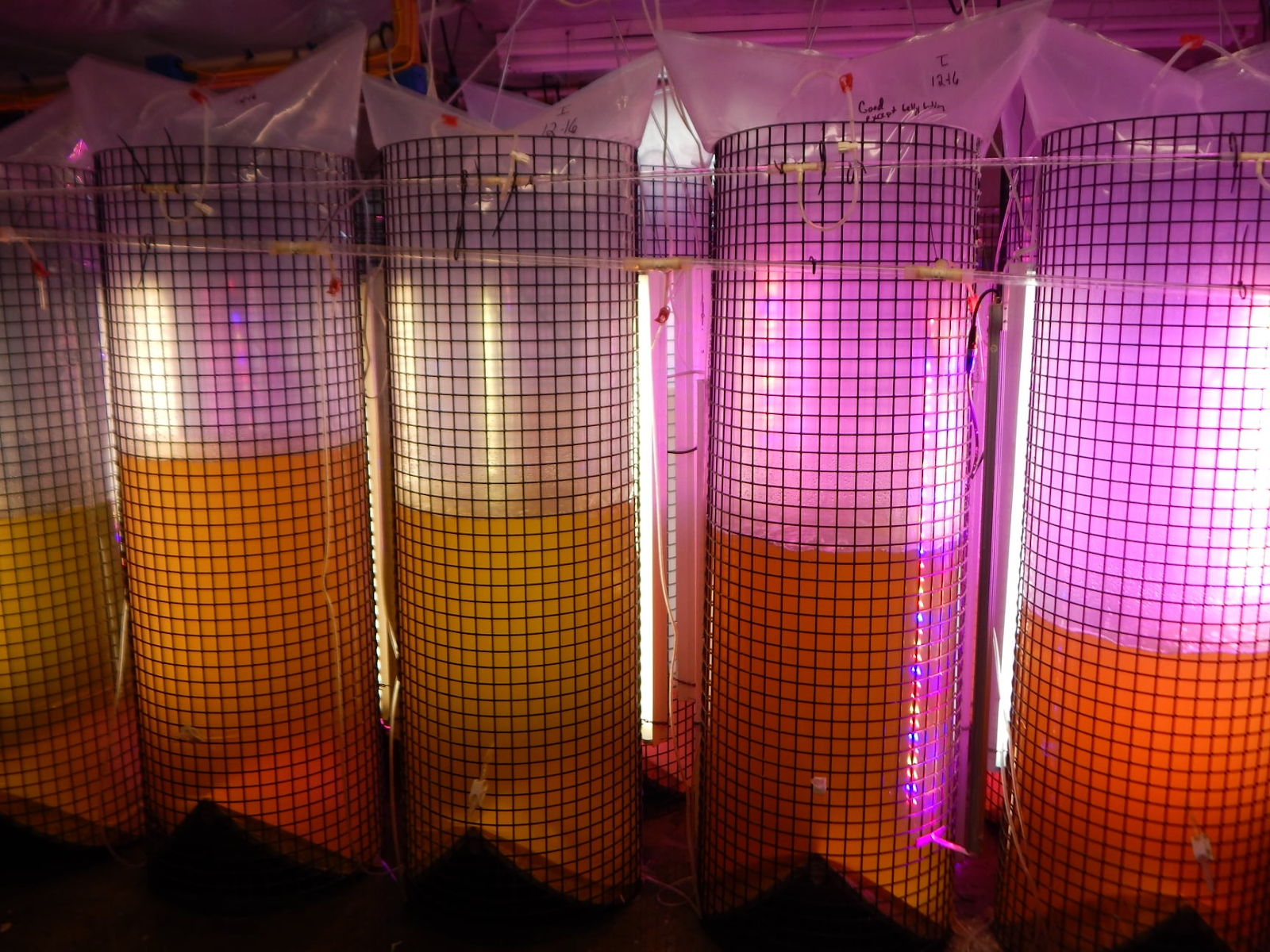
In part one of this article I discussed the growing incentive to aquaculture marine invertebrates to increase the sustainability of the global aquarium trade, and presented the DyMiCo technology as a possible solution. In part two, I will outline some of the results that have been obtained with the DyMiCo technology recently. More specifically, I will discuss the successful husbandry of invertebrates that depend on a live plankton population for their survival.

Read More…    |    Comments    |   

ARTICLE

Feature Article: Spectral Distributions of LEDs: AI-Sol, Radion, Orphek, EcoRay, Mvava

By Sanjay Joshi on Mar 07, 2012 at 03:00 PM

In addition to the characterization of light by its intensity and distribution, the spectral distribution is also of interest. Light sources emit light at varying amounts at different wavelengths. Spectral distribution characterizes the light output across different wavelengths of the light spectrum.

Read More…    |    Comments    |   


ARTICLE

Aquarium Invertebrates: A Look at the Giant Clam Tridacna maxima

By James W. Fatherree, M.Sc. on Feb 22, 2012 at 04:00 PM

With their desirability in mind, if you can find a good specimen these clams can be relatively easy to care for in a well-run reef aquarium. However, they do have particular lighting requirements, and are by no means bulletproof when it comes to keeping them long-term. So, this article will cover their basic biology, how to identify them, and how to best care for them in aquaria.

Read More…    |    Comments    |   

ARTICLE

Aquarium Chemistry: Effects of GFO (Granular Ferric Oxide) on 'Trace' Metals Concentrations in Artificial Seawater

By Dana Riddle on Feb 15, 2012 at 03:00 PM

Granular Ferric Oxide (GFO) is popular among reef hobbyists as a means to decrease phosphate levels and subsequently algal growth in their tanks. GFO, however, can also affect other ions and compound levels as well. In this article, Dana investigates the effect that GFO has on our tanks outside of decreasing phosphate levels.

Read More…    |    Comments    |   

ARTICLE

The Way We Were: 1973: Breeding the Clownfish, Amphiprion ocellaris

By Martin A. Moe on Feb 08, 2012 at 03:00 PM

This was the first article written that described the successful culture of large numbers (relatively speaking) of marine tropical fish. I wrote the article in January/February of 1973 after working with about 10 spawns of Amphiprion ocellaris. It was also my first article in the popular marine aquarist magazines of the time. The article, including editor's comments, is just as it was first printed (with a few spelling corrections).

Read More…    |    Comments    |   

ARTICLE

Feature Article: Improved husbandry of marine invertebrates using an innovative filtration technology - Part 1: DyMiCo

By Tim Wijgerde, M.Sc. on Feb 01, 2012 at 04:00 PM

In part one of this article I will discuss the innovative filtration technology called DyMiCo (Dynamic Mineral Control) that allows aquarists to culture a rich diversity of marine organisms, especially those that rely on live plankton for their survival.

Read More…    |    Comments    |   

ARTICLE

AmericanReef Video Podcast: WetPets 460 Gallon LED Mixed Reef

By Russ Kikel on Jan 27, 2012 at 12:00 PM

AmericanReef's Russ Kikel visits with Brian Taimuty at his store Wet Pets and Friends in McMurray, PA. Brian presents the store's 460 gallon LED mixed reef aquarium. In this video he shares details relating to the design, set-up, and maintenance of this tank, offering the home aquarist both inspiration and invaluable reef-keeping advice.

Read More…    |    Comments    |   

ARTICLE

Feature Aquarium: Ralf Prehn's 870 gallon "Little Coral Reef"

By Ralf Prehn on Jan 25, 2012 at 04:00 PM

Ralf Prehn has created a reef masterpiece. His 870 gallon display is a perfect balance of art and design, science and engineering, passion and discipline. Ralf set out to recreate a slice of natural coral reef in Hamburg, Germany. Six years in, the result of his dedication is nothing short of amazing.

Read More…    |    Comments    |   


ARTICLE

Aquarium Corals: Applying PAM fluorometry for the advancement of coral aquaculture

By Zack Zartler on Jan 18, 2012 at 03:00 PM

(Alaska Pacific University) While the aquaculture of corals has greatly improved with recent technological advances in water parameter regulation, flow control, and lighting, a lag persists in physiological examination of the health of coral specimens. A cost-friendly, pulse amplitude modulated (PAM) fluorometer (Junior- or JR-PAM) was used to examine photosynthetic activity of corals within recommended aqua-culturing temperature ranges. A total of 24 coral fragments were used, representing four species: Acropora sp., Montipora digitata, Pavona decussatus, and Seriatopora hystrix. Exposure to typical, aqua-culturing temperature treatments (22, 24, 26, and 28°C) for three week periods revealed significant restrictions of photosynthesis at lower- and higher-end temperatures. Both maximum quantum yield (FV/FM) and maximum, relative electron transport rate (rETR) were significantly different across the four-interval temperature range. The efficacy of the JR-PAM for in situ coral research was also examined, and usefulness for determining coral productivity was assessed.

Read More…    |    Comments    |   

ARTICLE

Feature Article: LED Lighting Tests: Radion, Orphek, Mvava, Ecoray and Ecoxotic

By Sanjay Joshi, Ph.D. on Jan 11, 2012 at 03:00 PM

As LED lighting moves further into the mainstream, there a lot of new choices available to the aquarist. Hopefully this data will help the aquarist make an informed choice on what to expect from the individual LED fixtures and how best to utilize them to achieve the desired coverage and light intensity.

Read More…    |    Comments    |   

ARTICLE

Aquarium Fish: An Overview of Clownfish of the Saddleback Complex

By Kenneth Wingerter on Jan 04, 2012 at 03:00 PM

Members of the Saddleback Complex are among the most challenging species of clownfish to maintain in captivity. A rather high level of care must be reached to ensure (if it can be ensured) the health and wellbeing of these sensitive animals. Generally, attempts to keep these fishes should be undertaken by advanced aquarists (especially so if host anemones are to be kept as well). Properly cared for, the wide-band clownfish, the saddleback clownfish, and the sebae clownfish alike will undoubtedly enhance the beauty and distinctiveness of any marine aquarium display.

Read More…    |    Comments    |   

ARTICLE

Aquarium Fish: An Overview of Clownfish of the Tomato Complex

By Kenneth Wingerter on Dec 21, 2011 at 03:00 PM

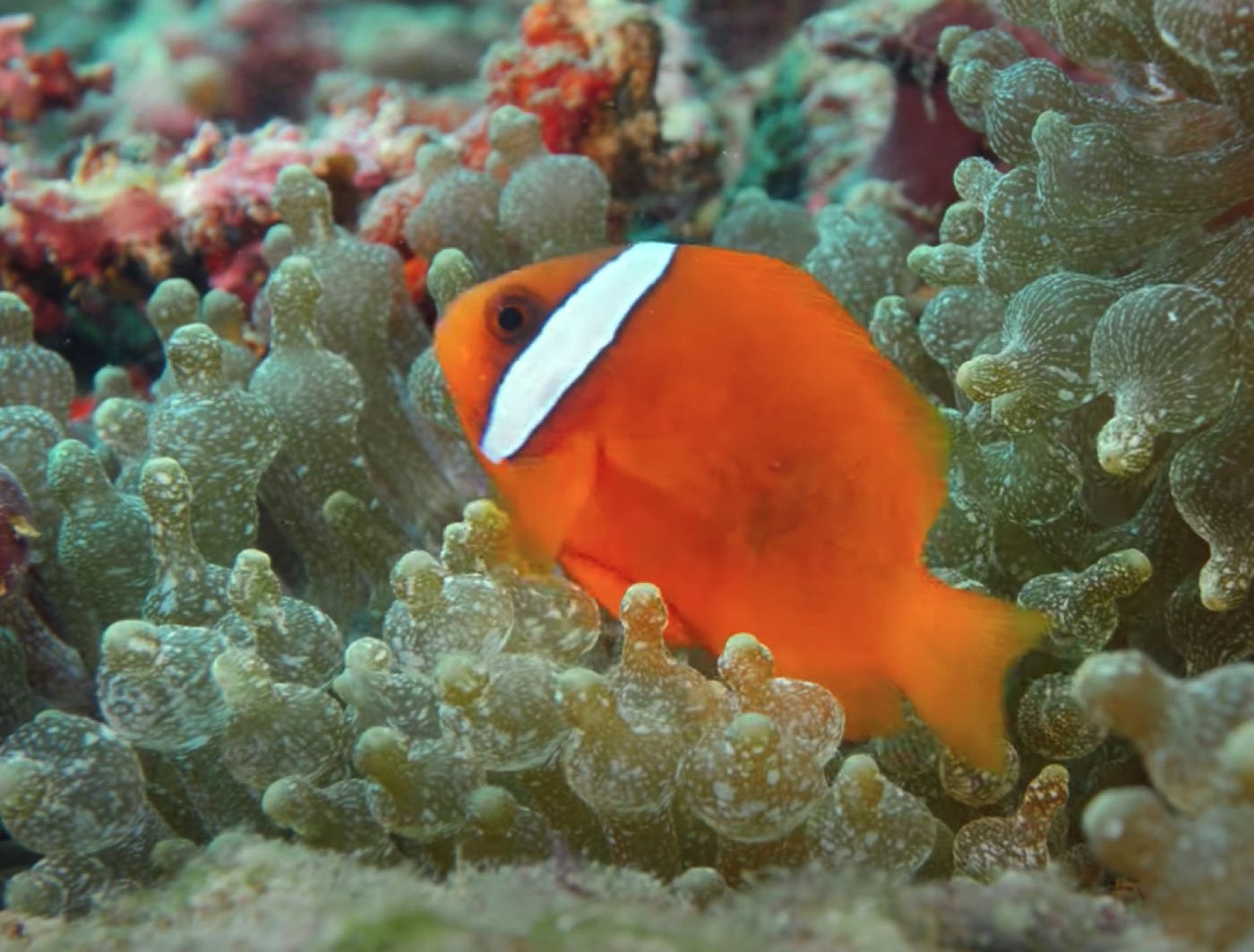
The Tomato Complex arguably claims some of the most durable marine aquarium fish species, being capable of withstanding suboptimal water quality, inadequate nutrition, and careless handling (that being said, it is certainly not advisable to subject them to poor living conditions). Due to their powerful bodies and belligerent temperament, they are well suited for a community of larger, more aggressive species. As such, members of this complex are undoubtedly the best choice of clownfish for hobbyists (novice and advanced alike) that have a fondness for outstandingly bold, cantankerous fishes.

Read More…    |    Comments    |   

ARTICLE

Aquarium Corals: A Look at the Sun Corals

By James W. Fatherree, M.Sc. on Dec 14, 2011 at 05:00 PM

There are numerous species of azooxanthellate stony corals out there, but more than likely the only ones you'll ever come across in the hobby are known as the sun corals, some of which are called orange cup corals. This umbrella of a common name is used for several species of the genera Tubstraea and Dendrophyllia, and these are the subject from here on out.

Read More…    |    Comments    |   

Document Actions

magazine_sm.jpg

Support Our Sponsors

Support Our Sponsors

Support Our Sponsors
Latest Comments
Powered by Disqus
Recommendations